


The histories hidden in bones








Small finds, big progress
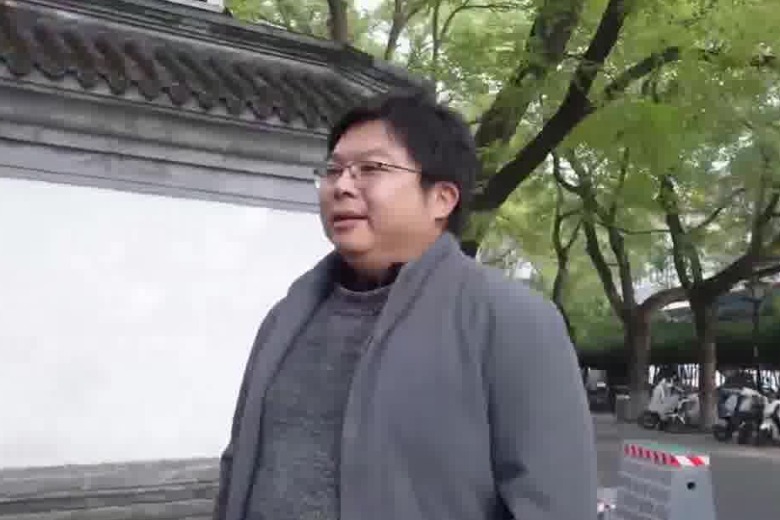
The 42-year-old molecular archaeologist used to study bioscience. In 2014, when he was a doctoral candidate at Fudan's School of Life Sciences, he joined a program overseen by historian Han Sheng and molecular anthropologist Li Hui to trace the pedigree of Cao Cao, an iconic warlord in late Eastern Han Dynasty (25-220).
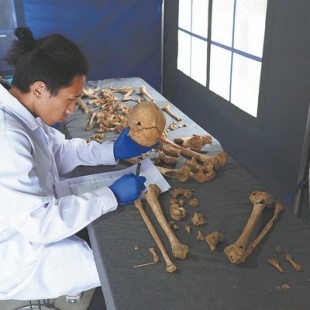
As part of the program, researchers collected and analyzed genetic samples of contemporary males with the Cao surname from across the country — particularly those who claim to be descendants of Cao Cao — and later compared their Y-DNA with that of the warlord's granduncle Cao Ding, whose remains include two teeth, from which the researchers were able to extract a DNA sample.
For Wen, the program was a door into the world of ancient DNA, which over the past decade has shown great potential in the study of the origins and migration of human populations, changes to social structure, cultural exchange and the spread of diseases.
In 2022, Swedish geneticist Svante Paabo received the Nobel Prize in physiology or medicine for his discoveries concerning the genomes of extinct hominids and human evolution, a milestone in the research of ancient DNA.
Wen likes the fact that addressing questions of history through the study of ancient DNA is straightforward and compelling.
His research includes tracing the spread and hidden connections between the Neolithic Yangshao and Longshan cultures in the middle and lower reaches of the Yellow River, as well as changes to social structure in the pre-Qin period (before 221 BC), by looking into migration and genetic lineage.
In addition, a major strand of his work involves uncovering evidence of the interaction and integration of different ethnic groups with a presence in today's northern China, including the Xiongnu, Turks, Xianbei, Tuyuhun nomads and the Sogdians, who were active on the Silk Road, through the third to the ninth centuries.
The project was launched in 2021 and research teams specializing in multiple disciplines such as history, archaeology, genetics, ethnology and linguistics are involved.
One notable achievement has been the team's research into Yuwen Yong, Emperor Wudi of the Northern Zhou Dynasty (557-581), and his wife Queen Ashina.
The emperor was a member of the Xianbei ethnic group and succeeded to the throne at 17. He unified northern China and died at the age of 36 on an expedition to the Turkic tribes to the north, led by his father-in-law.
Genomic analysis suggests that 30 percent of Wudi's ancestry derived from agricultural populations in the Yellow River Basin, which, according to Wen, likely resulted from long-term intermarriage between the Xianbei royal family and Han nobility.
Meanwhile, laboratory tests and historical data indicate that the emperor died of chronic arsenic poisoning, the result of taking Taoist elixirs in pursuit of longevity, while Queen Ashina's bones contain a high level of lead from the cosmetics she used.
Wen says that the project is also exploring the ethnic structure of the Tang Dynasty (618-907) capital Chang'an — today's Xi'an in Shaanxi province — which had a population of over a million at its peak and attracted merchants from across China and beyond.
He says that the relatively cold and dry climate of northern China aids the survival of biological remains like teeth and bones, whereas in southern China, where it is more humid and the soil is more acidic, remains are less well-preserved and so they often analyze the DNA of sedimentary deposits to learn about the ancient environment or to determine what vessels contained and where they came from.