



Countering EU misconceptions about Chinese electric vehicles imperative







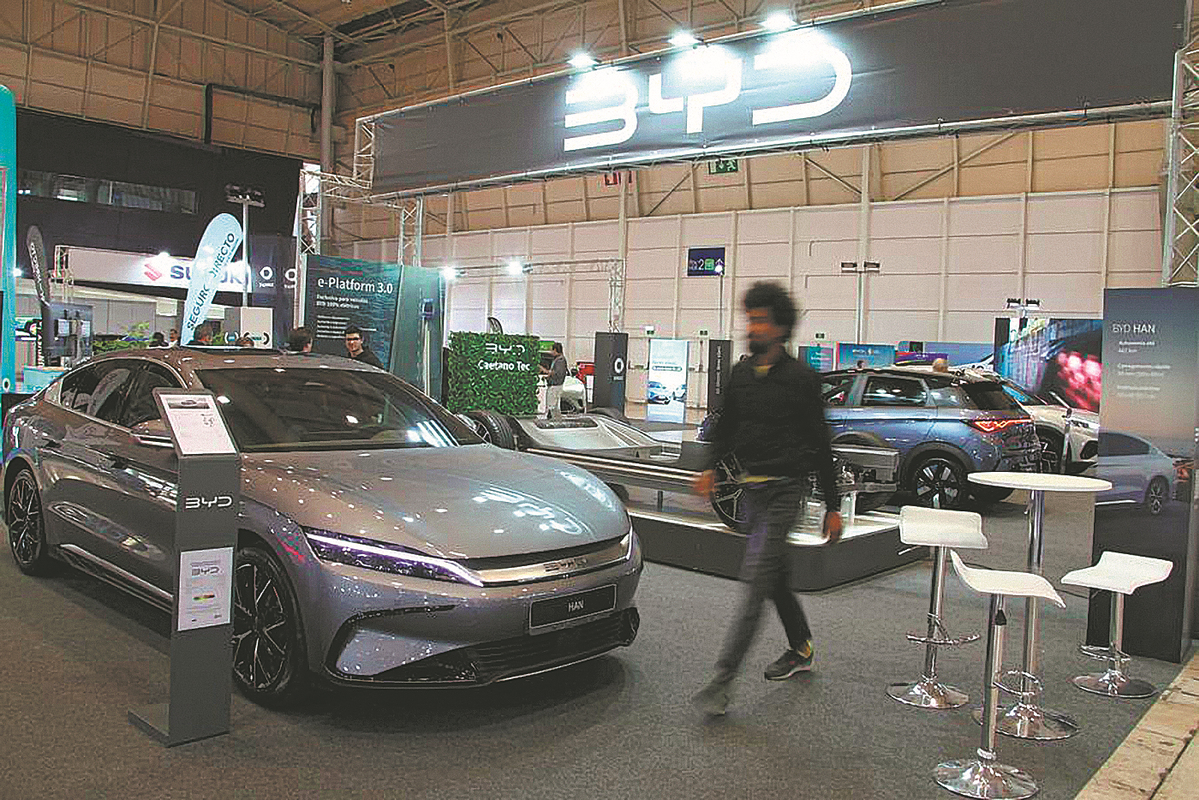
GENEVA — The EU's decision to impose provisional tariffs on electric vehicles imported from China starting July 4 has triggered strong dissatisfaction from both Chinese and European automakers, prompting the two sides to start consultations on the EU's anti-subsidy investigation of Chinese EVs in late June.
As the talks are underway, it is crucial for the EU to review the facts on the following issues to avoid politicizing economic and trade matters.
Has Europe suffered losses from automotive cooperation with China?
Never.
Collaboration between the Chinese and European automotive industries began 40 years ago when Volkswagen established a joint venture in China, followed by other manufacturers like PSA Peugeot Citroen, BMW and Daimler.
Over the four decades, European car manufacturers have produced and sold a significant number of vehicles in China. Volkswagen had delivered approximately 40 million vehicles in the Chinese market by the end of 2022. BMW Brilliance Automotive, a China-Germany joint venture, rolled its 6 millionth vehicle off the production line in May. For both Volkswagen and BMW, sales in China account for over 30 percent of their global total.
While bringing advanced technologies, management experience, and production techniques to China, European automakers have also reaped substantial profits in the competitive Chinese market.
Even in the field of new energy vehicles, China and Europe are not engaged in a zero-sum game. Companies like Volkswagen and BMW have established research centers in China or collaborated directly with Chinese firms to drive technological innovation. This has helped European automakers better understand and adapt to the Chinese market, positioning them advantageously in electric and intelligent vehicles.
In recent years, Chinese EVs have progressed significantly, which surprised many in Europe. Yet their market share in Europe remains low. Still, some politicians are trying to exploit the situation for political purposes.
In fact, over the past 40 years, European carmakers have undoubtedly benefited from cooperation with China, as evidenced by their opposition to the EU's anti-subsidy investigation of China-made EVs. Major car companies such as Volkswagen, BMW and Mercedes-Benz have voiced their objections to these protectionist measures, regarding them as neither reasonable nor justified.
The German Association of the Automotive Industry said recently that the planned tariffs against China-made EVs would be counterproductive for Europe's climate goals and harmful to its industry and consumers. Western car manufacturers in China would also be affected, in some cases even worse than Chinese companies, it noted.
"Competitiveness is fostered through competition," the association said.
Is Chinese "overcapacity" or EU undercapacity the problem?
Probably the latter.
As observed by the Swiss newspaper Neue Zurcher Zeitung, if a country only produced for its domestic market, there would be no international trade. The automotive industry inherently operates on global production and global sales. In 2023, around 80 percent of cars produced in Germany and 50 percent of those made in Japan were exported, while only about 12.7 percent of China's EVs were sold to the international market. Accusations of China's "overcapacity" are therefore groundless.
According to research by the International Energy Agency, to achieve carbon neutrality, annual global sales of EVs need to reach about 45 million by 2030, more than three times the figure in 2023 and far exceeding current global production capacity.
Take the EU as an example. Its transportation sector accounts for nearly a quarter of total greenhouse gas emissions. To meet the net-zero emission target by 2050, the EU needs at least 30 million zero-emission vehicles on the road by 2030. From a supply and demand perspective, the electric vehicle sector is not experiencing overcapacity but rather facing a capacity shortage.
In essence, the EU's allegations of China's "overcapacity" in EVs and concerns about "supply chain security" are just excuses to prevent China from participating in normal international trade and undermine the development of China's EVs.
The so-called "dumping" of Chinese EVs in Europe is also exaggerated. Most EVs exported from China to Europe are Western brands made in China.
According to data from the European Federation for Transport and Environment, in 2023, 19.5 percent of EVs sold in Europe were produced in China, and only 7.9 percent of those were Chinese brands. US carmaker Tesla's Shanghai factory exported around 340,000 vehicles in 2023, nearly half of which were sold to Europe. Thus, Chinese EV brands hold a relatively small market share in Europe, far from being the main players.
Is a boom in Chinese EVs the result of subsidies?
No.
China's success in the EV sector stems from technological innovation, a robust supply chain and a competitive market, rather than from subsidies.
A report by the US-based Center for Strategic and International Studies has noted the importance of recognizing the tremendous advancements made by Chinese EV manufacturers and battery producers. Recent years have seen substantial improvements in the energy density, range, and reliability of Chinese EV batteries, as well as better designs, infotainment systems, and autonomy capabilities.
The EU's claim that China's affordable EVs are heavily subsidized and therefore disrupt the market is baseless. In reality, it is the EU's protectionist measures that are causing market disruption.
Subsidy policies originated in Europe and the United States and are widely practiced globally. China does not implement any subsidies that are prohibited under WTO rules.
In contrast, Europe and the United States have significantly intensified their subsidies for EVs in recent years, with a range of exclusive and discriminatory practices. This has created barriers for Chinese EVs and is in clear violation of WTO regulations.
Is the EU's investigation reasonable?
No.
Industry insiders believe that the EU's investigation seeks to prevent Chinese EV companies from investing and expanding in Europe and to diminish the competitiveness of emerging Chinese industries, so as to protect local traditional industries. Timed before the just-concluded EU elections, this protectionist move is geopolitically motivated.
The EU has always portrayed itself as a staunch defender of free trade, and it claims that its investigation is meant to determine whether China is excessively subsidizing its EV industry and will set tariffs based on the findings. However, in fact, the investigation was initiated without requests from member states or the auto industry.
Moreover, the investigation process was characterized by noncompliant sampling standards and a lack of transparency, seriously breaching WTO rules.
For example, the EU excluded high-sales producers from member states during the sampling process, demonstrating a clear discriminatory approach aimed at Chinese EV firms.
Visionary voices from Europe's political, business, and academic circles have urged that, instead of keeping Chinese EVs out, the EU should collaborate with China to leverage technological and supply chain advantages to enhance Europe's industrial landscape, meet emission reduction commitments, cater to consumers and achieve mutual benefits. Putting up barriers is nothing but a shortsighted move.
Xinhua



















