



Chinese firms' new-age ventures elevate BRI
Nation's corporates outgrow big-ticket infrastructure projects to redefine development globally







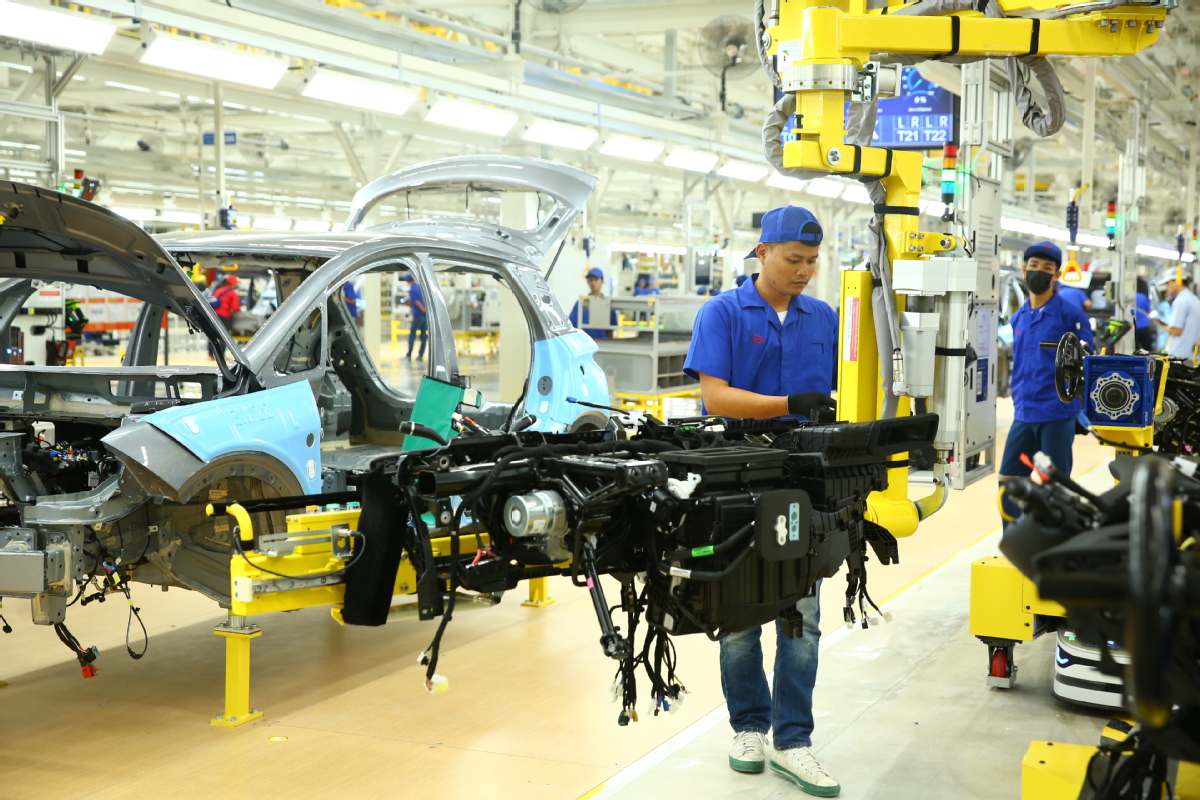
At Chinese automaker Great Wall Motor's welding workshop in Rayong, Thailand, numerous robotic arms in operation indicate the level of high-tech in use even as Chinese technicians guide local employees through the welding process.
Following the successful rollout of its first electric vehicle at its plant in Thailand this January, the Baoding, Hebei province-based carmaker said that multiple batches of Thai workers have now mastered the production processes of its EV products. They have thus become valuable assets for the company, aiding its expansion efforts in other Southeast Asian markets.
Elsewhere, Beijing-based artificial intelligence services provider Terminus Group is charting a similar course to bring additional value to an overseas market. Amid the intensified efforts by many Middle Eastern countries to leverage the digital economy for sustainable growth, Terminus launched its international headquarters in Dubai, the United Arab Emirates, in February.
It will not only facilitate Terminus' projects and business expansion initiatives in the UAE, Saudi Arabia, Qatar, Oman and other countries in the region, but also support the group's operations in Singapore, Australia and numerous countries participating in the Belt and Road Initiative.
Both GWM and Terminus are epitomes of a larger trend — that of Chinese enterprises operating in the vast BRI landscape going beyond big-ticket infrastructure projects like dams, highways, railroads, airports and municipal engineering works.
As many parts of the world enter a new phase of development, Chinese companies, particularly those from high-end manufacturing and trade in services, are adjusting their strategies to better align with the evolving environment in BRI economies, said Wan Zhe, a researcher at the Belt and Road School of Beijing Normal University.
Facing challenges like escalating geopolitical tensions and rising protectionism in certain countries, Chinese enterprises are focusing on avoiding risks and generating revenue through higher-value business ventures that serve the changing landscape better, said Wan.
For instance, GWM plans to start operations at its new factories in Vietnam, Indonesia and Malaysia this year or the next.
Similarly, Chang'an Automobile Co, a Chongqing-based State-owned automaker, is building a factory in Rayong province, Thailand. The first phase of the project will involve an investment of over $240 million and is scheduled to begin production in 2025.
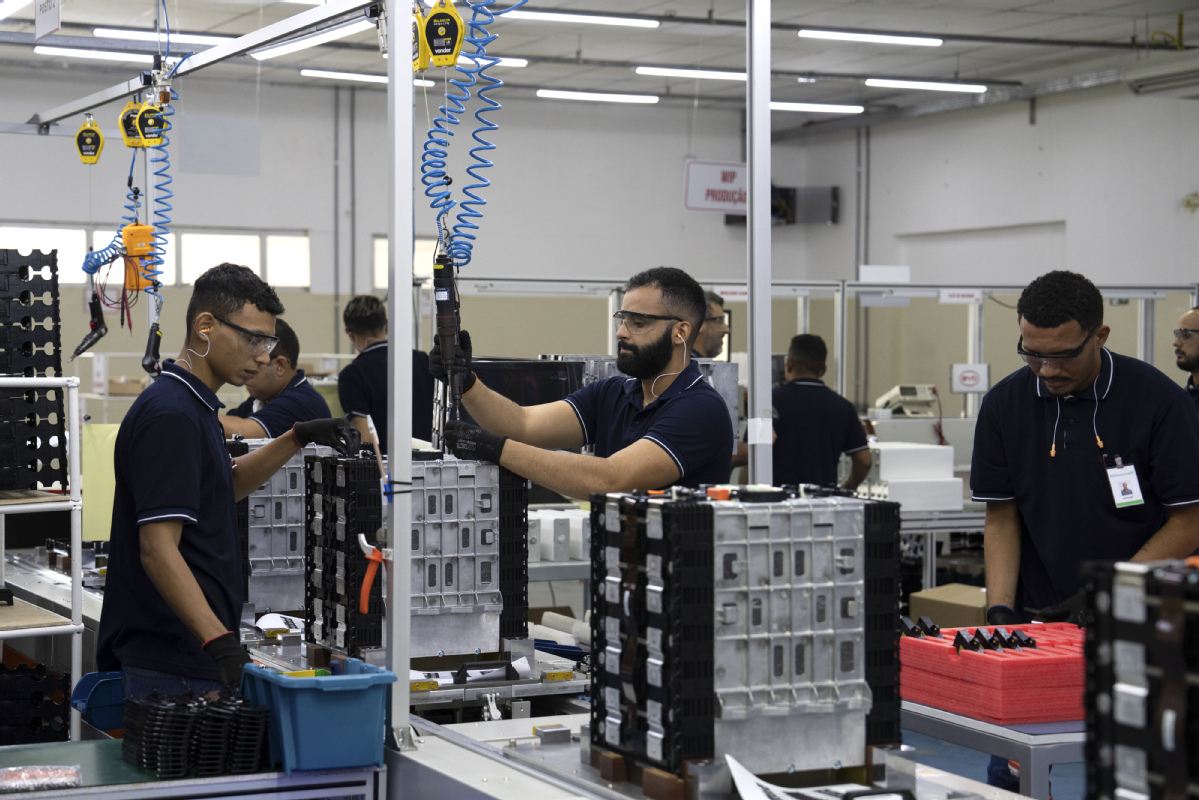
The new energy vehicles produced will be not only marketed in Thailand but also exported to other neighboring ASEAN (the Association of Southeast Asian Nations) countries, as well as Australia, New Zealand, the United Kingdom and South Africa, said Shen Xinghua, president of Chang'an Automobile's business for Southeast Asia.
Shen said that the initial annual production capacity of this plant is 100,000 units, which will be gradually expanded to 200,000 units in the next phase.
Chen Bin, deputy director of an expert committee at the Beijing-based China Machinery Industry Federation, said that South Africa, Hungary, Saudi Arabia, Indonesia, Vietnam and Malaysia have all formulated EV-related policies to encourage and support the development and growth of the industry.
Highlighting that electrification and intelligence complement each other, Chen said with growing populations in many countries, particularly in Africa and Southeast Asia, an increasing number of young consumers who prefer smart technologies are emerging, making these markets more proactive in embracing EVs.
His observation reflects a trend. China's NEVs are becoming popular in overseas markets thanks to their quality, driving range and multifunctionality.
Some 519,000 EVs and plug-in hybrids were exported from China between January and May, up 13.7 percent year-on-year, said the China Association of Automobile Manufacturers.
China's continuous efforts to enhance institutional opening-up and secure high-standard economic and free trade agreements, alongside the swift expansion of its tech-intensive green product industries, are anticipated to propel its companies to strategically invest in new plants, service centers and innovation facilities in markets involved in the BRI, said Yu Jianlong, vice-chairman of the Beijing-headquartered China Council for the Promotion of International Trade.
In addition to automakers such as SAIC Motor, Beijing Automotive Group, Guangzhou Automobile Group and BYD, Chinese battery and component manufacturers, including Contemporary Amperex Technology Co Ltd, Gotion High-tech Co Ltd and EVE Energy Co Ltd, have invested in BRI economies to supply products to their domestic partners and create jobs for local communities.
Recognizing this trend, Matthias Loebich, partner and leader for international business at Bearing-Point, a European management and technology consultancy with more than 10,000 employees across 70 countries and regions, said that China's fast-growing EV sector will continue to lead the world's green transition and create enormous growth opportunities for upstream and downstream industries in the BRI landscape.
"This is evident in our doubling of Chinese automotive clients seeking consulting support over the past two years," said Loebich, noting that Chinese automakers are enhancing their internal capabilities in management, digital transformation and overseas strategies, learning from advanced markets to elevate their global presence.
The company established a dedicated team to help Chinese automakers conduct sustainability-related activities in both home and global markets in 2023, in order to further enhance their growth strength.
Collectively, such moves have had a positive effect on official data. China's nonfinancial outbound direct investment came in at $60.2 billion in the first five months, up 16.3 percent year-on-year, statistics from the Ministry of Commerce showed.
China's cooperation with countries and regions participating in the BRI continued to show growth momentum as ODI in these economies came in at $12.81 billion, up nearly 13 percent year-on-year.
The value of trade between China and BRI economies was worth 8.31 trillion yuan ($1.14 trillion) during the January-May period, up 7.2 percent year-on-year, data from the General Administration of Customs showed.
Such a rise will likely be sustained given certain strategic Chinese corporate moves. For instance, in late June, Chinese train maker CRRC Corp, driven by its product upgrade and technology accumulation, unveiled seven new energy locomotives in Beijing, to offer the world new solutions for green, low-carbon development in rail transport. These will enrich CRRC Corp's overall product offerings. This marked a notable step forward in green transition efforts in both domestic and global markets.
Lin Cunzeng, CRRC's vice-president, said the development of this series of new energy locomotives is a concrete step to promote the renewal and upgrade of outdated equipment in both home and foreign markets, and advance the green and low-carbon transformation of rail transit equipment.
"They will contribute to the high-quality growth of the BRI and enrich China's export content," said Lin.
These new locomotives, he said, will drive the demand for diverse new energy products like power batteries and hydrogen energy power packs. They will, therefore, stimulate the development of upstream industries like basic materials and core components, fostering new drivers of economic growth.
The current reshaping of the global supply chain has generated new avenues for Chinese companies to match their capabilities with shifting market needs, said Lyu Yue, a professor at the Academy of China Open Economy Studies, part of the University of International Business and Economics in Beijing.
"Showing strong competitiveness, Chinese companies excel in industries like new energy vehicles, lithium-ion batteries and photovoltaic products," said Lyu, adding this has resulted in increased acceptance and collaboration from many countries involved in the BRI.
Agreed Michael Dyke, CEO of the Riyadh-based New Murabba Development Co, a business unit of Saudi Arabia's Public Investment Fund. Dyke said that the tangible growth of the BRI and enhanced Sino-Saudi business relations will attract more Chinese companies to expand their market presence in Saudi Arabia.
New Murabba Development is responsible for building a modern town in Riyadh. Its development spans 19 square kilometers. The project will include 2 million square meters of floor space featuring retail areas, tourist attractions, 104,000 residential units, 9,000 hotel rooms and 80 entertainment venues. Its first phase is scheduled to be completed and operationalized in 2030.
China Harbour Engineering Co Ltd, a Beijing-headquartered subsidiary of State-owned China Communications Construction Co Ltd, will carry out the first phase of excavation work for this project.



















