SCO helps maintain stability, promotes prosperity








The Belt and Road Initiative has yielded fruitful results for both China and Kazakhstan, and become not only a brand of Chinese diplomacy but also an effective tool for strengthening international cooperation, promoting global growth and helping build a community with a shared future for mankind.
At the Third Belt and Road Forum for International Cooperation in Beijing last year, which was attended by Kazakh President Kassym-Jomart Tokayev, many important agreements were signed between China and Kazakhstan, including the "Agreement on the Joint Development of the Trans-Caspian International Transport Route" and the "Memorandum on the Joint Construction of a Third Cross-Border Railway (Ayagoz-Tacheng)". These agreements will boost the development of the transport and logistics networks linking Belt and Road countries.
The expanding cooperation, new projects and people's rising incomes are the hallmarks of development in the East. As President Tokayev noted, the Belt and Road Initiative is a project of grand scale. And the further development of the comprehensive strategic partnership between Kazakhstan and China is very important for both countries, as Tokayev said.
Understanding well the global trends and having considered the prospects of the Belt and Road Initiative, Kazakhstan put forward "Nurly Zhol", an economic stimulus plan to develop and modernize its roads, railways, land ports and IT infrastructure in 2014, the year after the Belt and Road Initiative was proposed.
Kazakhstan's participation in regional development programs has become one of the important elements of the new architecture of multilateral cooperation in Eurasia. The country supports the China-proposed Belt and Road Initiative and thus contributes to overall development in the region. The initiative's conceptual origins reflect not only the rich history and culture of China, but also the development philosophy of the Chinese people in the context of cooperation with neighbors.
As a Chinese saying goes, "if you want to become rich, build roads". The ancient Silk Road is an apt example of this. About 2,000 years ago, thanks to the courage and entrepreneurship of the people, Eurasia was already united by a network of roads, which was the first prototype of economic globalization.
Today, Kazakhstan is crisscrossed by 11 transcontinental routes — five railways and six expressways. Over the past 10 years, Kazakhstan has spent about $30 billion on developing of infrastructure, including transport and logistics networks. Under the plan, about 2,500 kilometers of railways and 12,500 km of highways have either been modernized or put into operation.
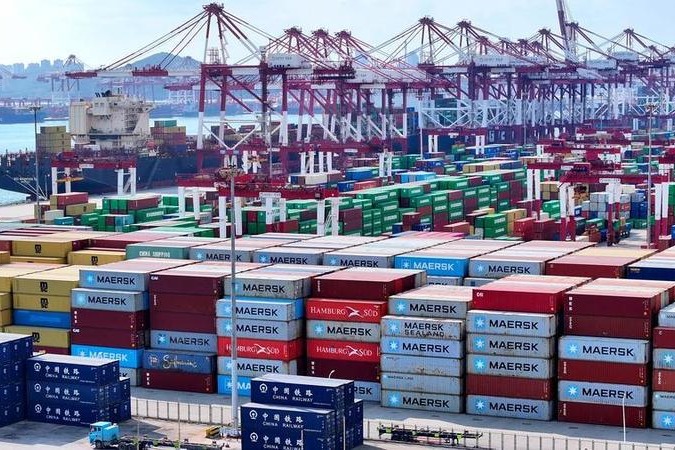
Over the past 10 years, the efforts of the two countries have shaped a grandiose transit plan linking two continents and three oceans. Thanks to its cooperation with China, Kazakhstan has gained access to the sea and become one of the most important logistics hubs in Eurasia, facilitating the development of fast continental supply chains and trade between the East and the West. Thus, the two countries are implementing new large-scale projects that go far beyond the framework of Kazakh-Chinese relations.
The Belt and Road Initiative has completed trade and infrastructure projects, which in the past took decades to complete, within years. The initiative has not only facilitated reforms in the participating countries but also given them easier access to global free trade which they have benefitted from. In fact, the Belt and Road Initiative, as the modern version of the ancient Silk Road, has become the most outstanding global development project of the current century and reflects the rise and grandeur of modern Asia.
Cooperation among the Belt and Road countries has played a key role in the prosperity and progressive development of billions of people around the world. As such, the initiative will become a good basis for taking forward the Shanghai Cooperation Organization's plans.
The SCO has emerged as a pivotal force in maintaining regional stability and promoting global cooperation, with China playing a central role in fostering its development and goals. The SCO's evolution underscores a commitment to maintaining peace, safeguarding security and promoting mutual prosperity among its member states and beyond.
Established in 2001, the group has grown from six members into a robust platform involving nine member states, three observer states and 14 dialogue partners. Its primary objectives focus on bolstering security cooperation, combating extremism, enhancing economic ties and promoting cultural exchanges. Over the years, the SCO has become instrumental in addressing common challenges faced by its members, ranging from terrorism to economic development.
Central to the SCO's evolution is China's steadfast commitment to promoting the building of a community with a shared future. China, as the second-largest economy in the world and a staunch advocate for multilateralism, has played a leading role in shaping the SCO's agenda and fostering cooperation among its member states. China's vision emphasizes mutual respect, inclusiveness and win-win cooperation — a departure from traditional power politics — and prioritizes collective prosperity over individual gains.
Beyond security, the SCO has become a driving force for economic integration and development. Its member states have leveraged the organization's strengths to deepen trade ties, enhance connectivity and unlock new investment opportunities. The SCO's support for development programs such as the Belt and Road Initiative has catalyzed infrastructure development and economic growth across Eurasia, benefiting not only its members but also neighboring countries and regions.
In the past 23 years since its establishment, the SCO, as an international organization, has established a model for maintaining and strengthening regional security. Kazakhstan assumes the chair of the SCO against the backdrop of rising geopolitical tensions, increasing challenges, and exacerbation of ongoing conflicts and emergence of new ones. In such conditions, Kazakhstan's proposal for the leaders of our countries to accept the initiative on world unity for peace and harmony seems very timely.
A number of important events have been held this year, in particular, the SCO Energy, Digital and Tourism Forum, meetings of foreign, health and IT ministers of SCO member states, and the meeting of the "Regional Anti-Terrorism Structure". Under the chairmanship of Kazakhstan, about 180 different events were held, and more than 30 documents on cooperation are being prepared under the SCO's framework.
Last year, President Tokayev said Kazakhstan will make every possible effort to modernize the SCO and turn it into a more effective multilateral platform in order to further strengthen mutually beneficial cooperation and traditional friendship between SCO member states. By working together, the SCO member states can produce more tangible results, and the decisions made at the SCO Summit in Astana will contribute to the further development of the organization, and help maintain long-term peace, stability and prosperity in the region.
Kazakh-Chinese relations under the Belt and Road framework have demonstrated to other SCO members countries how to derive mutual benefit from economic cooperation. Thanks to the successful implementation of joint projects, other countries in the region also became more actively involved in the Belt and Road Initiative, contributing to the strengthening of economic ties within the SCO.
Just before the SCO Summit, it is worth noting the importance of continuing and deepening these relations to achieve common goals and maintain stability and promote prosperity in the region.
The author is director of the China Studies Center in Kazakhstan. The views don't necessarily reflect those of China Daily.
If you have a specific expertise, or would like to share your thought about our stories, then send us your writings at opinion@chinadaily.com.cn, and comment@chinadaily.com.cn.