Young children deserve the best start in life







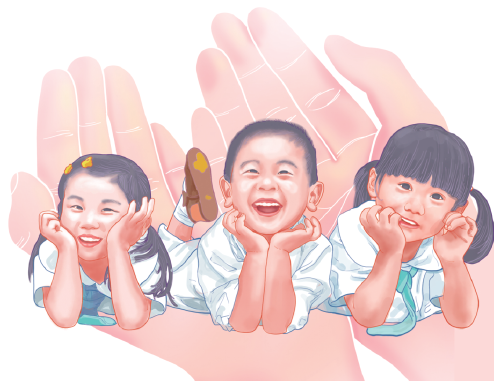
Imagine a 3-year-old girl growing up in rural China. Her parents want to give her the best start in life but lack the knowledge and skills to do so. Luckily, the family has plenty of support. A village health worker visits her regularly at home to ensure she's had her health check-ups, is eating nutritious food, and her development is on track. In the nearby town, there are regular early childhood development (ECD) care group activities, where she gets to play with other children, and her parents learn how to provide nurturing and responsive care. This girl can go on to achieve anything in life.
But without the support and care, the girl's chances in life could be limited. As a child, she might struggle with her physical and mental health, or with her ability to learn at school. After growing up, she might not be able to find a job. She would be less likely to achieve her full potential in life.
Early childhood, during the first six years of life, is a critical window of opportunity to shape the trajectory of a child's development and build a firm foundation for their future. In the first few years of life, more than 1 million neural connections are formed every second, a pace never repeated again. For young children to achieve their full potential, they need five scientifically proven things: good health; adequate nutrition; early learning and stimulation; safety and security; and responsive caregiving with parents or caregivers who love them. At UNICEF, we call this the nurturing care framework.
Let's take the example of responsive care-giving. This is about a parent's or caregiver's ability to notice, understand and respond to their child's signals. It starts with simple things like making eye contact, smiling, cuddling and giving praise. The caregiver can then start to notice the child's cues, such as signs of hunger, illness, emotional distress, or the desire to play. It's about finding everyday moments to communicate and play with children, such as during mealtimes and bedtime. The result is that parents can better respond to their child's needs, and that they both enjoy spending time together.
That is why early childhood development is one of UNICEF's priority areas of work in China, and why we recently launched a campaign, "Parent with Purpose, Nurture their Future", together with the Center for Women and Children's Health of the National Health Commission, China National Children's Center, China Center for Children's Welfare and Adoption, and other partners.
We want all parents and caregivers to understand the critical importance of the early years of children, and learn how to engage with their children during this time, in order to unleash their full cognitive, emotional and social potential. The campaign will therefore provide practical messages and materials about early childhood to caregivers nationwide.
We are also working on the ground across China to support vulnerable children and their families. For example, UNICEF, the NHC and partners are scaling up a program in 30 provinces that provides integrated ECD services as part of primary healthcare. This includes screening for risk factors, counseling, care group activities and paying home visits to vulnerable children. We are also working with the All-China Women's Federation to set up early childhood development centers that support early learning and care for young children, and positive parenting sessions to prevent violent disciplining.
Another related issue in China is that of left-behind children. From UNICEF's experience, in many rural areas, most of the children who come to these care group activities live with their grandparents. In 2020, nearly four in every 10 children in China's rural areas were left-behind children, because their parents had migrated to cities for work. While our ECD programs are having a positive impact on these children, UNICEF is also calling for solutions to the underlying problems that lead to migrating parents leaving their children behind. Better services cannot replace the critical role of parents, especially during these vital early years.
UNICEF's recent report, "Reimagining Social Policies to Support Families in China", makes recommendations for strengthening support to enable families throughout China to provide nurturing care. These include workplace policies, such as parental leave and flexible working, which make it easier for working parents to care for young children; child benefits such as tax breaks, and benefits for families with children. Taken together, these measures can help keep families together.
Every child has the right to get the best start in life, including good health, nutrition, learning, safety and responsive caregiving. This can provide children with the opportunity to grow and develop to their full potential. And as these children thrive, their communities grow, making a more sustainable future possible.
UNICEF will continue to support the Chinese government, businesses and other partners to build stronger systems that support caregivers to provide the loving and nurturing care that every child deserves, from her or his very first days of life.
The author is UNICEF representative to China.
The views don't necessarily reflect those of China Daily.
If you have a specific expertise, or would like to share your thought about our stories, then send us your writings at opinion@chinadaily.com.cn, and comment@chinadaily.com.cn.