


Beating back the desert
The Three-North Shelterbelt Program serves as a vast barrier against the spread of various sandy lands in northern China. China Daily reporters Yan Dongjie and Cui Jia visited the Tengger, Kubuqi and Badain Jaran deserts to witness the efforts and achievements of the megaproject.







Editor's note: As protection of the planet's flora, fauna and resources becomes increasingly important, China Daily is publishing a series of stories to illustrate the country's commitment to safeguarding the natural world.
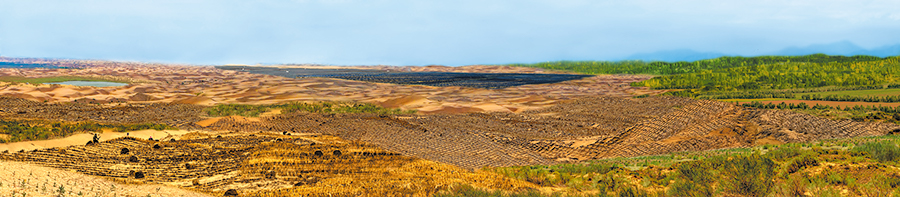
When thinking about deserts, countries such as Libya and Saudi Arabia come to mind, but China actually has more varieties of deserts than any place on the planet.
With nearly 18 percent of the nation's land mass classified as "desertified" — that's 1.69 million square kilometers — China's 12 major deserts are: The Taklimakan Desert, the Gurbantunggut Desert, the Badain Jaran Desert, the Tengger Desert, the Kumtag Desert, the Qaidam Basin Desert, the Kubuqi Desert, the Ulan Buh Desert, the Mu Us Sandy Land, the Hunshandake Sandy Land, the Horqin Sandy Land and the Hulunbuir Sandy Land.
In addition, stony deserts — barren wastelands that are made of pebble and rocks such as the Gobi Desert — also take up a significant portion of the desertified land.
Covering vast swaths of the northwest, north and northeast of the country, the threat of these deserts and their spread has existed for centuries.
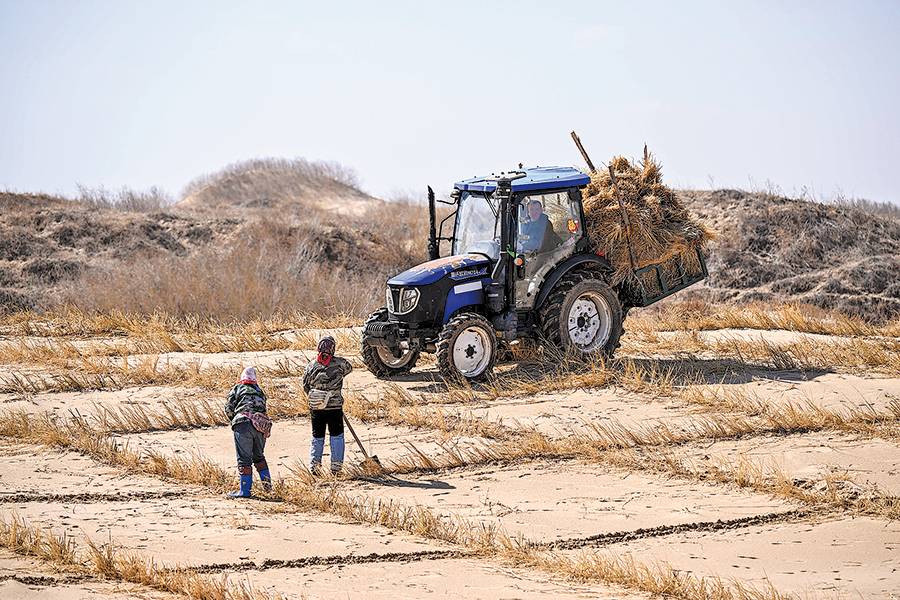
However, several generations of hardworking and dedicated Chinese people have made it their raison d'etre to push back these deserts. They've done this by thinking outside the box, or grid, planting trees and shrubs, and creating a "Green Great Wall" that spreads across 13 provinces and autonomous regions in northern China and protects over 150 million hectares of farmland.
In the 1950s, China was considered one of the "most desertified" countries in the world, with places such as Zhangwu county in Liaoning province in the northeast of the country consisting of 90 percent sandy area.
In 1978, the central government made a significant decision to implement the Three-North Shelterbelt Program across 13 provinces and autonomous regions in northern China to fight against desertification. Over the past 45 years, more than 45 percent of the desertified land has been controlled, 61 percent of the soil erosion area has been managed, and the forest coverage rate has increased from just over 5 percent to 13.84 percent.
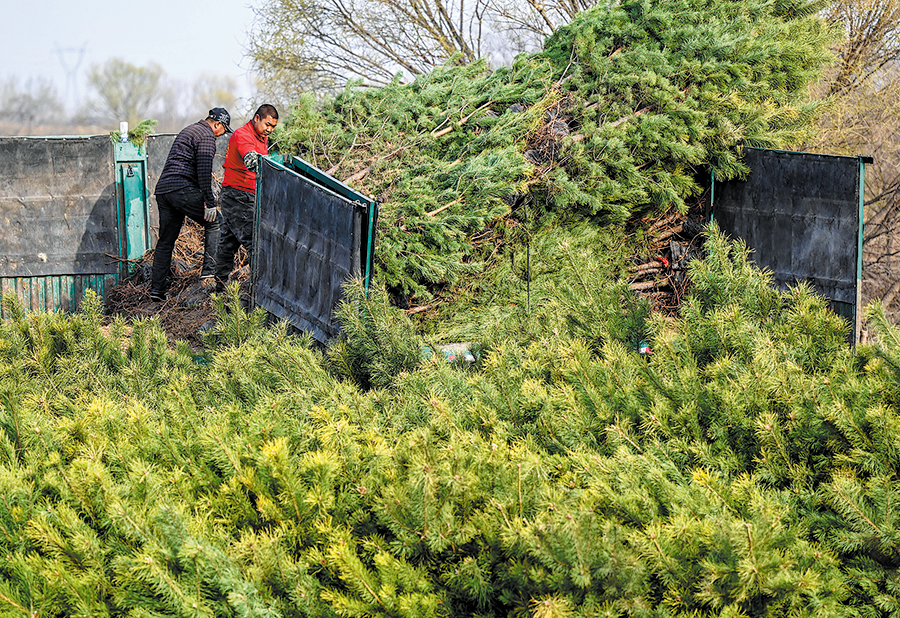
On June 6 last year, President Xi Jinping highlighted the period from 2021 to 2030, the sixth phase of the Three-North program, as the key phase for consolidating and expanding achievements in fighting desertification, during a meeting with officials in Bayannuur in the Inner Mongolia autonomous region.
More than ever, desertification control measures are backed by scientific research and the use of the latest technology, said Lu Qi, head of the Three-North program research institute.
"Each desertification control project is now planned based on the conditions and resources of different areas backed by research data. And people have reached a consensus that the goal of desertification control is to ensure that people's lives and development won't be threatened by deserts, which also need to be protected as they are essential parts of the ecological system," said Lu.





