Three imbalances on road to India's economic rise







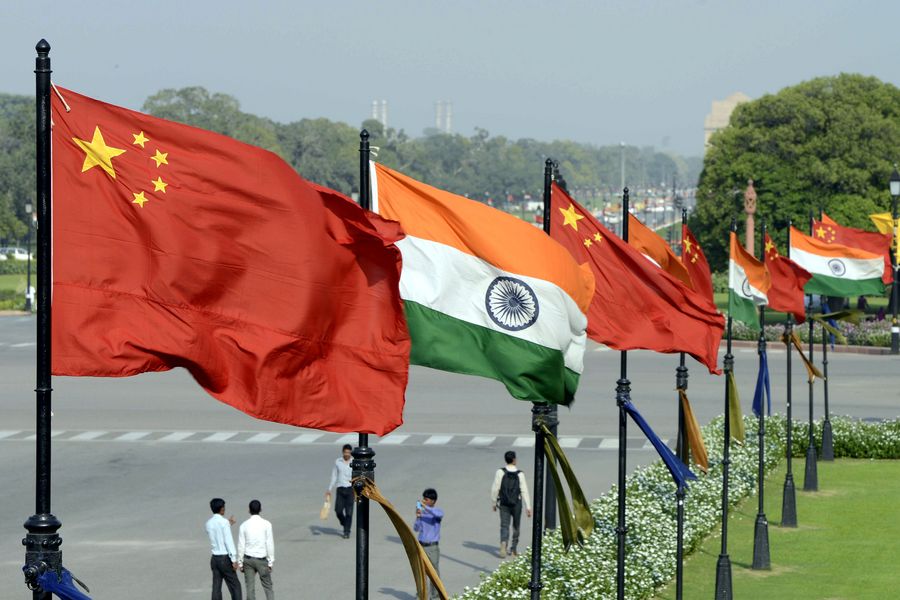
Indian Prime Minister Narendra Modi is preparing for a third term in office, but the just-concluded general election was different from the previous ones in that the overall voter turnout was lower than the previous elections, leaders of some political parties showed "election fatigue" and many voters might have voted against Modi.
Second, this election has seen the resurgence of the opposition, because of the general discontent with the government over rising unemployment and inflation, especially in provinces such as Haryana, Maharashtra, Uttar Pradesh and Bihar.
And third, religious fanaticism seems to be giving way to "bread and butter" problems in India, although young voters and farmer unions are more concerned about earning enough money and enjoying a share of India's development dividends in order to lead a decent life.
This election has not only exposed the problems of religion, caste, wealth gap, governance and corruption that have plagued India for decades, but also highlighted the urgency of correcting the "three imbalances". After all, the sustainable development of the Indian economy is a prerequisite for the country's strategic rise.
The first development imbalance India faces is the imbalance between manufacturing and services. In terms of industrial structure, India's manufacturing industry lags behind that of its service industry. India's services sector accounts for more than 50 percent of its GDP, while manufacturing accounts for only about 15 percent.
Although New Delhi proposed the "Make in India (2025)" initiative in 2014 to increase the share of manufacturing in GDP from 15 percent to 25 percent by 2025, according to the Reserve Bank of India (the country's central bank), the proportion of manufacturing in India's GDP declined from 18.7 percent in the 2021-22 fiscal year to about 17.7 percent in 2022-23.
Different from the traditional development path, India skipped the industrialization stage and shifted from agriculture-based to service-oriented development. This resulted in under-urbanization and the inability to create enough new jobs to take advantage of India's demographic dividend: a young workforce. If India's manufacturing industry continues to lag behind, it will hinder the upgrading of the service sector and aggravate the imbalance in India's economy in the long run.
The second imbalance is that between industry and agriculture. Nearly two-thirds of India's over 1.4 billion people live in rural areas, but the government has been implementing industry-friendly policies, rather than agriculture-friendly policies, to boost the economy. For example, during the two terms of the Modi government, India focused on establishing new factories through heavy state subsidies, which do not benefit large parts of the population including farmers. In fact, Modi's high-handed, sweeping changes in the agriculture policy without public consultation sparked the biggest and longest farmers' protests in the world.
The third imbalance is that between the public and private sectors. India's growth has been driven mainly by heavy state-led infrastructure spending and investment, while small and medium-sized enterprises have been cautious about increasing investments to expand their businesses. Also, the number of preservation jobs in India do not experienced increase during Modi's past 10 years' rule.
Correcting the three imbalances is necessary for India to make its "Make in India (2025)" initiative a success. But the other major problem is that India's workforce, in general, lacks the expertise to propel medium and high-end manufacturing.
Besides, India has not developed a manufacturing ecosystem to support its small and medium-sized enterprises. The relatively poor infrastructure and the less-supportive environment for foreign investment have prompted foreign investors to proceed cautiously when investing in India. As a matter of fact, in the 2022-23 fiscal year, gross foreign direct investment declined by 16.3 percent year-on-year — the first time in a decade — according to the Reserve Bank of India.
As such, India seems to lack the material basis for its strategic rise, and inclusive and sustainable development, although the trade frictions between China and the United States-led West could somewhat benefit India, because the Western developed countries are trying to isolate China's industry and supply chains from those of the rest of the world.
In such circumstances, can India accelerate its rate of growth? That depends on whether India can create a big enough market for other countries, provide public goods in greater volume to developing countries, especially Global South countries, and implement rules conducive to developing emerging technologies.
The contrast between China and India becomes even more evident when we compare their imports. In terms of raw materials and primary products, China's imports account for 3.8 percent of the global GDP while India's account for 0.9 percent. And in terms of industrial products, China's imports and consumption account for 50-60 percent of global consumption of industrial commodities, while India's share is between 2 and 6 percent. This shows India has a long way to go to become the next growth engine for the global economy.
Whether India can achieve sustainable and inclusive development to lay the foundation for its strategic rise, contribute more to global economic growth and become a "global leader" depends on whether it can correct the three imbalances.
The author is an associate professor at the National Institute of International Studies, Chinese Academy of Social Sciences. The views do not necessarily reflect those of China Daily.
If you have a specific expertise, or would like to share your thought about our stories, then send us your writings at opinion@chinadaily.com.cn, and comment@chinadaily.com.cn.