The Great Wall's construction was tailored to the diverse landscapes it traversed, with each terrain providing a foundation for its architectural marvels. Whether winding through rugged mountains or stretching across vast basins, the Great Wall seamlessly blends with its surroundings. In the Xinjiang Uygur autonomous region, both the Tarim Basin and the Junggar Basin play a crucial role in the Great Wall defense system. Numerous beacon towers in Xinjiang stand watch along the waterways. Initially constructed during the Han Dynasty, these towers continued to serve their purpose into the Tang Dynasty and some even persisted until the Qing Dynasty. Spanning the expansive Xinjiang Gobi, these beacon towers have stood for millennia as guiding lights amid the sands. Additionally, in Qinghai Province, nestled within the Qinghai-Tibet Plateau, remnants of the Great Wall are also visible.
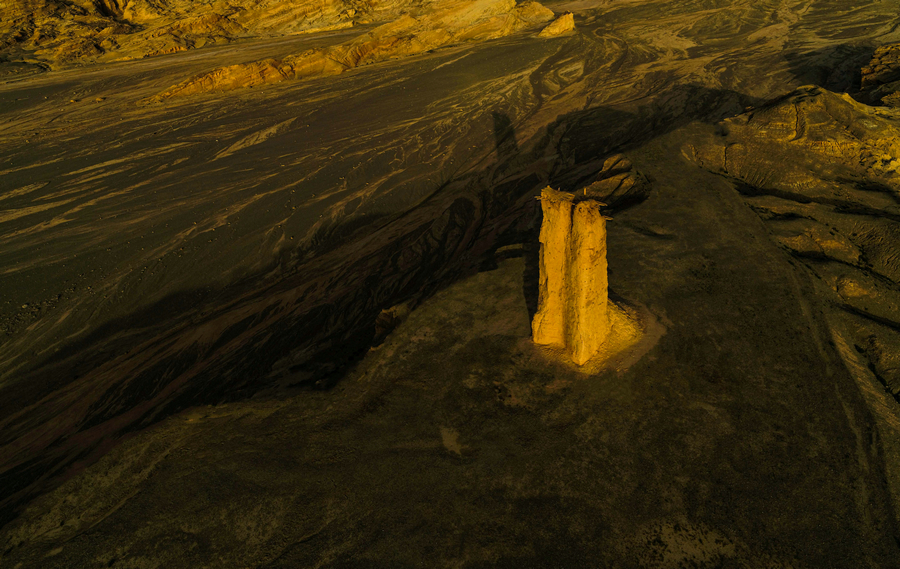
The beacon towers constructed in the Han Dynasty (206 BC- 220 AD) and Tang Dynasty (618-907): Following the unification of the Western Regions in the Tang Dynasty, new beacon towers, border garrisons, and post stations were built in the Western Regions on a basis of the Han Dynasty's tradition. These structures ensured the safety and efficiency of trade along the southern, central, and northern main arteries of the Silk Road, as well as the numerous branch lines traversing the Tianshan Mountains. Among these structures stands the Kizilgaha Beacon Tower, meaning "red outpost" in ancient Turkic. Originally constructed during the Han Dynasty and later refurbished during the Tang Dynasty, this tower, situated along the middle route of the Tang Silk Road, is the best-preserved relic of the Great Wall in Xinjiang. It features a rectangular design, reaching a height of approximately 13 meters, and showcases a sturdy rammed loess construction method. Once adorned with wood-pillared layers and adobe at the top, the tower's remnants now bear witness to the passage of time, with only a few scattered wooden stockades remaining. The upper middle part of its southern side has weathered into a distinctive groove shape, further illustrating the tower's ancient and enduring presence in the region.
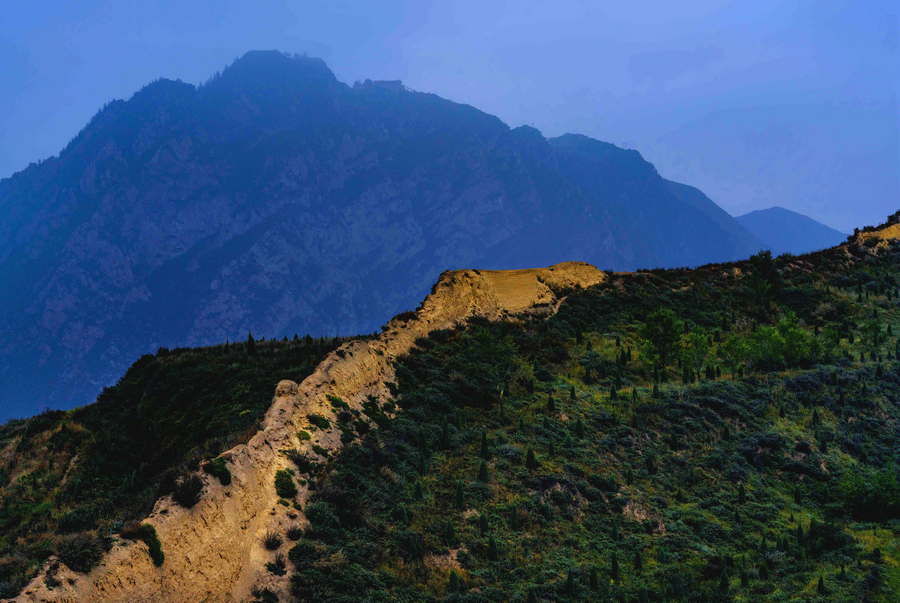
The Great Wall constructed in the Ming Dynasty (1368-1644): During the Ming Dynasty, there existed a unique defensive structure on the Qinghai-Tibet Plateau, separate from the Great Wall system of the nine frontier towns. This defensive structure is known as the Xining Guard Border Wall, also referred to today as the Great Wall of Qinghai. Its primary purpose was to defend against Mongolian forces. This defensive wall was first built in the mid-Ming Dynasty and was carried out in three phases over approximately fifty years. The project was completed in the 24th year of the Wanli Emperor's reign, in 1596. Stretching across the western region of Xining Guard, it forms a distinctive crescent shape. This architecture consists of walls, ditches, water gates and sluices for controlling water flow, and additional defensive measures such as cut and reshaped earth and stone cliffs.