


Hexi Corridor







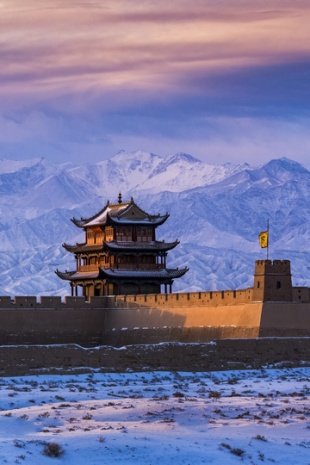
The Hexi Corridor extends from Wushaoling Mountain in the east to Dunhuang city in the west, bordered by the Qilian Mountain range to the south and various peaks like Longshou Mountain to the north. Spanning approximately 1000 kilometers in length and varying in width from a few kilometers to nearly 200 kilometers, its name originates from its corridor-like appearance and its location to the west of the Yellow River. This region assumes pivotal significance in the historical, economic, and cultural exchanges among diverse ethnic groups in ancient northern China, owing to its strategic location and distinctive cultural landscape. Within the Hexi Corridor, most sections of the Great Wall were erected during the Han (206 BC- 220 AD) and Ming (1368-1644) Dynasties. Some beacon towers from the Han Dynasty were further maintained and repurposed during the Ming Dynasty.
The Great Wall erected along the Hexi Corridor during the Han Dynasty (206 BC- 220 AD): Situated to the west of the Yellow River in Gansu province, the Great Wall along the Hexi Corridor played a pivotal role in fostering peace and stability. After Emperor Wu's successful conquest of the Hexi Corridor from the Huns, concerted efforts were made to consolidate control and establish governance infrastructure. This included the establishment of counties and the construction of fortified strongholds, culminating in the creation of four pivotal counties: Wuwei, Jiuquan, Zhangye and Dunhuang, revered as the "Fortresses for Han in the Hexi Corridor." These measures bolstered administrative efficiency and regional security. The construction of the Great Wall along the Hexi Corridor served multiple purposes. On one hand, it severed the Hun's connections with the Western Regions and curtailed their influence in that area. On the other hand, it became a crucial "base" and passageway for the Han Dynasty to expand westward and control the Western Regions.

Gansu Town in Ming Dynasty (1368-1644): Gansu Town stands as one of the earliest established among the nine border districts along the Ming Great Wall. The Hexi Corridor fell under its jurisdiction, where the towns, fortresses, beacon towers and border defense facilities operated in unison to protect both production and daily life. This interconnected network formed a vital system crucial for the seamless operation of military activities and civilian settlements, embodying the "frontier society" concept in Great Wall studies.
The Great Wall of the Ming Dynasty in the Hexi Corridor was primarily constructed using rammed earth. Various techniques were employed, including compacting earth with wooden frames, mixing sand with earth, incorporating cliffs as part of the wall, and carving walls directly into mountainsides. Additionally, trenches were dug as defensive measures. These construction methods reflect a key principle in building the Hexi Great Wall: leveraging the terrain to create strategic defenses. The defensive construction in the Hexi Corridor during the Ming Dynasty was largely influenced by the military situation of the time. Consequently, the peak of the Great Wall construction occurred during the reigns of the Jiajing, Longqing, and Wanli Emperors, driven by the frequent border conflicts.
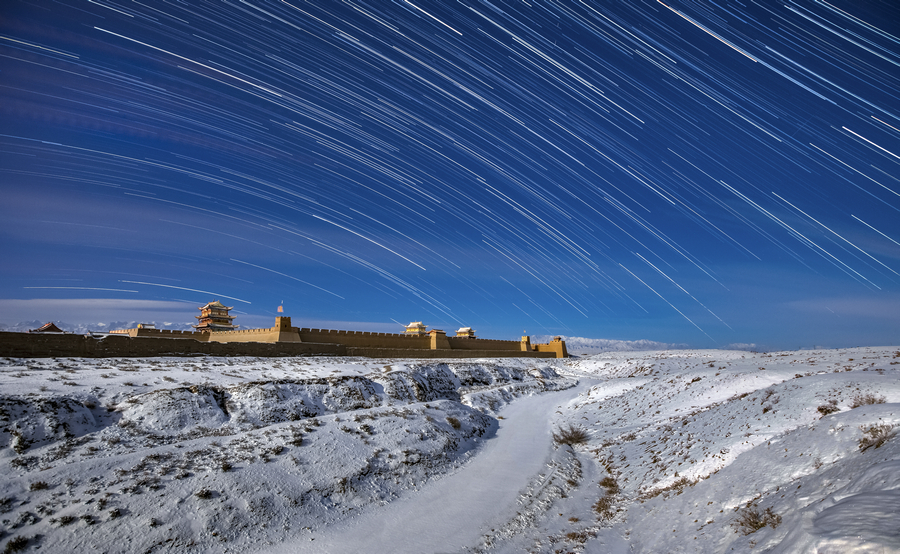
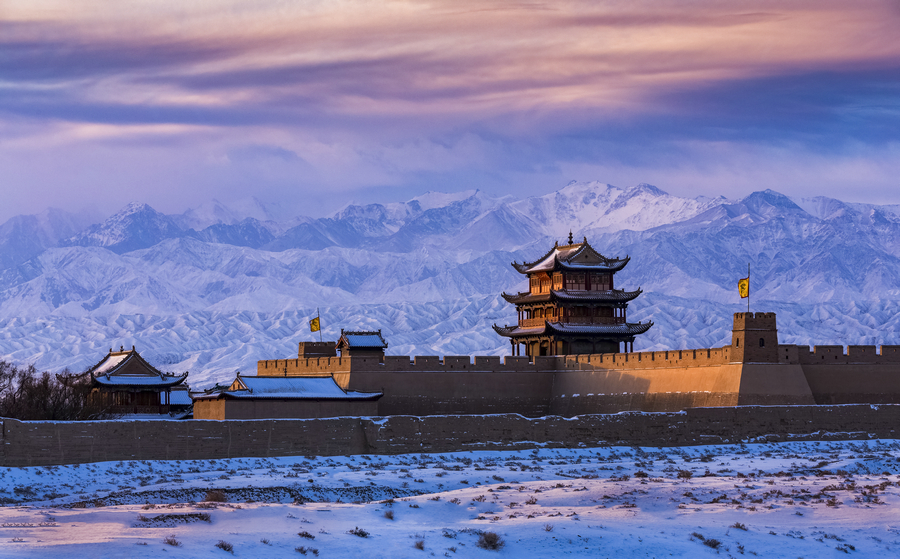
Jiayu Pass marks the westernmost end of the Ming Dynasty Great Wall. Construction began in 1372, and by 1394, the Suzhou Garrison was established as a military defense unit. During the Qing Dynasty, Suzhou was elevated to a directly governed prefecture, with Jiayuguan falling under its jurisdiction. From the Jiaqing to Tongzhi reigns, a patrol officer was appointed to oversee inspections and maintain order. Serving as the Ming Dynasty's farthest western frontier, Jiayu Pass symbolized a departure from the homeland. Its cities possess a unique charm, offering contrasting perspectives when viewed within and beyond the Great Wall.