



Global Security Initiative promotes peace







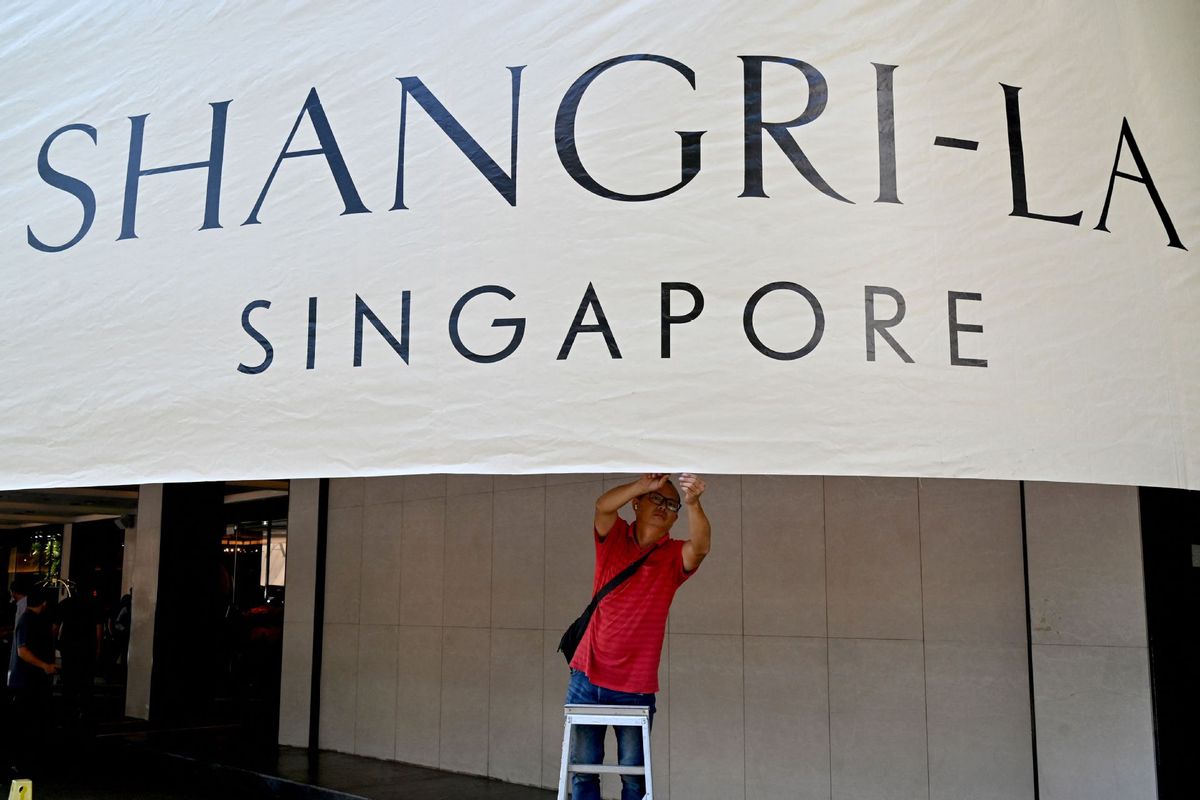
During the ongoing 21st Shangri-La Dialogue in Singapore, defense leaders and senior military officers from many countries are going to exchange ideas on security issues in the Asia-pacific region and the world as a whole.
China once again has sent a high-level delegation, led by the Minister of National Defense, to attend the dialogue. Against the background of the fast-changing international situation and increasingly complex power competition, peace and development are the most precious international public goods. Facts have proved that China is an active protector of peace and development in the Asia-Pacific and the world. The implementation of the Global Security Initiative is essential to peace and development.
Notably, the Asia-Pacific has been among the most peaceful and stable regions in the world during the past four decades, thus becoming the fastest-growing region in terms of economic and social development. A key reason is that most Asian countries are committed to handling state-to-state relations based on openness and inclusiveness, mutual respect, mutual benefit and peaceful coexistence.
The Five Principles of Peaceful Coexistence, which emerged in Asia 70 years ago, embodies the values of benevolence and equality of the Asian people, and echoes the Chinese traditional idea of "peace among all nations".
For 70 years, the Five Principles of Peaceful Coexistence have been recognized by all countries in the world for its importance in international relations because it vividly reflects the purposes and principles of the Charter of the United Nations and endows them with a visible, feasible and traceable connotation, which not only represents the new expectations of Asian countries for international relations, but also embodies the spirit of international law in which the rights, obligations and responsibilities of all countries are unified. The five principles have thus become an important criterion in international relations and contributed to the correct handling of state-to-state relations.
More than 20 years ago, China and the 10 ASEAN member states signed the Declaration on the Conduct of Parties in the South China Sea, which demonstrates the collective wisdom and spirit of cooperation between China and the members of the Association of Southeast Asian Nations, and become an event of great significance in the history of international relations.
Over the past 20 years, China and ASEAN have gradually found an effective path of enhancing mutual trust and managing differences within the framework of "10+1", accumulating experiences of successfully carrying out dialogue, cooperation and common governance, thus maintaining overall peace and stability in the South China Sea.
In contrast, the United States and NATO have caused wars and disasters in Europe and the Middle East over the past four decades. Nowadays, the US is trying hard to extend NATO into Asia-pacific security, which will add to the destabilizing factors in Asia and may even trigger conflicts, undermining stability and prosperity in the region.
At present, as the global economic recovery is weak, regional conflicts occur frequently, and global problems are aggravating. The world is entering a period of turbulent changes, and the Asia-pacific region's peace and development are facing new challenges. Particularly, some small geopolitical circles have widened the differences and contradictions among regional countries.
The US, ostensibly waves the banner of "freedom and openness", while actually it still suffers from the outdated cold war mentality. It is keen to manipulate ideological issues and spreading the "China threat" theory, in order to maintain its global hegemony and contain the development of other countries.
In East Asia, the US has been hyping up sensitive issues including the Taiwan question and South China Sea disputes, and has built exclusive circles such as QUAD and AUKUS, and pushed the Philippines to take provocative actions against China, seriously impacting the regional cooperation framework with ASEAN as its center.
The "Indo-Pacific Economic Framework" advocated by Washington not only excludes China, but also deliberately includes seven of the 10 ASEAN members. By excluding the other three ASEAN members and China from the framework, it is undermining the unity of ASEAN and the Asia-Pacific regional order.
The US' intention is to create camp antagonism and promote regional tensions, so as to induce and intimidate regional states to take sides between China and the US, strategically encircling China. In the Middle East, the US has repeatedly vetoed UN Security Council draft resolutions on the Israel-Palestine conflict, drawing condemnation from the international community.
The more volatile the world is, the more we must actively implement the Global Security Initiative to safeguard the hard-won peace and development. In recent years, China has made a profound proposal to help build a global community with a shared future, and put forward the Global Development Initiative, the Global Security Initiative and the Global Civilization Initiative, promoting the building of a better world.
China has always practiced true multilateralism, which is rooted in the open and inclusive Chinese civilization, and is crucial for peace and development. In particular, the Global Security Initiative has gained international consensus on pursuing security through cooperation, advocated a new security path of dialogue rather than confrontation, partnership rather than alliance, win-win rather than zero-sum, and provided Chinese solutions to the international security challenges, which has been acknowledged by more than 100 countries and international organizations.
Also, the Global Security Initiative provides a viable way to resolve conflicts and control risks. China has been actively implementing the initiative, and has contributed greatly to the reconciliation between Saudi Arabia and Iran, as well as the efforts to end the Ukraine crisis and the Israel-Palestine conflict. Such efforts have contributed China's wisdom and strength to the maintenance of regional and global peace.
China firmly supports ASEAN's centrality in regional cooperation, is opposed to "taking sides", group confrontation and a "new Cold War", and persists on peacefully resolving differences and disputes among countries, demonstrating that it is a responsible major country.
Today, China and ASEAN are comprehensive strategic partners and largest trading partners to each other. China-ASEAN relations have become the most successful, fruitful and dynamic model of regional cooperation, providing a vivid example for building a global community with a shared future. With China's development entering a new era and ASEAN's development entering a new stage, China continues to use diplomacy to develop foreign relations, placing ASEAN in a priority position, and is willing to work with ASEAN members to maintain the UN-centered international world order, expand practical cooperation and jointly safeguard regional peace and development.
The author is an associate professor at the PLA National Defense University.
The views don't necessarily reflect those of China Daily.
If you have a specific expertise, or would like to share your thought about our stories, then send us your writings at opinion@chinadaily.com.cn, and comment@chinadaily.com.cn.





