Factory automation looking more like us







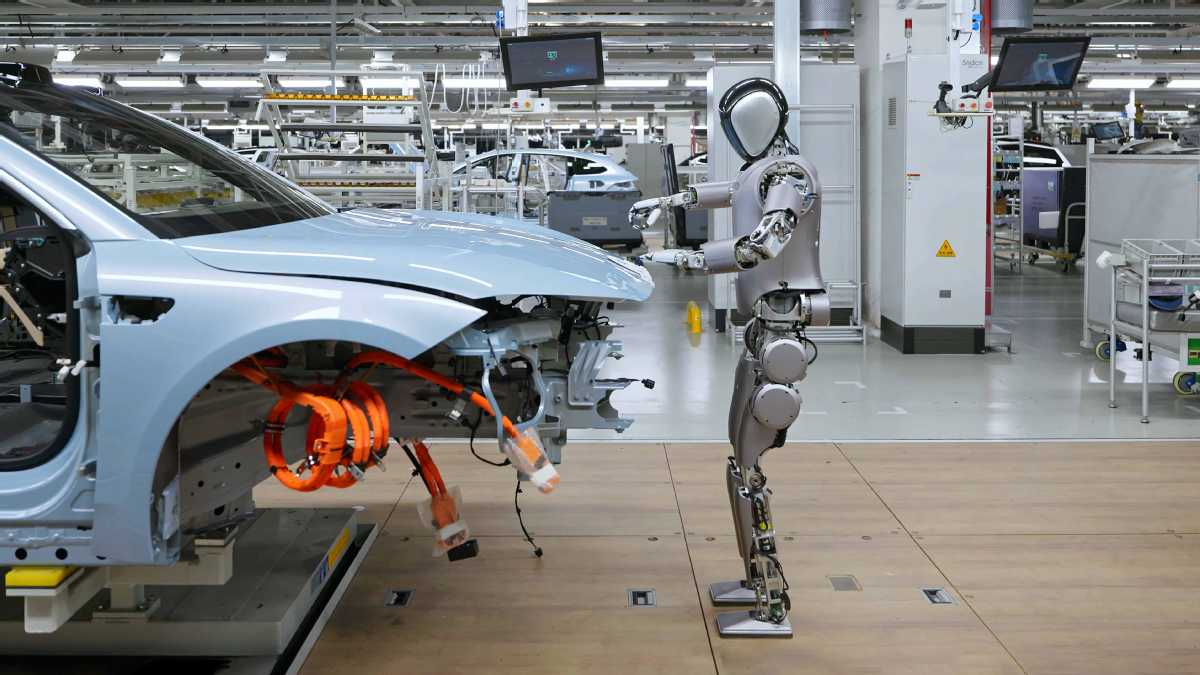
In an auto factory, a humanoid robot effortlessly inspects car door locks, tests seat belts, examines headlamp covers and even affixes car emblems, further blurring the distinctions between humans and machines.
The robot, Walker S, is produced by Chinese AI and humanoid robotics company UBTech Robotics. This is not the first time that the company's humanoid robots have created an internet sensation, as it works hard to commercialize the cutting-edge technology into more sectors for wider adoption.
In December, for the first time in its 132-year history, the Hong Kong Stock Exchange's opening bell was rung by UBTech Robotics' humanoid robot, floating the Shenzhen-based firm on the bourse for its final initial public offering of 2023.
Said by many to be "China's first humanoid robot stock", UBTech Robotics raised more than HK$1 billion ($128 million) on that day, as many domestic companies race to commercialize their humanoid robots.
Zhou Jian, chairman and CEO of UBTech Robotics, said, "After going public, we will continue to improve the technological capabilities of humanoid robots, and use innovative technologies to solve major social problems."
Zhou said the company focuses on three major application scenarios for humanoid robots — manufacturing, commercial services and home companions.
The global humanoid robot market is expected to grow at a rate of 52.8 percent annually from 2023 to 2030, according to market research company ReportLinker.
However, humanoid robots are still in their very early stages of development. There are shortcomings in the design of humanoid robots, and their functionalities are not fully in line with customer needs. Technological hurdles and cost challenges also exist, experts said.
"As a manufactured product, humanoids can only have a solid market when costs are lowered to an acceptable level," said Guo Qianqian, an analyst at Essence Securities.
But using the technology available today, Goldman Sachs Research forecasts significant demand for humanoid robots in structured environments like manufacturing in the future. That could include use cases such as electric vehicle assembly and component sorting. Industry research indicates that about 70 percent of manufacturing in China is already done by machinery and automation. Since humanoids are more flexible and capable of adapting to complex terrains, Goldman Sachs analysts believe they can expand the market for industrial automation.
Humanoids are particularly appealing for tasks that are "dangerous, dirty, and dull", Goldman Sachs Research said, adding that there would be potential demand for robots in mining, disaster rescue, nuclear reactor maintenance, and chemicals manufacturing.
Customers may be willing to pay a higher price for robots that can do dangerous jobs that people are reluctant to do. Importantly, robots could also provide labor in sectors that don't have enough workers, Goldman Sachs added.
Labor is still indispensable in the era of industrial automation. However, going forward, humanoid robots can collaborate with traditional automation equipment to solve complex scenarios of flexible unmanned operations, and independently complete difficult tasks, such as torque tightening and material handling, Zhou from UBTech Robotics said.
The company is exploring the application of humanoid robots in industrial scenarios, such as new energy vehicles and smart logistics, with leading domestic enterprises. Meanwhile, it is only a matter of time before humanoid robots enter the home, as they become more intelligent and provide more services to people, Zhou added.
UBTech Robotics has also unveiled a smart healthcare strategy with a string of products and strategic cooperation agreements with companies such as Medical Care Service Co Inc, which is better known as MCS, from Japan.
The move also comes as UBTech Robotics eyes serving China's growing population of senior citizens.
UBTech Robotics said it now serves 900 corporate clients from more than 50 countries, focusing on artificial intelligence education, smart logistics, eldercare and commercial services.