How AI models can fight climate change








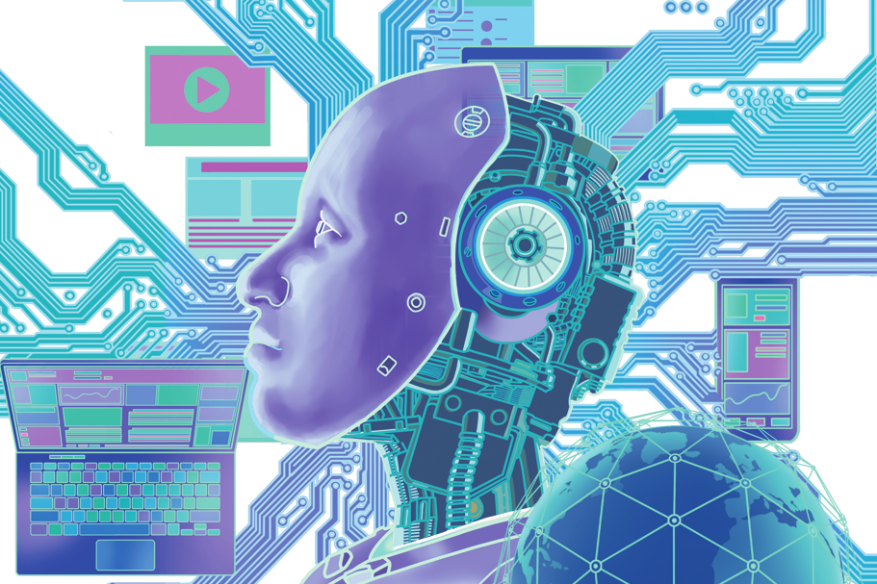
The world is familiar with artificial intelligence (AI) models such at ChatGPT. These "foundation models" have triggered global excitement and interest in AI. A next step in this journey is sector-specific AI models that can be tailored for specific industries.
Such models can also be used to address development challenges such as climate change. For example, an AI-driven solution, "Agrepreneur", has developed an AI-powered agri-fintech platform that provides real-time advice to smallholder farmers on farm management, including how they could optimize available resources and prevent crop disease. It also uses machine learning algorithms to assess creditworthiness.
Machine learning is also used to forecast the amount of farm inputs farmers will need for their crops so they can streamline their procurement processes.
"Viamo" is another AI-driven solution. It is available via voice calls, allowing farmers even from areas with limited or no internet connection to get guidance on sustainable agriculture practices. Natural language understanding techniques and a pre-trained large language model, along with speech-to-text and text-to-speech features, are used to enable the farmers to get critical information from the app.
"ClimateGPT" is another example. It was trained on interdisciplinary research to provide users with a holistic understanding of climate change.
Sector-specific AI models can be particularly useful for Asia and the Pacific region, which is highly vulnerable to extreme weather events due to climate change. Users can also go small by creating a model that informs them of the chances of flooding or drought in a specific area at a given time.
But how can this technology be leveraged to improve planetary resilience?
The advantage offered by sector-specific models is that they have relatively minimal requirements, unlike other tools that require millions of dollars of initial funding, human resources and government support.
It is possible to build a sector-specific model regardless of whether you are going to develop it as an individual or as an institutional representative. The requirements may be higher depending on the size of your dataset and how complex your model or application may be, but you can build a simple one using a laptop and a small dataset to train the model.
An AI model can be built through a series of steps that include defining its scope and purpose to establish clear objectives and parameters, and then preparing the training data and breaking it into smaller units. It can then be customized using platforms and frameworks, such as GitHub and Hugging Face, for customization, rather than doing it from scratch.
Following customization, the model can be trained on the data, with continuous evaluating and fine-tuning using feedback mechanisms and metrics to ensure accuracy and coherence. Multiple iterations may be necessary to optimize the model's responses. A beta testing phase engaging diverse user groups can be used to validate the model's functionality and check for biases, which enhances its reliability before wider deployment.
Depending on the complexity of the model, your available resources and data, and your familiarity with the programming language, it can take anywhere from a few hours to weeks before you have a functioning climate model ready for deployment.
AI, like other forms of technology, has downsides and risks. Responsible AI frameworks, which are now being developed and mainstreamed, need to be adhered to. In the next year or two, smaller models will come into play under these responsible AI frameworks, similar to what we saw with guardrails around e-commerce transactions, social networking, and the internet with respect to the dark web.
Users who develop their own sector-specific model need to be aware that AI models are heavily dependent on data. Poor-quality data will result in poor-quality analyses. In addition, biases in the data may be reflected in what the AI model will churn out. For example, using gender-blind data to train AI models can be detrimental to women, who face unique challenges during times of crisis.
AI can serve as a force multiplier that development institutions can use in their work. In the context of climate change, sector-specific AI models can be used to accelerate progress on climate action, adapt to the changing climate to resolve contemporary issues in adaptation, and reflect the overall impact of climate change across the planet.
Depending on the model, the technology can be used to show global trends, or customized so that one developed for one country can be adjusted for use in other countries. Having these models could be the difference between climate resilience and vulnerability.
As we harness AI's potential, specialized models to address common challenges such as climate change offer a promising path forward. If developed, these models could be a critical aspect of the AI solutions that set a new course for planetary sustainability and resilience.
The author is director, Digital Innovation and Architecture, Information Technology Department of the Asian Development Bank.
The views expressed are those of the author's and do not necessarily reflect the views of ADB, its management, its board of directors, or its members, or that of China Daily.
If you have a specific expertise, or would like to share your thought about our stories, then send us your writings at opinion@chinadaily.com.cn, and comment@chinadaily.com.cn.