Hope for cooperation in new region








Japan's Global South diplomacy should not supplement the US' global strategy. Instead, Japan should explore China-Japan collaboration in Global South countries in various fields
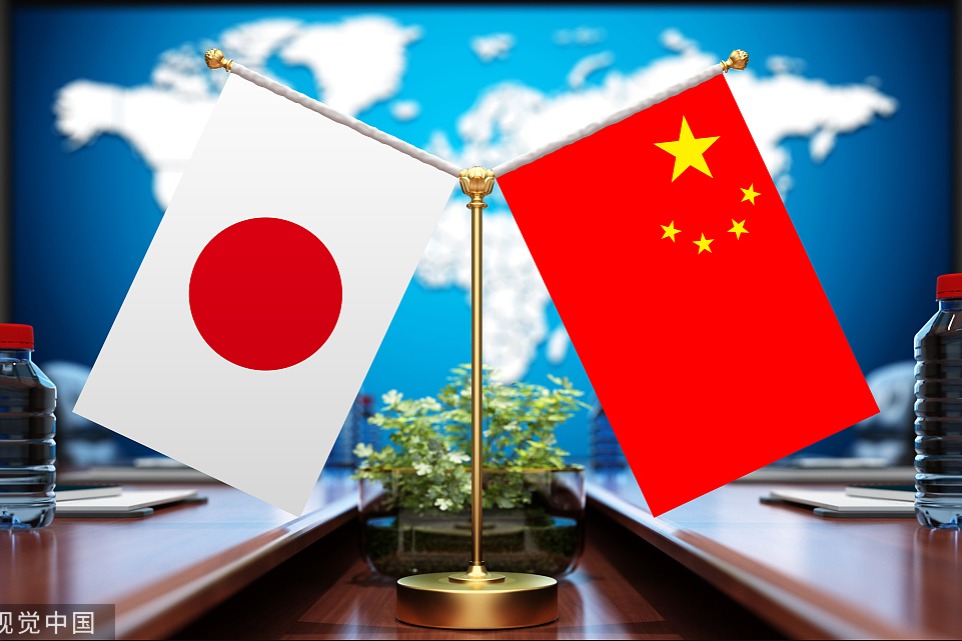
The annual Diplomatic Bluebook that Japan's Foreign Ministry published in April points out the need for cooperation in China-Japan relations, reinstating the expression "mutually beneficial relations" for the first time in five years, which sends a positive signal.
However, the Bluebook retains the previous edition's perception of China, positioning it as the greatest strategic challenge Japan has ever faced. Japan is sending contradictory, and thus confusing signals. On the one hand it claims to promote mutually beneficial relations with China, and on the other hand, it spares no efforts to portray China in a negative light.
Japan's self-contradictory China policy manifests in its "Global South" diplomacy.
Earlier this month, Japanese Prime Minister Fumio Kishida visited Brazil and Paraguay, while Japanese Foreign Minister Yoko Kamikawa embarked on a tour of Africa and South Asia. Both diplomatic tours were reportedly aimed at aligning "Global South" countries with the G7 and reducing their dependence on China. In a similar vein, Kishida paid visits to four African countries — Egypt, Ghana, Kenya, and Mozambique — ahead of the G7 summit in Hiroshima last year.
Recognizing the collective rise of developing nations and the consequential shift it has brought to the global order, Japan included the phrase "Global South" to its Diplomatic Bluebook for the first time last year. However, if Japan's Global South diplomacy revolves around containing China, it will not help build mutually beneficial relations between the two neighbors, and will limit Japan's ambition to play a larger role in global affairs.
First, aligning Japan's Global South diplomacy with China-Japan cooperation in third countries will create wider strategic space for the country.
Back in 2018, the two countries reached a consensus on deepening their strategic partnership, a major component of which is cooperation in third countries. As developing countries need large amounts of capital, technology and expertise to develop their economy, cooperation between China and Japan, the world's second and fourth-largest economies, will bring immense benefits to developing countries while improving the two countries' mutual trust.
However, developing country cooperation, which is an important platform for China and Japan to build mutually beneficial relations, is viewed in a negative light by Japan. For instance, China has helped build high-speed railways in Southeast Asian countries. Japan, which has close economic and trade ties with members of the Association of Southeast Asian Nations, could have contributed to boosting connectivity in the region. Regrettably, Japan regards China's efforts to bolster regional integration with skepticism, perceiving China-aided infrastructure projects as "debt traps" driven by geopolitical motives.
That being said, Asia's progress in infrastructure integration has not halted because of Japan's negative perceptions, and countries on the Indo-China Peninsula share strong demand for cross-border railways.
The opening of the China-Laos Railway has turned Laos from a landlocked country to a land-linked one. The Jakarta-Bandung High-Speed Railway, the first of its kind in ASEAN, marks an end to the view that high-speed railways are an unaffordable luxury for the region. Japan has thus missed an opportunity to team up with China in advancing regional integration through collaboration in third countries.
Second, Japan's Global South diplomacy should be based on the recognition of developing countries' growing aspirations for strategic autonomy.
The Ukraine crisis has dramatically changed the strategic thinking of Japan. The new perception is that the world is divided into three camps — one led by the United States, Japan and Europe, another led by China and Russia, and the third one comprising a number of emerging countries. Japan views major power competition as the principal feature of international relations, and the protracted China-US rivalry as giving rise to a fault line along a "democracy versus authoritarianism" divide.
To make up the leadership deficit of the US-led international order, Japan has proactively taken the job of drawing Global South countries over to the Western bloc.
This binary worldview divides the globe into two opposing blocs — the Western alliance and the China-Russia partnership, with the Global South being a wrestling ring for geopolitical competition between the two blocs. This worldview hinders Japan from seeing the aspirations among developing countries for strategic autonomy. Take Brazil as an example. As the largest country in South America and a representative of the Global South, Brazil is committed to maintaining strategic independence and thus shows little interest in bloc politics.
During his visit to China in April last year, Brazilian President Luiz Inacio Lula da Silva met leaders of major Chinese enterprises, including Huawei, BYD, and China Communications Construction. Brazil did not exclude Huawei from its 5G networks despite Western countries' crackdown on the Chinese telecommunications giant on the pretext of so-called national security concerns. Neither did Brazil reject China Communications Construction because of the so-called debt trap accusations leveled against it.
Underpinning the enhanced cooperation between Global South countries has solid socioeconomic foundations. During his China visit, Lula proposed creating a peace club comprising major developing countries to broker a cease-fire between Kyiv and Moscow, and called for the US to stop fanning the flames of the conflict. In the face of US' criticism, Lula did not waver, and insisted it was Europe and the US that were prolonging the conflict.
Japan's Global South diplomacy should not serve as a supplement for the US' global strategy. Instead, Japan should explore China-Japan collaboration in Global South countries in economic, political and diplomatic fields. As a major importer of energy from the Middle East, Japan can also join China in mediating the conflicts in the region.
In a word, "building mutually beneficial relations between China and Japan" should not be merely a slogan, but a concrete goal to strive for. Cooperation in the Global South is an important area for the two countries to forge stronger relations.
The author is an associate professor of international relations at Niigata University in Japan and a nonresident senior fellow at the Center on Contemporary China and the World at the University of Hong Kong. The author contributed this article to China Watch, a think tank powered by China Daily. The views do not necessarily reflect those of China Daily.
Contact the editor at editor@chinawatch.cn.