


Erhu made in melodic meicun still producing Wuxi's greatest hits







Masters continue to craft traditional Chinese instrument with skill and dedication
At Guyue Qinfang, a time-honored erhu workshop in Meicun town of Wuxi, Jiangsu province, workers' making and playing of the traditional Chinese two-stringed instrument resonates with both superb craftsmanship and enchanting musical artistry.
Often known by Westerners as the Chinese violin, the instrument, which is believed to have originated during the Tang Dynasty (618-907), is deeply rooted in Xinwu district of Wuxi.
Hailed as the Chinese hometown of erhu, Meicun in Xinwu district is known for its association with compositions such as the famous masterpiece Erquan Yingyue, or The Moon Reflected on the Erquan Spring, by legendary local figure Hua Yanjun, better known as Abing. The town has also cultivated a long list of master erhu-makers, including Wan Qixing and Lu Linsheng. In 2011, Meicun's erhu-making technique was listed as a Jiangsu provincial intangible cultural heritage.
Huang Jianhong, an operator at Guyue Qinfang and an inheritor of erhu-making technique, credits his career success to master Wan. In 1995, Huang, who was then 27 years old, quit his job as a driver to become an apprentice of Wan, who is his father-in-law.
"In my teenage years, I often heard the sound of erhu around Meicun town, but I didn't know this instrument was locally produced near my home," Huang said. The mystery was not uncovered until the young man became part of Wan's family and joined the operation of Guyue Qinfang, which Wan had set up in 1992.
"There were only four people with Wan to learn about erhu-making at that time. The instrument looks simple in its appearance, but making it requires both physical strength and technical skills," Huang added.
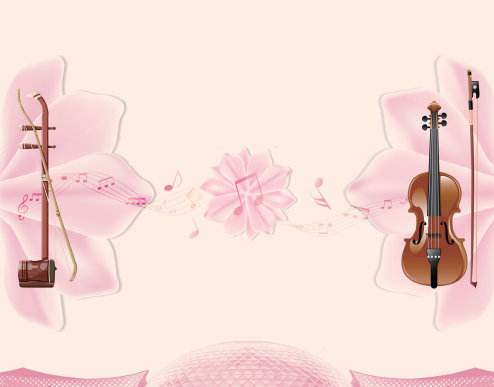
Erhu is comprised of a sound box, a long neck and two tuning pegs. Two strings extend from the peg to the bottom of the chamber. Traditionally, the side of the chamber where the strings are positioned is adorned with python skin. The bow used with the erhu typically consists of a bamboo rod strung with horsehair.
Erhu-making involves several intricate processes including wood selection and body shaping, with more than 100 steps, Huang said, adding: "Each step is interdependent and connected."
Three decades after becoming an apprentice, Huang continues to hone the skills he's now passing along to the next generation of craftsmen.
"In the 1990s, we made this instrument to earn a living. It was sold for about 100 yuan ($13.81). But now, we hope that our erhu brand and products can be more widely used to promote the erhu culture that originated in Wuxi," Huang said.
Currently, Huang, together with Wan and his brother-in-law, who is also an erhu-making master, runs the business of their Guyue Qinfang workshop, which now has more than 30 workers and apprentices and occupies more than 3,000 square meters.
Ma Yunfei, 39, a veteran erhu player from Panjin, Northeast China's Liaoning province, embarked on a new chapter in his career when he decided to join Huang's workshop to learn the craft of erhu-making.
Ma learned to play the instrument at age 7 and eventually became a member of the Guangdong national traditional orchestra in South China and the Jilin provincial opera theater before joining Guyue Qinfang. After touring the world with his orchestra, he developed a desire to learn to make erhu himself.
"I knew how to play erhu well but I knew nothing about how the instrument that I played since my childhood was produced," Ma said. He researched online to find a place that has master erhu-makers, and discovered that Wuxi was the best option.
"Wuxi has masters like composer Liu Tianhua and a strong tradition of master-apprentice inheritance in both playing and making erhu. Therefore, for anyone learning to play the instrument or studying its development, Wuxi is the place to be," Ma said.
Having worked in Huang's erhu workshop for more than five years, Ma now shares his performances and tutorials through the short video platform Douyin, where his channel has more than 1 million followers. He gives full play to erhu to arrange or innovate modern songs, and by contrasting the traditional Chinese musical instrument with modern pop culture, he's gained many young fans.
"During the peak of my livestreaming on my channel, I had up to 20,000 viewers," said Ma, whose videos showcase innovative erhu playing. His students come from various professions, including business owners, lawyers and doctors from all over China as well as Japan and South Korea.
"My students are aged from 7 to 70. The instrument is quite well received even within the strong erhu music atmosphere in Wuxi," Ma said.
"Before the age of 30, I wanted to learn as many things as possible and see more of the world. Now, I have gained so much knowledge and experience. Here in Meicun of Wuxi, I have a great opportunity for deep learning about erhu-making and hope that I can become a master in maybe 20 years," he added.
As early as 1965, Meicun established an ethnic musical instrument factory and began the production of erhu. Today, the town is a major hub of the erhu industry, boasting the country's first theme park dedicated to the instrument.
Meicun is home to nearly 20 erhu makers that employ more than 200 workers and produce nearly 50,000 instruments annually, with about 5,000 of those being exported.