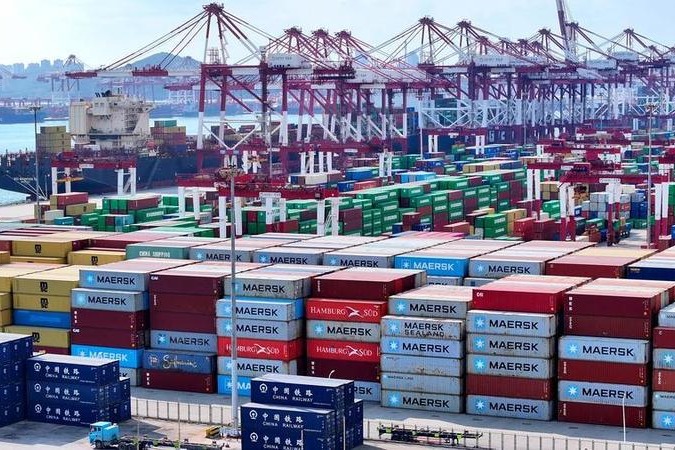
'Jing-Jin-Ji' turning into a mega economic region








A grand plan for the coordinated development of Beijing, Tianjin and Hebei province was unveiled in February 2014, giving birth to a major national strategy. The Beijing-Tianjin-Hebei (Jing-Jin-Ji) regional coordinated development plan is aimed at achieving better integration and more balanced regional development, by addressing regional income disparities and reducing pollution levels while promoting innovation-driven economic growth.
In the 10 years since the unveiling of coordinated development plan, the economic prowess of the Jing-Jin-Ji cluster has greatly increased. The total economic output of the Jing-Jin-Ji cluster in 2023 exceeded 10.4 trillion yuan ($1.44 trillion), 1.9 times as large as 2013, indicating the coordinated development and integration of Beijing, Tianjin and Hebei are bearing fruit.
In the past 10 years, more than 3,000 manufacturing enterprises have been relocated from Beijing to Hebei and Tianjin, about 1,000 markets and logistics centers have been shifted from the capital or upgraded, and over 9,200 hectares of land freed up and "afforested "after the demolition of illegal buildings in Beijing, according to the Jing-Jin-Ji joint work office. These developments have directly or indirectly impacted the lives of more than 100 million people.
The impressive growth of China's megacities has long been a driver of overall economic growth. Now, the country has embarked on an ambitious new endeavor — integrated development of urban clusters including the Jing-Jin-Ji cluster — to achieve balanced regional development nationwide.
The coordinated development plan acknowledges the strong interconnection between Beijing, Tianjin and Hebei. As the capital of China and a global IT and innovation hub, Beijing has faced the problems of overpopulation, traffic congestion and air pollution. Tianjin's challenge is how to capitalize on its advantageous location and status as a bustling port city. And Hebei faces the challenge of translating its extensive land, natural and human resources into economic gains. The coordinated development of the three regions will help overcome these and many other challenges.
A concrete embodiment of this vision can be seen in Xiong'an New Area, a meticulously planned city about 100 kilometers southwest of Beijing. The Xiong'an project was proposed in 2017 with the aim of creating a sustainable, technologically advanced and livable urban area which can absorb the non-capital functions of Beijing. Xiong'an is expected to cover about 2,000 sq km and accommodate about 2 million people.
Xiong'an holds a significance that goes beyond being a mere satellite city. It has already achieved remarkable success in its first five years, attracting an impressive $57 billion in investment, with major companies including Alibaba, Tencent and the State Grid Corporation of China having already established a presence there.
Also, coordinated development has made travel between Beijing, Tianjin and Hebei a lot easier, as people can now reach Beijing from Tianjin in a mere 30 minutes and Beijing from Xiong'an in 20 minutes. Plus, collaboration between the three places has drastically reduced air pollution and improved the air quality in the region. As the Ministry of Ecology and Environment said, there has been a significant decline in the average concentration of PM2.5 in the Jing-Jin-Ji region between 2013 and 2020.
Another important development is the integration of public services and the social welfare system. The Jing-Jin-Ji medical insurance plan has made it convenient for residents to use their medical insurance card throughout the region to get medical treatment, streamlining the healthcare process.
Besides, coordinated development has significantly enhanced the global competitiveness of the region and made it an increasingly attractive destination for multinational corporations and foreign investors.
The integration of Jing-Jin-Ji will yield benefits to not only the Chinese people and domestic enterprises. China's northern heartland is being positioned as a formidable global economic powerhouse, capable of complementing, more than competing with, the influential Guangdong-Hong Kong-Macao Greater Bay Area and the Yangtze River Delta Region.
But achieving full integration of Beijing, Tianjin and Hebei poses its own set of challenges. Coordinating the policies and budgets of three administrative regions is a big challenge. Additionally, the COVID-19 pandemic disrupted cross-border movement and economic activity.
Despite these facts, the authorities remain committed to integrating Beijing, Tianjin and Hebei, with the central government giving this ambitious project the utmost importance and financial support and policy guidance to ensure it is a grand success, and local authorities setting a good example of working together, knowing that it will have a positive impact on the future of northern China.
The Jing-Jin-Ji coordinated development plan, which has shown China is capable of achieving balanced regional development, will likely inspire and guide other densely populated urban areas, not only in China but also worldwide, to implement similar coordinated development plans.
The author is a Pakistani political analyst, journalist, and communication expert. The views don't necessarily represent those of China Daily.
If you have a specific expertise, or would like to share your thought about our stories, then send us your writings at opinion@chinadaily.com.cn, and comment@chinadaily.com.cn.