



NATO's meddling in Asia-Pacific threatens regional peace







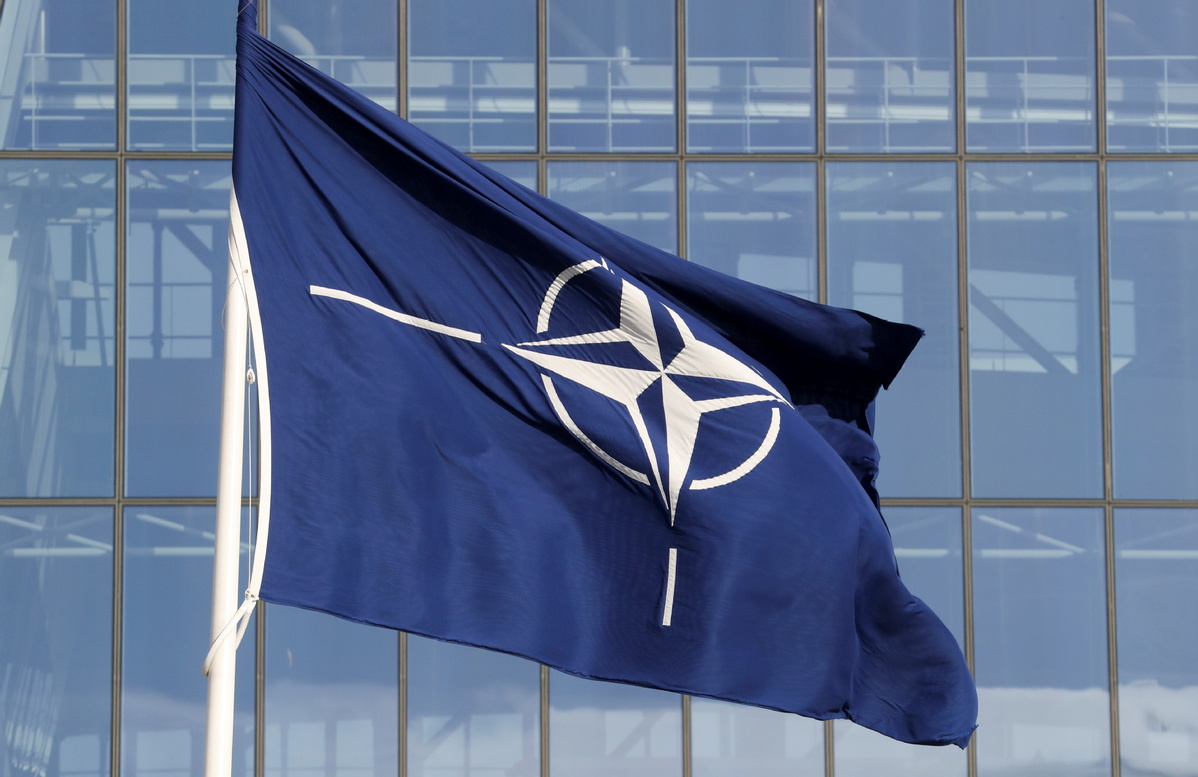
The North Atlantic Treaty Organization (NATO), now in its 75th year of existence, has outlived its mandate and is clinging to life by fanning flames beyond its scope.
On April 4, 1949, led by the United States, 10 European countries plus Canada signed the North Atlantic Treaty in response to the so-called "threat posed by the Soviet Union."
After the Soviet Union disintegrated in the 1990s, however, the military bloc did not dissolve and in reverse, extended its sinister grasp beyond its treaty-defined geographical scope eastwards voraciously, expanding its membership to 32 today. In recent years, the Asia-Pacific region has been its new prey.
Analysts warned that in its attempt to interfere in the Asia-Pacific, NATO is exporting "malicious poison to Asia," posing a threat to regional security and stability, and hindering the region's development.
ENCROACHING ASIA-PACIFIC
The US government plans to invite Japanese Prime Minister Fumio Kishida to the July NATO summit in Washington this year, reported Japanese daily Sankei Shimbun. It would mark Kishida's third consecutive year attending NATO summits.
In June 2022, leaders from four Asia-Pacific countries — Japan, South Korea, Australia and New Zealand — attended the NATO summit for the first time in Madrid, Spain. In July 2023, during the NATO summit in Lithuania's capital of Vilnius, NATO member leaders met with leaders from the four countries, showcasing their closer relationship.
As early as 2006, then US Ambassador to NATO Victoria Nuland proposed the concept of "global partnership," aiming to expand NATO's global influence by establishing contact mechanisms with Japan, South Korea, Australia and New Zealand.
From 2012 to 2014, NATO signed an Individual Partnership Cooperation Program with the four countries respectively.
In 2014, NATO proposed the Partnership Interoperability Initiative to allow other countries to participate in NATO-led military operations. The four Asia-Pacific states all joined the platform.
NATO also tried to establish a liaison office in Tokyo as its first operational unit in the Asia-Pacific region but had to shelve the plan due to opposition from France.
Additionally, some NATO subordinate agencies have actively absorbed Asia-Pacific countries. South Korea and Japan joined the NATO Cooperative Cyber Defence Center of Excellence in 2022. Australia and India have also joined this mechanism.
Meanwhile, NATO members have increased their military activities in the Asia-Pacific region in recent years. In 2021, Britain dispatched the HMS Queen Elizabeth aircraft carrier strike group to the Asia-Pacific, which included vessels from the United States and the Netherlands. A US Naval Institute's commentary said that the involvement of Dutch warships gives the fleet a "true NATO character."
The same year, Germany dispatched its frigate "Bavaria" to the Asia-Pacific. Canadian warships have also been active in the Western Pacific region in recent years.
SERVING US HEGEMONY
The United States is the behind-the-scenes instigator of NATO's outreach into the Asia-Pacific. Washington manipulates the bloc to advance its "Indo-Pacific strategy" and hegemonic strategies of selling security anxieties for its self-interest, heightening regional tensions.
NATO has used similar tricks in its recent Asia-Pacific engagement to those in its eastwards expansion. It first hyped up a "hypothetical enemy," inciting anxiety and fear among regional countries and compelling them to align with the United States for a false sense of security.
In the Asia-Pacific, the US-led NATO frames China as a "systemic challenge." In recent years, the United States, in its efforts to maintain global hegemony, has become increasingly overt about its intentions to contain China. And NATO's framing of China has also been exacerbated in line with US policies.
NATO viewed China as a major subject of concern for the first time at its London Summit in 2019 when the summit communique stated that China presented "both opportunities and challenges." In 2021, NATO further depicted China as a "systemic challenge" to the "rules-based international order" and to areas relevant to NATO security.
At the Madrid summit in 2022, NATO accused China of "endangering NATO security" and constituting a "systemic challenge."
Analysts have pointed out that NATO's distortion and vilification of China are largely fueled by the United States. Joshua Shifrinson, an associate professor at the University of Maryland, said that the United States wants further NATO involvement in Asia because American defense planners increasingly focus on China.
"As the United States increasingly sees China as its largest adversary, it wants to 'globalize' NATO into Asia and interlock it with existing US alliances in the region, including Japan, South Korea, the Philippines, and Australia," said Russian political analyst Timur Fomenko.
STABILITY DESTROYER
NATO's eastwards expansion has squeezed Russia's strategic space, directly leading to the escalation of the Ukraine crisis. Russia has been embroiled in conflict and subjected to Western sanctions. European countries, due to the spillover effects of the conflict, have also been severely impacted.
Analysts say that Washington has become the biggest winner in the crisis, not only striking a blow against Russia but also tightening its control over European allies.
NATO has already triggered turmoil in Europe and is now beginning to threaten the decades-long prosperity and stability in the Asia-Pacific by building a "NATO-like" framework in the region.
The United States is pushing for closer cooperation with Japan, India and Australia, concocting the so-called "Quad" as the core platform of its "Indo-Pacific strategy."
In August last year, the United States hosted a trilateral summit with leaders from Japan and South Korea at Camp David, aiming to integrate the US-Japan and US-South Korea bilateral military alliances into a trilateral military alliance.
The motivation behind the US strategy to usher NATO into the Asia-Pacific region is its hegemonism and Cold War thinking. From Europe to the Middle East, the United States and its NATO allies have brought profound disasters to countries like Yugoslavia, Ukraine, Afghanistan and Libya. Now they are attempting to extend their reach into the Asia-Pacific.
"Exporting that malicious poison to Asia would be akin to Asia welcoming the plague upon itself," said former Australian Prime Minister Paul Keating, referring to NATO's expansion into the Asia-Pacific.
Former Cambodian Prime Minister Samdech Techo Hun Sen also warned of the risks being created by NATO's expansion into the region. He noted that some NATO countries have announced they will send warships to Southeast Asia, which he said poses a threat to regional security, adding that none of the Association of Southeast Asian Nations (ASEAN) members is willing to pick sides.
NATO has outlived its usefulness and become nothing but Washington's axe, spear and spade. Where NATO goes, war is most likely. "Countries of the Indo-Pacific, take note," warned Binoy Kampmark, a scholar at the RMIT University in Melbourne, Australia, in an op-ed in July last year.


















