



Chinese cranes not 'Trojan horses'







The Chinese leader emphasized on Wednesday that China's economy is healthy and sustainable, and that China will consistently improve its business environment to provide broader development space for enterprises from various countries, including the United States.
At the Nov 2023 summit in San Francisco, US President Joe Biden assured the Chinese side that the United States does not seek to suppress China's development or disengage from it, and instead it is willing to sustain bilateral economic and trade relations. But the US administration has failed to honor this pledge, repeatedly using national security as a pretext to discriminate against, rather hound out, Chinese companies.
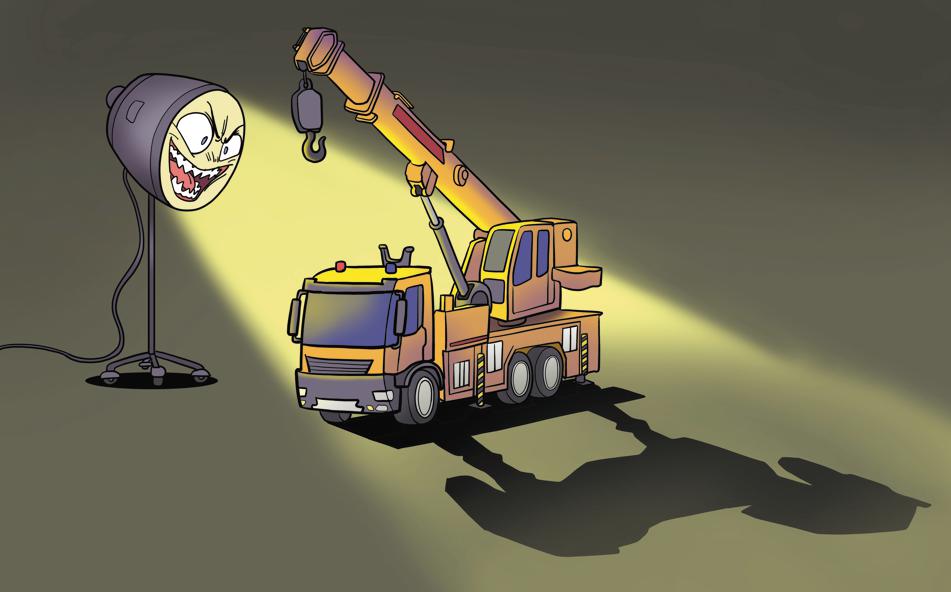
On Feb 21, Biden signed an executive order claiming Chinese-manufactured cranes used in US ports posed a threat to national security. The US administration plans to invest $20 billion over the next five years to upgrade US ports, including replacing Chinese cranes with those produced by a US subsidiary of Japan's Mitsui.
Currently, 80 percent of the cranes used in US ports are made by Chinese companies, which are known to produce affordable and high-quality products. Allegations that the Chinese-made cranes have been fitted with remote control devices and thus pose a "national security risk" are baseless, especially because there is no evidence to prove such allegations. In fact, the US Coast Guard Cyber Command inspected 92 Chinese-made port cranes but has not shown any evidence of the cranes being fitted with illegal or suspicious devices.
In reality, the executive order aims to "reshore" manufacturing to the US. But by trying to revive US manufacturing by suppressing Chinese companies, the US president is going back on his promise.
Besides, in February, Biden ordered the US Department of Commerce to investigate Chinese-made cars, alleging that their software could collect sensitive information on US citizens or remotely control vehicles.
Such national security trope has nothing to do with reality. Few cars used in the US are made in China, and their software is primarily developed by Western companies such as Bosch and Harman. Gaining access to data from car cameras and sensors, let alone remotely controlling vehicles, would be extremely challenging. US Commerce Secretary Gina Raimondo's remarks on MSNBC, suggesting that Beijing could remotely turn off 3 million Chinese-made cars in the US is incredible and irresponsible and groundless.
National security pretext used by the US is aimed at preventing Chinese electric vehicles from entering the US market and protecting US automakers against potential failure in their competition with Chinese companies.
As Tesla CEO Elon Musk said in January, Chinese automakers will "demolish "global rivals without trade barriers. Faced with intense competition from Chinese automakers, the US government has resorted to using excuses such as "national security" to suppress them.
Moreover, on March 13, the US House of Representatives passed a bill by a 352-65 vote, which is aimed at banning the video-sharing app TikTok in the US, or forcing its parent Chinese company to sell its US operations to an American company.
But this reasoning is baseless. About 60 percent of TikTok's shares are held by global investors, three Americans are on its five-person board, and TikTok already stores US user data on servers operated by Oracle. Also, and strangely enough, some US lawmakers, referring to the Israel-Palestine conflict, allege TikTok videos are biased toward Hamas and have anti-Semitic content. What they refuse to understand or realize is that the videos don't reflect TikTok's policy or intention; instead, they reflect the different views of young US users who don't necessarily think like US politicians.
Many in the US oppose the government's use of national security as a pretext to target TikTok. They see the bill as being purpose-driven and in violation of the First Amendment to the Constitution. A recent survey by the Associated Press and the NORC Center for Public Affairs Research showed only 31 percent of US adults support a ban on TikTok, while 35 percent oppose it. Former US president Donald Trump, too, opposes any ban because, he said, it would benefit TikTok's competitor, Facebook. Jim Himes, Ranking Member of the House Intelligence Committee, also opposes the bill, arguing against government censorship of newspapers, broadcasters and social media platforms.
The US administration's suppression of Chinese companies using national security as an excuse is nothing new. Since 2017, the US has been calling China the US' main "rival" and Sino-US ties as "strategic competition", abandoning the previous policy of "engagement" with China.
Emphasizing strategic competition and downplaying economic engagement have led the US administration to prioritize security over economic considerations in its China policy. The US has been increasingly securitizing economic issues, asserting that Sino-US economic interdependence threatens national security and pushing for "decoupling" or "de-risking" with China.
The US administration's use of national security harms not only China's legitimate interests but also overall Sino-US relations. The Chinese government has always opposed the US administration's abuse of power to obstruct normal economic and trade cooperation between China and the US. Using "national security" as an excuse for trade protectionism will weaken the international competitiveness of US businesses and increase costs for US consumers.
The author is a research associate at the Institute of American Studies, Chinese Academy of Social Sciences.
The views don't necessarily reflect those of China Daily.





