China's economy at critical phase of transition







The Chinese economy has shown strong resilience. China's urbanization, pursuit of low-carbon and green development, and rapid digitization have provided robust intrinsic momentum for its economic development.
The country's institutional advantages, meanwhile, have granted it great error-correction capabilities, while ongoing reforms and innovations have injected certainty into the future prospects of its economic growth.
Admittedly, China faces challenges such as insufficient effective demand, subdued social expectations, and multiple risks during its economic development journey. However, these issues, inevitable in the transition toward high-quality development, are solvable and will not alter the long-term stability and upward trajectory of the Chinese economy.
Engine of expansion
China has been the world's largest manufacturing powerhouse, top goods trader, and leading contributor to global economic growth for many consecutive years. In 2023, China's gross domestic product exceeded 126 trillion yuan ($17.5 trillion), growing at a rate of 5.2 percent year-on-year. This has not only surpassed the global average of around 3 percent, but also positioned China as one of the top performers among major economies. China remains the primary engine driving global economic expansion.
China also possesses a significant advantage with its vast domestic market, and the potential for economic growth driven by consumption upgrades is immense. With a population exceeding 1.4 billion, a middle-income group of more than 400 million people, and a per capita GDP exceeding $12,000, China has already established a preliminary advantage in demand within a super-large market.
As the size of the middle-income group continues to expand, Chinese residents' consumption patterns will further diversify and evolve toward the high-end and services-oriented spectrum. Simultaneously, the upgrading of consumption structures will give rise to new demand, thereby propelling China's economic growth into even broader horizons.
The Chinese economy also possesses a strong supply advantage due to its well-developed industrial system. The continuous upgrading of manufacturing industries lays the foundation for future high-quality economic development.
China's large industrial scale, complete industrial system, and strong supporting capabilities enable efficient fulfillment of various market demands. This is conducive to achieving economies of scale and agglomeration effects.
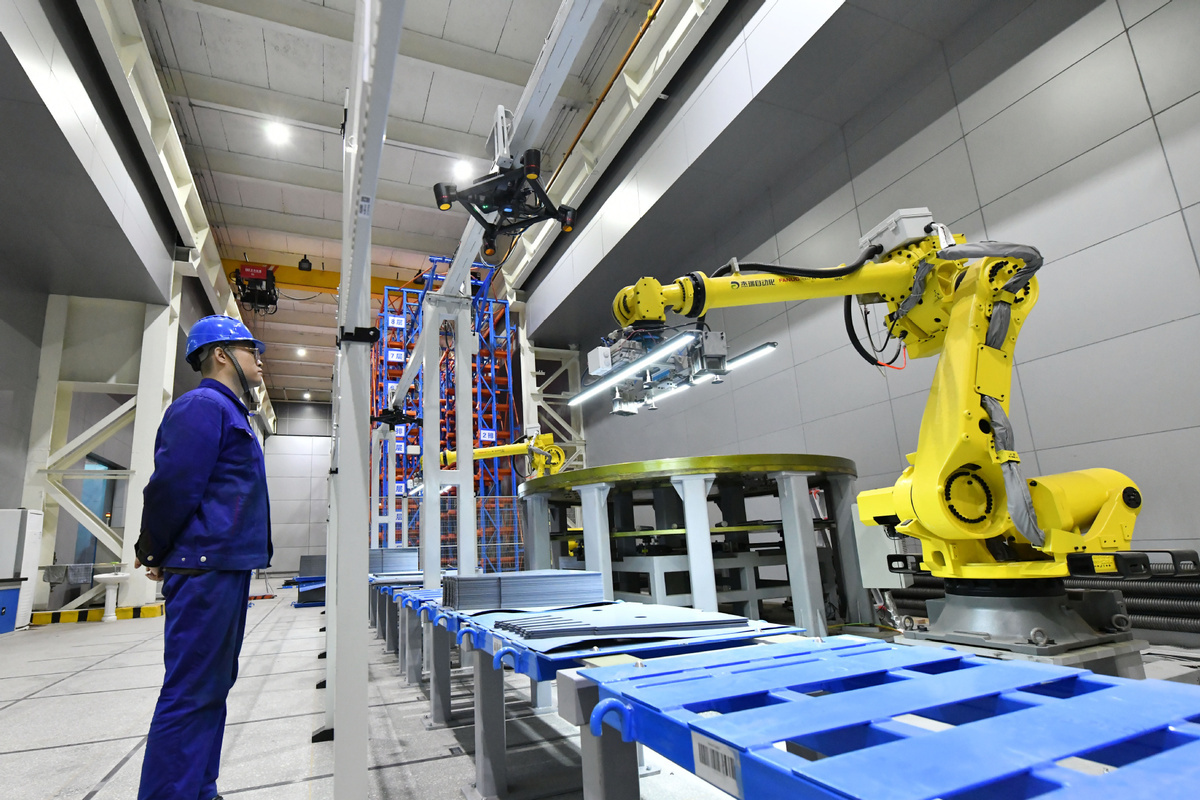
By the end of 2023, China had nurtured 421 national-level demonstration factories, more than 10,000 provincial-level digital workshops and smart factories, and established a total of 5,095 national-level green factories. The country has also developed 66 national-level strategic emerging industry clusters, with its share of global new industrial robot installations exceeding 50 percent.
As China's manufacturing sector continues to upgrade, its advantageous position in the global industrial chains will become even more pronounced, providing robust support for the country's economic development.
Demographic dividend
In recent years, although China's population growth has slowed, the quality of its population has steadily improved, leading to the accelerated formation of demographic dividends.
As of 2023, China boasts a population of over 250 million individuals with university-level education, and the average education years for the working-age population (aged 16-59) has reached 11.05 years, representing a 0.12-year increase compared to that in 2022.
Besides, by enhancing public expenditure on education and other essential services, China can effectively unlock the dividends of population quality improvement, providing robust support for sustained economic development.
The aging population has also given rise to a considerable silver economy, while China's pool of over 200 million skilled workers also represents significant potential for innovation and creativity.
China's efforts to build a financially strong nation provide effective support for future economic and social development.
The country boasts abundant capital, and its outbound investments continue to grow, making it a significant source of investment for many countries. Currently, China's banking sector holds the world's largest size of assets, and its bond market ranks second globally. Additionally, China's foreign exchange reserves have consistently maintained the top position for several years.
The development of digital finance, green finance, and inclusive finance places China at the forefront globally. As internationalization of the renminbi gathers pace and its exchange rate remains relatively stable, China is providing greater security in an uncertain financial world.
Currently, the Chinese economy is entering a critical period of transitioning toward high-quality development. In this process, it is inevitable to encounter some challenges and issues, which may cause fluctuations in certain economic indicators.
However, these fluctuations will not alter the overall stable, progressive, and positive long-term prospects of the Chinese economy, which is underpinned by its significant potential in urbanization, low-carbon green development, and digitization. The realization of this potential will provide strong impetus for China's economic growth.
In 2023, China's urbanization rate of permanent residence stood at 66.16 percent, which is still more than 10 percentage points below the level of developed economies. This indicates that China has vast development potential from urbanization.
However, in terms of registered permanent residence, China's urbanization rate is only 47.7 percent, leaving the population of rural migrant workers at nearly 300 million. Progress in turning the migrant workers from rural areas into new registered urban residents will unlock significant domestic demand and economic growth potential, providing robust momentum for China's economic development.
Green transformation
Low-carbon and green transformation are also driving the transformation and upgrade of China's energy structure, industrial composition, transportation systems, and production and lifestyle patterns.
Within this transformation lie substantial opportunities for investment and consumer demand. For instance, the green and low-carbon transformation of heavy industries such as steel, cement, and petrochemicals, along with the production, storage, and transmission of renewable energy, necessitates significant investments.
Meanwhile, low-carbon and green initiatives will foster new drivers of economic growth, enhance development potential, and provide robust support for China's economic progress. A prime example is the emergence of the three core products in the green and low-carbon industry — new energy vehicles, lithium batteries, and solar panels, or the new three. They have gradually replaced the traditional "old three" of clothing, furniture, and household appliances, becoming a fresh impetus for China's foreign trade growth.
Digital transformation in China is also accelerating, infusing new vitality into its economic development.
Currently, China's digital economy has surpassed 5 trillion yuan, the world's second-largest in terms of value. China's capacity for digital technology innovation is also rapidly improving. As of the end of 2022, the country holds 1.273 million valid patents in core industries related to the domestic digital economy.
The widespread application of digital technology and the rapid accumulation of data elements are driving the convergence of digital and real economies. By empowering supply chains, industrial networks, and value chains and fostering innovation, this transformation is propelling comprehensive, multidimensional, and end-to-end upgrades across manufacturing, services, and agriculture. Consequently, it will inject fresh vigor into China's economic development.
Currently, the global economy is faced with high levels of uncertainty and instability, with escalating risks worldwide. Only countries that can discern problems and promptly address them through reforms and innovation will be better positioned to maintain positive economic development. China possesses such advantage in its institutional framework.
First, Chinese decision-makers exhibit strong risk awareness and crisis perception capability, and maintain a clear and objective understanding of the challenges facing the nation's economic development. Their insights into the complexity, severity, and uncertainty of the economic situation are crucial for risk prevention and crisis resolution.
Second, the spirit of self-revolution within the Party embodies robust reform and innovation capabilities, allowing for continuous self-correction. This enables the Chinese economy to make fewer mistakes in uncertain environments. Even when faced with short-term setbacks, the system's advantages can facilitate error correction, foster consensus on reforms, and inject greater certainty into China's economic prospects.
In recent years, despite the rise of protectionism and the emergence of anti-globalization forces, economic globalization remains a general trend. China is a beneficiary of, and contributor to, economic globalization, and more importantly, a staunch supporter and defender of it.
High-standard opening-up and cooperation are not only beneficial to the development of all countries in the world but also provide conditions for China's sustainable economic development.
China's rapid economic growth and the continued promotion of high-standard opening-up have provided important impetus for stable global economic growth and the construction of an open world economy.
Liu Shangxi is president of the Chinese Academy of Fiscal Sciences, and Li Chengwei is a researcher there.
The views do not necessarily reflect those of China Daily.