



Experts' take on democracy







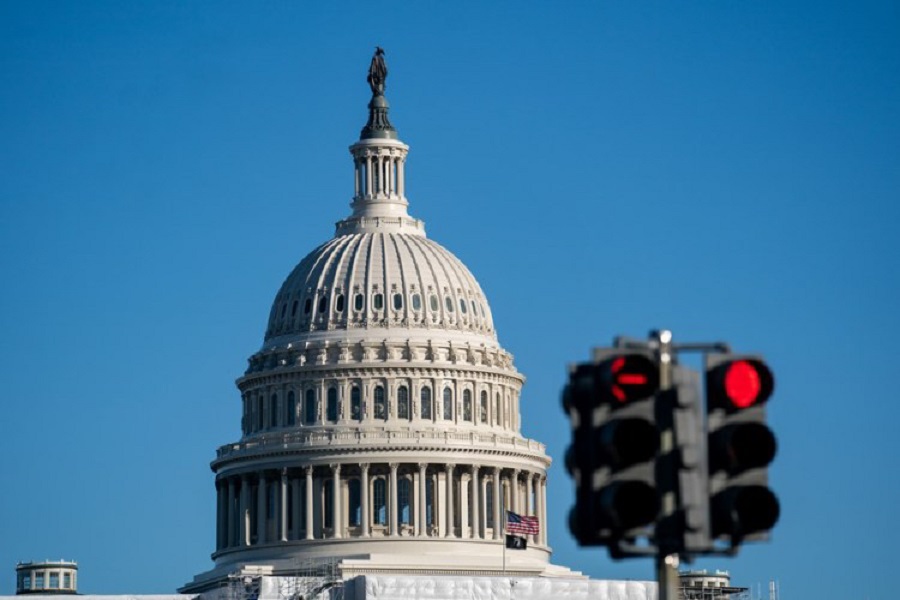
US pursuit of 'democracy' puts world at risk
By Jasna Plevnik
Democracy, in different forms, is the most followed political system in the world. But there are contrasting views on democracy, with the difference being like those between the two major world powers, China and the United States. The two sides strongly differ on key points of democracy related to social organizations and international relations.
However, no matter how big and worrying these differences are, we should not ignore the fact that the most valuable aspect of democracy is diversity and the right to differ.
For China, democracy belongs to all; it is not the property of any one country, and is related to human values. China's fast-paced economic development and the eradication of extreme poverty show the Chinese government works for the common good of the people. According to an Open Society Barometer survey, published six months ago, many respondents said they believe China's growing global influence would be "a force for good".
Beijing has never been interested in imposing its political system or form of government on other countries, neither by using its soft power nor by triggering a war. China has been reiterating that the world should not be dominated by one country, though.
The United Nations, according to China, should act as a central pole of international democracy, especially when it comes to global decision-making and enforcing international law. In contrast, the United States sees itself in the pole position, not the UN. Washington even wants Beijing to become a neoliberal democracy and pursue the values in which the US believes.
The US thinks the type of neoliberal democracy it follows has proved to be best for governance, both in theory and praxis, even though many of its important allies think US-style neoliberal democracy is going through a crisis in the US as well as globally.
In the US' foreign policy "democracy" is as significant as military or ecological security. The US' expanded approach to safeguard its national interests and national security, and the balance of power politics, mean Washington could force its model of democracy globally. The US has been pushing in different directions, while desperately pursuing neoliberal policies, which have resulted in economic and geostrategic gains for Washington.
In the interest of neoliberal democracy, the US has taken many anti-democratic actions, and triggered and/or fought wars, in order to engineer regime change in different countries. The results have been a devastated, unstable Iraq, a shambolic Libyan society and economy, and a war-ravaged Afghanistan now ruled by the Taliban, whose eradication the US had promised while invading the country in 2001. Yet the US does not see the chaotic and tragic developments as a defeat or debacle of its "global democracy spreading" campaign.
Under the excuse of spreading "democracy", the US in the "Indo-Pacific" region has established new political and military alliances and is even flirting with idea of expanding NATO in the Asia-Pacific, so as to make the region an "open, democratic, peaceful" place governed by rule of law.
Now the US' top geostrategic interest is to shield the values of "democracy" in Eastern Europe. That expansive ideology behind protecting "democracy" in Ukraine began 10 years ago when the US supported a coup in that country and decided to make Ukraine a NATO member. The problem for the US is that Russia immediately understood it as casus belli.
The US leadership has been sending weapons to Ukraine on the pretext of helping it defend itself against Russia, which has cost the lives of thousands of Ukrainian and Russian people, and billions of dollars in damages. It's another matter that the combined efforts of the US, the European Union and NATO have had no impact on Russia, let alone weaken it.
It seems that no cost for the Russia-Ukraine conflict is too high for them. The conflict has not only forced the civilian population in a life-threatening crisis, and destroyed the economy, cultural institutions and political democracy in Ukraine but also made the EU less democratic and a more propaganda-loving narrative generator.
In many parts of Europe, democracy has been under constant attack. Russian opera singers, conductors, writers, actors and athletes have been banned in much of the West, and historical monuments connected with Russia demolished. In the political sphere, former German chancellor Gerhard Schroder was almost expelled from Germany's ruling Social Democratic Party over his close ties with Russia. Anybody who does not see the Ukraine-Russia conflict as a way of protecting "democracy" has been called pro-Russia and/or morally corrupt, which perfectly reflects the hypocritical attitude of the US towards democracy in Europe.
In Europe, it is no longer possible to support peace even for Pope Francis and peace organizations, let alone ordinary people, without being attacked as traitors of democracy.
An additional blow to democracy and peace in Europe came when the Swedish government announced that it was ending the peace fund that had provided financial support to peace organizations since the 1920s.
It is strange that to strengthen democracy in Europe, the US decided to invest more than €1 billion in Germany to build the largest American military hospital abroad.
With the Russia-Ukraine conflict entering its third year, the situation has become increasingly different for the EU. What is evident now is that the US has spread the battlefield from Ukraine to the whole of Europe, all in the name of spreading "democracy" while a nuclear Armageddon seems to be looming. The whole world is at risk, and that is a serious threat to the future of democracy. The question is: Can democracy survive without the people?
The author is president of the Geoeconomic Forum, Croatia. The views don't necessarily reflect those of China Daily.





