



GCI a leading advocate for cultural exchanges







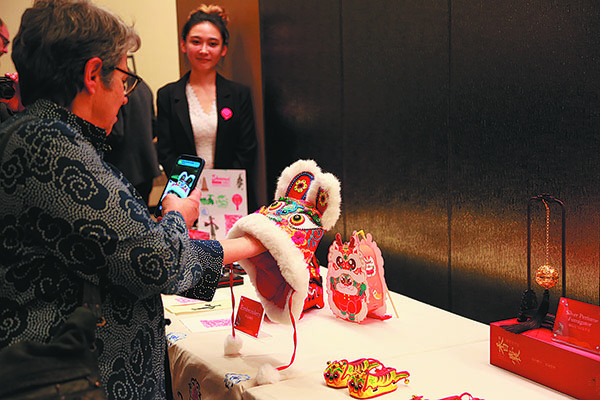
On March 15 a year ago, the Chinese top leader proposed the Global Civilization Initiative, emphasizing the importance of common development and common prosperity for the world.
Cultural exchanges, essentially, involve sharing by people from different countries and backgrounds ideas, values, traditions and customs, and other knowledge about each other's countries. In our increasingly intertwined world, cultural exchanges help broaden our vision and enrich our perspective by exposing us to different traditions, values, beliefs.
The impact of cultural exchanges goes beyond the personal level; it extends to the social and cross-border levels, and the lessons inherent in them go beyond the lessons of textbooks. The least cultural exchanges do is to provide an opportunity to learn the different aspects of different societies, the ways of different people's lives, their traditions and customs, and their opinions on important national, regional and global issues, and help build mutual understanding and trust.
The ancient Silk Road, for example, embodied these traits thanks to the massive economic and cultural exchanges among people of many regions. The trade route facilitated conversations among different traders coming from distant lands. Thanks to this valuable trade route, the world came to know about silk, tea, paper, typefaces and printing, compass and gunpowder.
In modern times, cultural exchanges, an integral part of international relations, involve the exchange of not only goods but also ideas and artifacts. Yet cultural exchanges are not necessarily limited to a group of people travelling from one country to another to exchange ideas and perspectives on important national, regional and global issues. They also include translating books, especially literary works, written in a language or languages spoken in one country, into a language spoken in another country, and telecasting one country's films in another country.
Talking about translations of literary works, I once walked into a bookstore in Hefei, Anhui province, and, out of curiosity, inquired whether they had any books by Austrian author Stefan Zweig. I was told, to my pleasant surprise, that the entire work (30 volumes) of one of the most popular writers in the first half of the 20th century had been translated into Chinese.
More surprisingly, the poems of Austro-Bohemian poet and author Franz Werfel and Romanian-born German poet Paul Celan, whose poetry is described as closed and aloof, are freely accessible in the Chinese language on the internet. Surprisingly, the reverse (translation of Chinese authors' works into other languages) is also true. For instance, the poems of famous Chinese poets have been translated from Chinese into English, French and German. This means one can enjoy the poems of Tang Dynasty (618-907) poets Du Fu, Li Bai, Meng Haoran and Du Mu, Song Dynasty (960-1279) poets Su Shi and Lin Bu, Ming Dynasty (1368-1644) poet Gao Qi.
Pinyin, the phonetic transcription of spoken Chinese based on the Latin alphabet and developed by economist and linguist Zhou Youguang has been of immense help to non-Chinese people in learning the Chinese language, as well as to native Chinese speakers in accessing European languages. Indeed, it is cultural exchange that helps integrate the knowledge, experiences and skills of one people with another, and promotes better understanding between them.
When it comes to food and music, well-known Western fast food chains have opened thousands of outlets in China, although they try to prepare the items in a way that suits the palette of the Chinese people. The fact that some Chinese fast food chains offer the same food items but under a purely Chinese label shows some sort of resilience.
Economic globalization has greatly influenced people's lifestyle and consumption habits, and impacted the media landscape. And with the development of economic globalization, cultural exchanges among countries will increase. It is important to mention here that the most important task of cultural exchanges is to promote mutual understanding and mutual trust, and facilitate dialogue among people from different countries. As a matter of fact, this is already taking place through lectures, concerts, exhibitions and meetings, be it in the Confucius Institutes in the universities in German cities or in the German consulate building in China.
Town twinning, too, plays an important role in building mutual understanding among different countries. Town twining refers to pairing of cities across the world in order to foster human and cultural links, and is sometimes called "the diplomacy in small format". In this context, Hamburg, which is the sister city of Shanghai since 1986, organizes a high-level event called "China Time" every two years to promote cultural exchanges and dialogue between Germany and China.
The other sister cities in Germany and China are Cologne and Beijing, Trier and Xiamen, Braunschweig and Zhuhai, Dresden and Hangzhou, Frankfurt am Main and Guangzhou, Nuremberg and Shenzhen, Regensburg and Qingdao, and Augsburg and Jinan.
Cultural exchanges not only promote dialogue on culture but also facilitate joint research and help ease the access to archives. Cultural exchanges are like glue; they join different societies and promote friendship.
The author is a professor at Hainan College of Foreign Studies.The views don't necessarily reflect those of China Daily.
If you have a specific expertise, or would like to share your thought about our stories, then send us your writings at opinion@chinadaily.com.cn, and comment@chinadaily.com.cn.





