



The US should stop creating a lose-lose calamity in the Red Sea







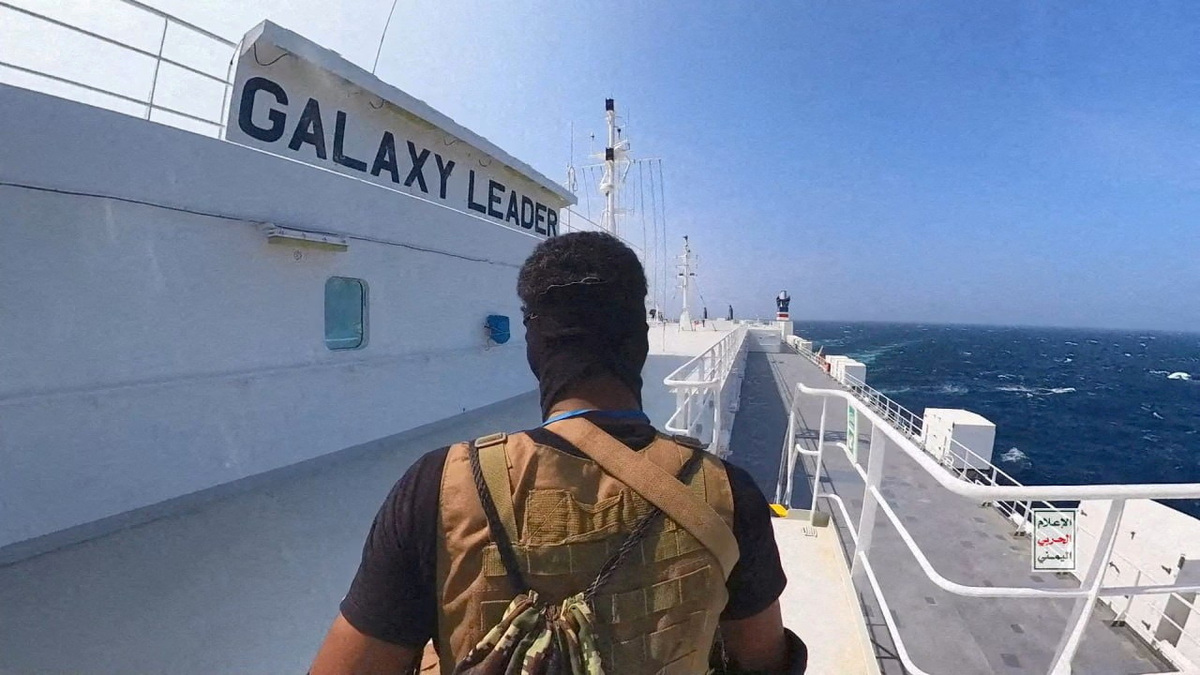
This round of the Palestinian-Israeli conflict has sent ripples beyond Gaza's fences, particularly on one of the world's most important trade routes—the Red Sea. Safety of passage has already been put under severe threat in this critical waterway. Now it will be even harder to guarantee such safety with the ongoing military forays in Gaza and a series of counterintuitive actions taken by the United States.
Flames Fanned Higher
Instead of pressuring Israel into stopping its collective punishment of the people in Gaza and coordinating more life-saving humanitarian assistance to the enclave to end the current crisis in the Red Sea, the United States announced a joint maritime security initiative called Operation Prosperity Guardian to "ensure freedom of navigation" and "bolster regional security and prosperity", launched multiple rounds of strikes against Houthi targets in Yemen, and, as the largest contributor, paused funding to UNRWA, a UN humanitarian agency that is the backbone of all humanitarian response in Gaza.
What the United States has done offered little help to dampen the tensions in the Red Sea. Security and prosperity in the region have barely been bolstered. Greater hostility and chaos ensue.
Only a very small number of ships, mainly US-flagged ones, have been guarded under the Operation Prosperity Guardian. Many more ships have been hit as a direct consequence of the US-led strikes against the Houthi and the ongoing sufferings imposed on the civilians in Gaza.
As a result, there has been an almost wholesale exodus of larger container ships from this water that offers the fastest freight route from Asia to Europe. More and more merchant ships are instead taking a detour of several thousand miles around the southern tip of Africa, adding $1 million worth of fuel cost per trip and weeks of delay to the delivery of goods.
A prolonged crisis in the Red Sea caused by undue US interference could cause a lose-lose calamity, shattering the hopes of global economic recovery and creating more blows to the international order.
Déjà Vu
This is not the first time that US interference has created a lose-lose dilemma for all.
Shortly after the September 11 attacks, the United States declared its war on terror and subsequently led a multinational troop to Afghanistan. The stated goals were to dismantle al-Qaida, topple the Taliban government, and deliver greater peace and security for the world, and food and freedom for Afghanistan.
Sadly, the reality is hardly so after the United States hastily left the country following nearly 20 years of futile wars. Al-Qaeda, entering its fourth decade, has continued to evolve and grow. The Taliban was on track to regain power even before the United States left. Afghanistan was not rebuilt into a free, modern and stable country.
The same goes for Iraq. In 2003, the United States accused the Iraqi government of owning weapons of mass destruction (WMD) and supporting terrorists, and vowed to safeguard democracy, peace and security in the region and free the Iraqi people.
Then it started its military operation that led to a near-decade-long civil war in Iraq, no discovery of WMDs, legions of new terrorists and the deaths of an estimated 300,000 Iraqis. To this day, Iraqis continue to suffer from the cascade of violence and state failure triggered by America's war.
There is no way to spin a benefit to the United States. In breaking Afghanistan and Iraq, the United States also broke itself: Its military interventions in Afghanistan and Iraq directly cost the United States $2 trillion and $2.3 trillion respectively.
Win-Win Prospect Instead of Lose-Lose Calamity
In a world already overshadowed by growing geopolitical tensions and increasing economic uncertainties, "many governments are no longer focusing on the absolute benefits provided by the international order and global cooperation," says this year's Munich Security Report. It goes on to warn that this could give rise to lose-lose dynamics that undermine the existing international order.
The total cost of the current crisis in the Red Sea is already in the billions of dollars. Even a conservative estimation of these losses, calculated by combining the lost tolls in the Suez Canal, increased spending in international shipping and higher international transaction costs, is astronomical. And this amount is set to not only soar and multiply as long as the crisis lingers, but also be primarily borne by developing countries least equipped to handle it.
Ancient Chinese wisdom tells us that to put an end to a complex problem, we need to solve not only the symptoms but also the root cause. And to end the crisis in the Red Sea, the US playbook is clearly not the answer.
This crisis is rooted in Israel's war in Gaza. An immediate ceasefire between Israel and Hamas, greater humanitarian assistance from the international community to the war-torn Gaza Strip and, most importantly, a comprehensive, just and sustainable solution to the Palestinian-Israeli issue on the basis of the two-state solution—principles at the core of China's proposals—are all that is needed to reverse a lose-lose calamity and create conditions for a win-win prospect.
The author is a Beijing-based observer.
The views don't necessarily reflect those of China Daily.
If you have a specific expertise, or would like to share your thought about our stories, then send us your writings at opinion@chinadaily.com.cn, and comment@chinadaily.com.cn.





