



AI industrial chain spurred on by Sora
Chinese firms may need to pool more resources into research, development of crucial technology







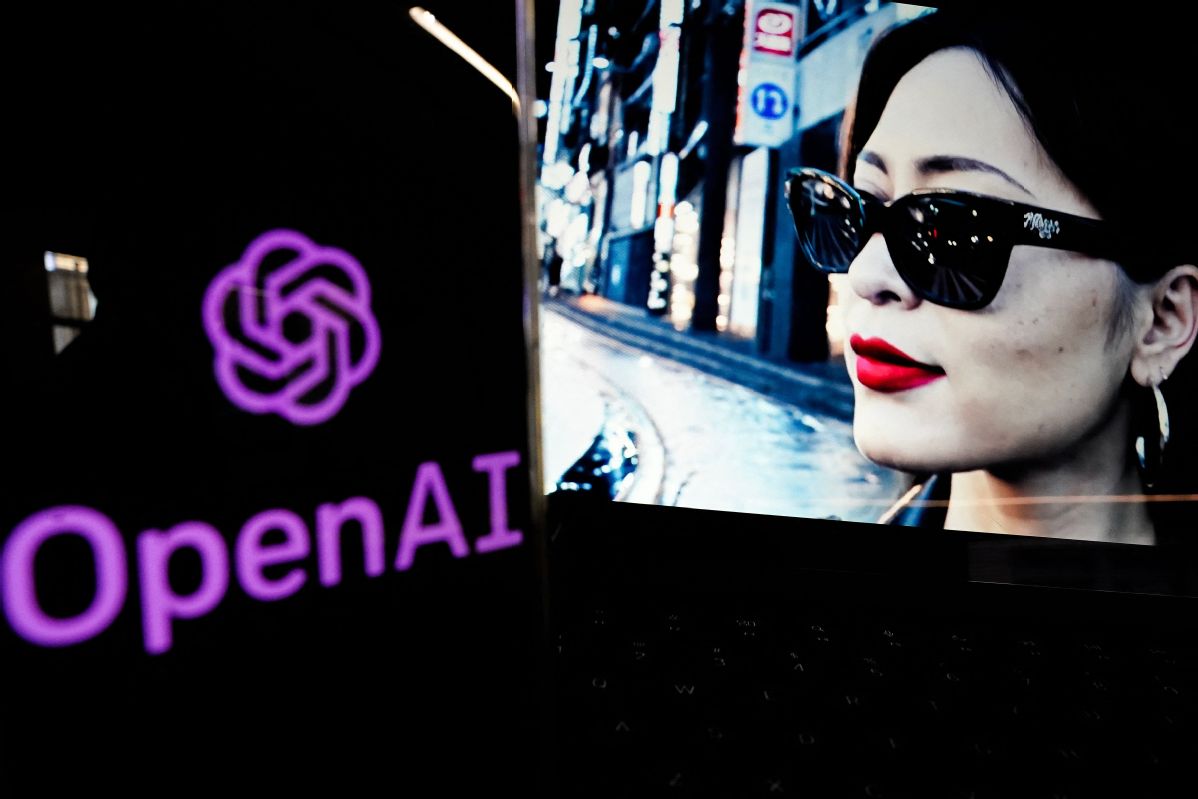
China's artificial intelligence industrial chains, including computing power, cloud servers and data centers, are expected to usher in unprecedented development opportunities amid a worldwide frenzy around Sora, a new text-to-video AI model developed by US-based research company OpenAI, creator of chatbot ChatGPT, experts said.
They said Chinese tech enterprises should pool more resources into the basic research of crucial technologies, improve independent innovation capacities and strengthen exchanges and cooperation with companies both at home and abroad so as to build an open, collaborative and innovative AI industrial ecosystem.
Moreover, the multimodal large language model, which possesses the ability to generate high-resolution video clips based on given text prompts, is an undeniable future development direction for generative AI technology, and will inject strong impetus into a new round of industrial development, said industry observers.
Sora can generate videos up to a minute long while maintaining visual quality and adherence to user prompts, OpenAI said. It is able to generate complex scenes with multiple characters, specific types of motion, and accurate details of the subject and background. The model understands not only what the user has asked for in the prompt, but also how those things exist in the physical world.
"The launch of Sora will have a profound impact on the development of China's AI industrial chain, and this innovative text-to-video model is expected to inject new vitality into the field of content creation and trigger an industrial revolution," said Zhu Keli, founding director of the China Institute of New Economy.
Zhu said it presents both a challenge and a rare opportunity for China as the country boasts immense data resources and broad application prospects, which lays a solid foundation for the commercialization of cutting-edge technologies such as Sora.
"With the wide application of AI technology, demand for infrastructure such as computing power, servers and chips will grow exponentially, which will significantly promote the coordinated development of upstream and downstream segments of China's AI industrial chain," he said.
Zhu added that Chinese AI companies should step up investment in the R&D of computing power and chips, try to achieve breakthroughs in key technologies, as well as expand the application scenarios of video generation models in a wider range of segments.
Computing power, which serves as a core productive force in the digital economy era, has become an important engine driving China's economic growth and unleashing the potential of data as a factor of production.
Chinese enterprises have ramped up efforts to build computing infrastructure, such as servers, storage and data centers, and bolster the development of AI by offering computing power support and guarantees.
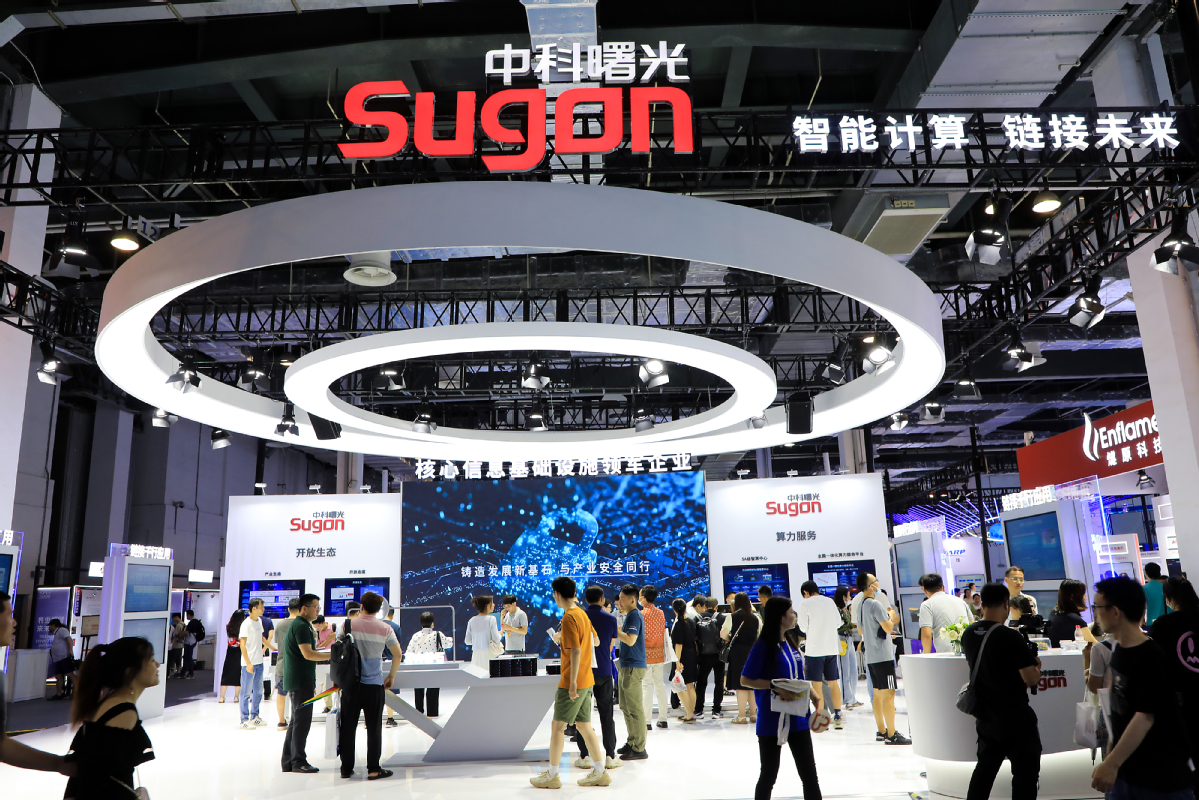
Supercomputer manufacturer Dawning Information Industry Co Ltd, also known as Sugon, has invested heavily in underlying computing power, frameworks, algorithms and applications, and participates in China's integrated computing power service platform to bolster the industrial use of AI models.
Cao Zhennan, vice-president of Sugon, said the training of AI models necessitates massive requirements for computing capacity resources, which will give a big boost to the development of China's computing power industry.
He said the company has accumulated advantages in large-scale computing infrastructure and computing power resource scheduling, and it will improve computing supply capacities for AI and scientific engineering projects.
As AI-powered large language models are driving a revolution in the cloud computing industry, more efforts are needed to rebuild the infrastructure system of LLMs and bolster the development of AI-native applications, said Hou Zhenyu, vice-president of Chinese tech heavyweight Baidu Inc.
Baidu will offer the LLM-centered cloud infrastructure to promote the commercial use of AI technology, Hou said, adding that intelligent computing abilities will provide solid support for the operation of AI applications.
According to Baidu AI Cloud, Baidu's cloud computing unit, the innovative integration of cloud computing with AI will lower the threshold for enterprises to acquire and use AI technology.
It anticipates that MaaS, or model as a service — which refers to a type of cloud-based service that offers access to machine-learning models to develop AI applications — will become the main business model for cloud computing companies.
China released an implementation plan to speed up the construction of a national computing power network in December. The plan, jointly released by the National Data Administration and four other central government departments, said China will form a preliminary comprehensive computing power infrastructure system by the end of 2025.
New computing power in national computing hubs should exceed 60 percent of the nation's new computing power, the plan said, adding that efforts will be made to coordinate computing power among China's eastern, central and western regions, and promote the integrated application of computing power, data and algorithms.
Xiang Ligang, director-general of the Information Consumption Alliance, a telecom industry association, said cloud computing has become the key foundation of AI, and with the increase in training intensity and computing complexity, the requirements for computational accuracy are gradually rising.
The scale of China's core computing power industry reached 1.8 trillion yuan ($250.1 billion) in 2022, said the China Academy of Information and Communications Technology, a think tank.
The Ministry of Industry and Information Technology said in August that the number of standard racks in use in China's data centers had exceeded 7.6 million units, and the country's computing power had reached 197 EFLOPS, ranking second in the world. EFLOPS is a unit of the speed of computer systems. It equals 1 quintillion floating-point operations per second.
The emergence of Sora will further propel China's investment in computing infrastructure, which includes data centers and cloud computing platforms, and boost the integration and upgrade in China's AI industrial chain, said Wang Peng, a researcher at the Beijing Academy of Social Sciences.
Wang expects that computing power and cloud server providers will work more closely with AI application developers to jointly promote the commercialization of AI technology.
"China's major advantages in developing AI lie in abundant data resources and diverse application scenarios, and a series of supportive measures from authorities, while the US has taken the lead in basic AI research, chips, algorithms and other crucial technologies and a sound innovation ecosystem," he said.
Wang added that Chinese enterprises should step up R&D investment in the aspects of optimization of computing power, server updates and chip designs, offer customized solutions catering to the demands of different industries and expand their presence in overseas markets.
Global market research firm International Data Corp said the scale of China's AI market is expected to reach $26.44 billion in 2026, with a compound annual growth rate of over 20 percent between 2021 and 2026.
Chinese firms have also stepped up the push to expand their presence in the video generation sector. Chinese AI startup Cloudwalk Technology said it has a plan for text-to-image and text-to-video multimodal LLMs and has launched a digital human generation platform, while Sumavision said it has invested heavily in video content production, and will continue to explore AI-generated content technology.
Pan Helin, co-director of the Digital Economy and Financial Innovation Research Center at Zhejiang University's International Business School, said Chinese AI companies have gained an upper hand in Chinese language-based AI models, and are able to surpass ChatGPT in this domain.
However, as for the video generation model, they need to re-accumulate data and model parameters, and it might be more difficult for them to catch up with their US rivals, Pan said.
"Talent, data and computing power are key to text-to-video generation models," he emphasized, adding that more efforts are also required to bolster the circulation of data elements, especially video data.
Pan's views were echoed by Charlie Dai, vice-president and research director at consultancy Forrester, who said the appearance of Sora will drive China's R&D input in generative AI technology across the whole supply chain, which is of great significance in achieving the country's self-reliance in science and technology and promoting global collaboration in the AI sector.
However, China still lags behind the US in high-quality data for AI model training and fine-tuning, as well as high-performance computing infrastructure like graphics processing units, Dai said.
Zhou Hongyi, founder of Chinese cybersecurity company 360 Security Group, said the appearance of Sora, which is capable of understanding and simulating the physical world, means the realization of artificial general intelligence could be shortened from 10 to one or two years. "AI will not necessarily subvert all industries quickly, but it can stimulate the creativity of more people."
Meanwhile, the use of text-to-video AI models raises concerns about ethics, copyright protection, personal privacy leakage and data security.
"How to ensure the authenticity and transparency of the content has become an important issue, and more efforts are needed to formulate rules and regulations to ensure the healthy development of such technology," said Liu Xingliang, director of the Beijing-based Data Center of China Internet.
fanfeifei@chinadaily.com.cn




















