Guizhou 'super factory' helps take matcha to the world







At the foot of Fanjing Mountain in Tongren, Guizhou province, a "matcha super factory" is racing to bring the unique taste of nature to the world.
Sweetness interlaced with a hint of subtle bitterness, swiftly transforming into a delightful aftertaste, much like the palpitations of a youthful crush — matcha, a finely ground powder of processed dried green tea leaves, is gaining popularity among consumers.
Matcha powder, matcha latte, matcha cookies, matcha noodles, matcha chocolate — various products are ready to be shipped from the automated production lines of Guizhou Tongren Gui Tea Co.
The company sold 1,000 metric tons of matcha last year, 40 percent of which was exported. It exports to more than 40 countries and regions such as the United States, Germany, Canada, Saudi Arabia and Singapore, according to Lan Fangqiang, deputy general manager of the company.
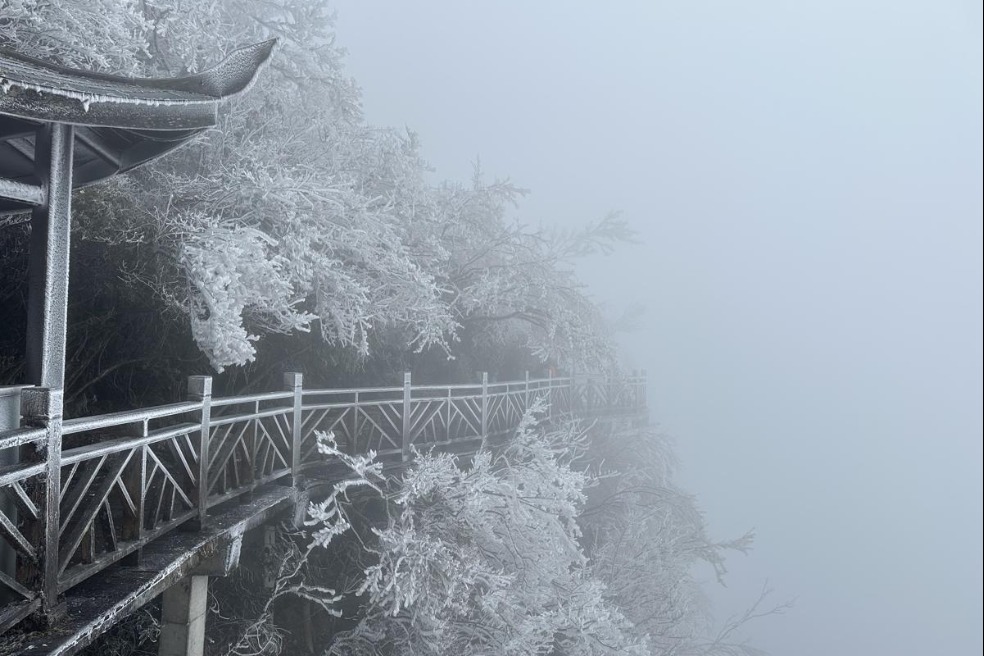
"The high altitude, low latitude, cloudy and misty climate with limited sunshine in Guizhou endows matcha with excellent quality, characterized by its original ecological and pollution-free nature," Lan said.
"In addition, as the province cracks down on the illegal use of pesticides and herbicides, Guizhou tea has become 'clean tea' in every sense of the word."
In 2017, Guizhou Gui Tea Group invested 600 million yuan ($83.4 million) to build the Tongren branch, which has the world's largest single-unit matcha production workshop, capable of producing 4,000 tons of matcha a year.
Compared to other types of tea, matcha has stricter requirements for cultivation and processing because it is also eaten, creating a certain industry threshold, according to Lan.
"Furthermore, we want to challenge people's traditional perceptions of Chinese tea and to expand the younger generation of tea consumers," he said.
Lan said the modern development of the Chinese matcha industry dates back only about 30 years — still in its early stages — and the market demand remains largely untapped.
"Currently, looking solely at the demand for raw materials in the domestic beverage and baking industries, production capacity falls short of meeting market needs," he said. "The market space is immeasurable."
Matcha originated in China, dating back to the Sui (581-618) and Tang (618-907) dynasties, and reached its peak during the Song Dynasty (960-1279). After the Ming Dynasty (1368-1644), China started to popularize the consumption of tea, brewing and drinking the liquid, discarding the tea residue. As a result, Chinese matcha was lost.
However, during the Tang Dynasty, a Japanese envoy took Chinese matcha back to Japan, where it was preserved, inherited and greatly developed. At the end of the 20th century, scholars and experts returning from Japan reintroduced matcha production techniques to China.
Lan said that because matcha is part of traditional Chinese culture, and has health benefits thanks to its high content of calcium, iron, betacarotene, fiber, vitamin B1 and vitamin E, it's favored by young consumers.
Tongren aims to develop into a high-quality matcha base and processing center, with an expanded brand influence, local authorities said.
By next year, it expects to increase its matcha raw material base from 2,000 to 3,000 hectares. By 2026, annual matcha production will surpass 1,300 tons and the output value will reach more than 1 billion yuan, data from the city's ecological tea industry development office showed.
The industry has also helped boost the incomes of more than 50,000 tea farmers.
"Guizhou will vigorously support the high-standard construction of the matcha industry, ensuring stable and consistent matcha quality through standardized production," Hu Jicheng, then deputy head of the Guizhou Provincial Department of Agriculture and Rural Affairs, said at the 2023 Fanjingshan Matcha Conference in Tongren in March.
It will introduce mechanized and intelligent tea grinding equipment to enhance efficiency, he said, and also promote the "Fanjing Matcha "brand and increase the industry's added value and competitiveness.
Yu Liaoyuan, an industry insider and chief editor of the book Chinese Matcha, said the industry has a promising future.
"It not only can improve the utilization of late spring tea leaves and summer-autumn tea resources but also contributes to achieving full mechanization and digitalization of tea production," he said.
"Additionally, it provides diverse tea consumption options for young consumers."
Besides food and drinks such as matcha ice cream, matcha milkshakes and matcha pudding, more matcha-related products are being developed in the industrial and medical fields, such as matcha soaps.
Globally, China has become the largest producer and consumer of matcha, with production of 3,916 tons in 2020 and consumption of 3,966 tons, both more than 55 percent of the global totals, according to a matcha industry development white paper released by the China Center for Information Industry Development.
Five leading companies, including Guizhou Gui Tea Group, produced 97 percent of Chinese matcha in 2020. By 2027, global production will reach 12,000 tons, it said.
Contact the writers at chenmeiling@chinadaily.com.cn
?

- Mainland denounces Taiwan-US trade deal as 'sellout pact'
- Beijing becomes China's second 5-trillion-yuan economy in 2025
- Strengthening trade bonds benefits people across Taiwan Strait: spokesperson
- Chinese researchers develop eye surgery robot
- High-speed train staff members in Beijing busy preparing for Spring Festival travel rush
- Mainland says DPP's so-called trade deal with US sells out Taiwan's interests