



Duty of care







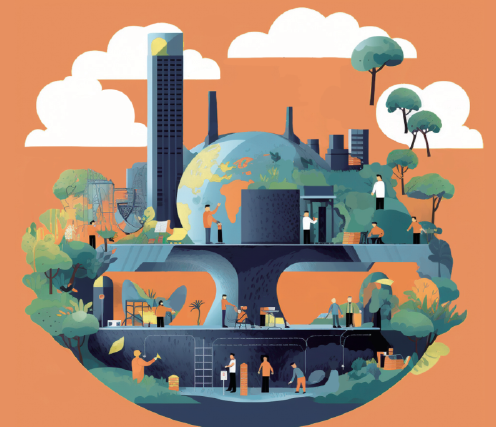
Developing countries are in urgent need of financial and technical climate support from developed countries
Climate change poses a huge challenge to the economic and social development of mankind, requiring the joint efforts of all countries to address it. The ideal scenario would be for countries around the world to set and meet consistent and ambitious targets to reduce greenhouse gas emissions and ultimately achieve climate neutrality. However, due to the differences between countries in terms of economic level and historical emissions responsibility, the actual emissions reduction targets vary from country to country. In order to maximize the solidarity of countries around the world to jointly tackle climate change, the international community has listed the common but differentiated responsibilities principle as a key guideline. This principle not only clarifies the primary responsibility of developed countries, but also points out that developing countries are still at an important stage of economic development, requiring substantial climate finance and technical support. The principle has played an important role in dividing responsibility for global greenhouse gas emissions reduction and promoting cooperation between developed and developing countries.
However, in reality, climate cooperation between developed and developing countries is not always smooth, and sometimes can even be described as adversarial. One crucial reason for this is that the goals of the two categories of countries diverge. The United Nations Sustainable Development Goals state that we need to eradicate poverty, protect the planet, and ensure peace and prosperity for all. As a result, for financially constrained developing countries, tackling climate change often conflicts with goals such as poverty eradication. Taking the energy transition as an example, developing countries often face high energy transition costs and have to make difficult trade-offs between economic development and emissions reduction in order to meet energy demand growth.
Despite the challenges faced by developing countries, developed countries have been slow to fully honor their commitments to developing countries. At the recently concluded COP28, UN Secretary-General Antonio Guterres stressed the importance of achieving climate justice, and urged developed countries to honor their commitments in terms of climate finance and technical support to help those developing countries that are financially challenged and deeply affected by climate change. In addition, some economies have implemented unilateral climate sanctions, such as carbon tariffs, exacerbating the burden of emissions reduction on developing countries and global inequality. Such actions seriously violate the principle of common but differentiated responsibilities and undermine the prospects for cooperation in global climate governance.
In recent years, developed countries have habitually criticized developing countries for not making sufficient overall efforts for emissions reductions and their slow energy transitions, while ignoring the actual difficulties developing countries face. Even the EU countries, which are regarded as the "models" for global low-carbon development and energy transformation, have to adjust their short-term energy transformation strategies to prioritize energy supply when facing energy crisis impacts. The UN SDGs aim to ensure access to affordable, reliable and sustainable modern energy for all, while eradicating all forms of poverty worldwide. This presents a formidable challenge for developing countries. At present, developing countries are still in the stage of rapid industrialization and urbanization, resulting in significant energy demand. Rapidly pushing the energy transition may lead to energy supply shortages and higher transition costs. This is a great challenge for some economically disadvantaged countries
Compared with other major economies and large energy consumption nations, China, as a key developing country, has a certain representative energy transition path. Therefore, China can be an example to illustrate the difficulties in the energy transition of developing countries. First, China's total energy consumption is large, and its industrialization and urbanization have not been completed, and its energy consumption is still in a rapid growth stage. Second, China's energy consumption structure of traditional fossil energy accounts for a high proportion. Although its renewable energy has registered a growth rate of more than 20 percent in recent years, due to the small base, it is impossible for the country to achieve a rapid scale replacement of fossil fuel energy. Therefore, no matter from the growth trend of energy demand or from the energy structure dominated by fossil energy, developing countries face great challenges in the energy transformation.
Developed countries, which have a high level of development and have historically been the main source of greenhouse gas emissions, should assume leadership and responsibility in addressing climate change.
First, because of the Industrial Revolution and the extensive economic model in history, developed countries have emitted a large amount of greenhouse gases and are the main contributors to global warming. This historical responsibility makes it necessary for developed countries to increase their emissions reduction efforts and take the lead in tackling climate change. At present, with the exception of European Union countries, the overall emissions reduction targets of other advanced economies are conservative. Even some countries are not firm in their stance on the issue of climate change, and use this issue as a political and diplomatic chip, with frequent policy changes.
Second, developed countries should provide green and low-carbon technologies and climate finance support to actively help developing countries achieve their low-carbon transition. In the fields of energy transition and climate adaptation, developed countries have relatively advanced technology and experience in policy formulation and management, and they can fully share resources through the establishment of cooperation mechanisms to help developing countries more effectively cope with climate change. For example, flexible compliance mechanisms, such as the Clean Development Mechanism, could continue. Through such an international transfer mechanism, developing countries can obtain financial and technical support from developed countries based on their own low cost of emissions reduction, and developed countries can also achieve emissions reduction through lower cost. Finally, developed countries should abandon unilateral sanctions represented by carbon tariffs, which could add to the difficulties of reducing carbon reductions in developing countries, and actually defeat the purpose of carbon tariffs.
Developed economies represented by the EU, the United Kingdom and the United States have planned to implement carbon tariff policies. The EU's Carbon Border Adjustment Mechanism (CBAM) has come into force since October 2023.The EU is determined to use the CBAM to reduce the risk of carbon leakage and improve the competitiveness of its own relevant high-carbon enterprises. However, once the carbon tariff is implemented, it will have an important impact on the global trade of high-carbon products, bring additional costs to the high-carbon commodities exported by developing countries to Europe, reduce the competitiveness of relevant industries in developing countries, and increase the burden of emissions reduction and affect economic growth and poverty reduction in developing countries.
To sum up, developing countries face difficult trade-offs between achieving rapid economic growth and addressing climate change, and are in urgent need of financial and technical support from developed countries. However, in reality, developed countries have failed to shoulder their responsibilities, even tending to abandon cooperation and pursue unilateralism. Addressing climate change is the common goal and responsibility of mankind. In order to ensure sustainable development, the international community must pay attention to the complex challenges and difficulties faced by developing countries in climate action, and advocate developed countries play a more active role in global climate governance.
The author is dean of the China Institute for Energy Policy Studies at Xiamen University. The author contributed this article to China Watch, a think tank powered by China Daily.
The views do not necessarily reflect those of China Daily.
Contact the editor at editor@chinawatch.cn





