



All older people can benefit from 'silver economy'







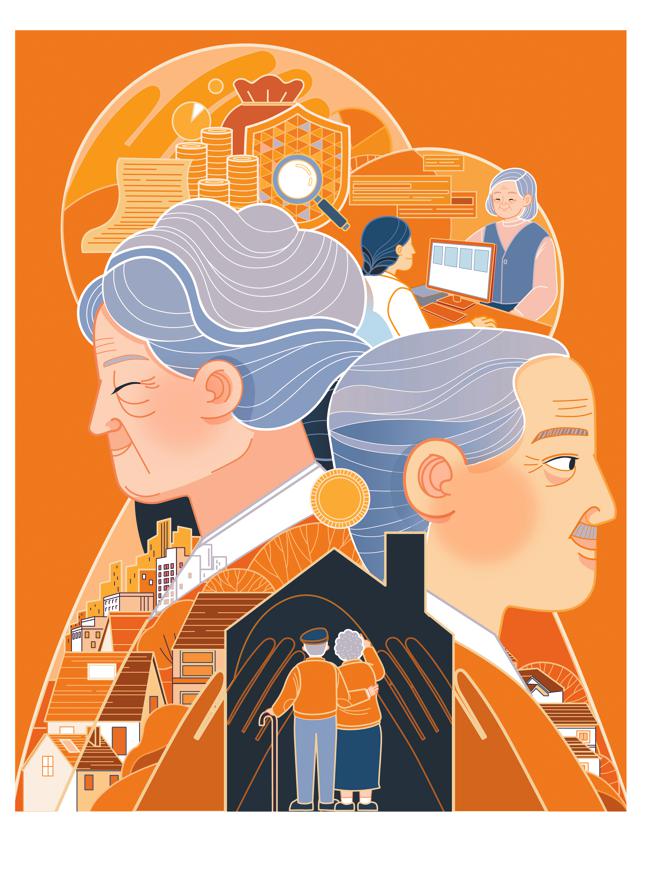
The world's population is aging: by 2025, people aged 60 or above will represent 20 percent of the global population. The gains in socioeconomic development that are driving this demographic transition mean that many people are reaching old age healthier, wealthier and better educated than previous generations.
With significant aggregate purchasing power and specific needs, older people in developed and emerging economies are seen as the fastest growing consumer group in the world, offering opportunities for business growth for many major industries. The market for products and services aimed at people aged over 50 — known as the "silver economy" — is currently estimated to be worth $15 trillion globally and is expected to rise exponentially as the number of older people continues to grow.
Importantly, the "silver economy" can contribute to a country's social development alongside the economic gains because when businesses set out to boost their profits by designing solutions to the challenges faced by older people, they can also create social value by improving the quality of life of people as they age.
China has the largest number of older people in the world with 216.8 million of its population aged 65 or above, and that number is set to increase to 400 million by 2050. As a result, China's "silver economy" is projected to triple in value, from $750 billion in 2020 to $2.1 trillion by 2030, and could reach a value of $4.2 trillion, accounting for 10 percent of China's GDP by 2035.
The recently published "Opinions on Developing the Silver Economy and Improving the Well-being of Older Person" is China's first specific policy guideline for the development of China's "silver economy", and China's experience over the next decade can offer important insights for emerging economies into how best to meet the needs of an aging population while also maximizing the economic development opportunities from such a demographic shift.
As governments and companies begin to focus on the opportunities created by the "silver economy", it is important to not stereotype older people as simply a collection of problems that can be solved through their consumption of tailored products and services. The United Nations emphasizes the right of older people to be active participants in the development of their societies, and the responsibility of governments to ensure that an enabling, stigma-free environment is created where older people can continue to fully engage in community life.
Older people make significant social and economic contributions to society through paid work, as community volunteers, and in family care roles. At the same time, active participation in social, economic and volunteering activities and lifelong learning support the individual growth and well-being of older people.
As such, strategies to develop the "silver economy" should include policies that support the continued employment of older people who wish to keep working, and provide incentives for companies to encourage them to retain older workers, as well as ensuring that schemes to support start-ups and small businesses are extended to people above the national retirement age, recognizing that the flexibility of self-employment often appeals to older people and offers a way to supplement pension income while remaining physically and mentally active.
While discussions on the "silver economy" often focus on the role of the private sector, the public sector has an equally important role to play. As people enter old age, they carry with them the inequalities they have experienced throughout their life, and the differences in levels of education, wealth and health accrued over a lifetime result in poorer well-being for the most vulnerable older people.
Many sectors make up the "silver economy" including healthcare, transport, banking, the leisure industry and the construction industry. If these sectors only pitch their innovative products and services to the wealthiest older people, socioeconomic inequalities within the older population will increase. Providing inclusive social protection schemes and services for older people who need them and ensuring the most transformative innovations for the elderly can be mainstreamed across public sector services are critical to ensuring that all older people have an opportunity to benefit from the well-being gains of the silver economy.
In this regard, the needs of older women need special attention, and policies for the development of the "silver economy" need to purposely address gender inequalities, because globally, women enter old age with fewer financial resources than men.
More likely to be employed in the informal sector, to have missed years of paid work due to time spent providing unpaid care in the family and having had fewer opportunities for career advancement, older women face, higher levels of financial insecurity and therefore, are less likely to be able to benefit from the consumption of the products and services on offer through the "silver economy". Therefore, especially when it comes to healthcare, women have a greater need. While women live longer than men, they experience more years of poor health in their old age.
The "silver economy" offers multiple benefits — for the industries that design their products and services to meet the needs of older people, for the older people who are able to live more independent, engaged lives by availing of those products and services and for the policymakers who want to boost economic growth and social development. However, the benefits of the "silver economy" can be achieved for all older people only if policies and strategies are designed to purposely address enduring inequalities.
The author is the representative of the United Nations Population Fund (UNFPA) in China. The views don't necessarily reflect those of China Daily.
If you have a specific expertise, or would like to share your thought about our stories, then send us your writings at opinion@chinadaily.com.cn, and comment@chinadaily.com.cn.





