


Accessible documentary explores China before China







Digital technology has been used to reproduce the grand capital, which was located on vast green plains. The city had a remarkable water and moat network, mostly composed of artificial waterways, and eight of its nine city gates were water gates.
As very little waste has been found in these former waterways, this would seem to indicate that they were strictly controlled to ensure smooth water traffic, the episode's narrator explains.
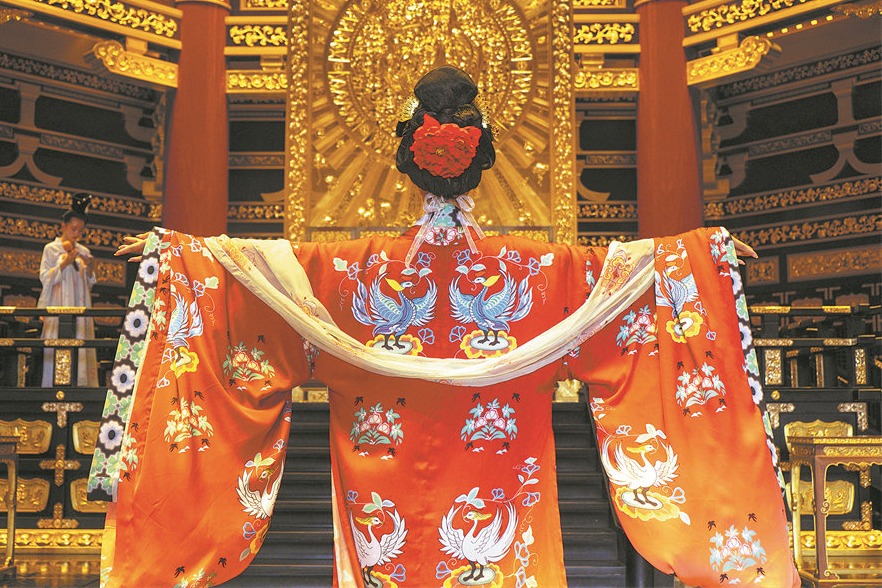
He adds that in the center of the city, an area known as Mojiaoshan, a 10-meter-tall man-made terrace was home to the palaces of kings and nobles, as well as other ceremonial architecture. The episode shows the king and queen, accessorized with various jade ornaments from head to chest, being escorted by lesser leaders as they attend a major sacrificial ceremony.
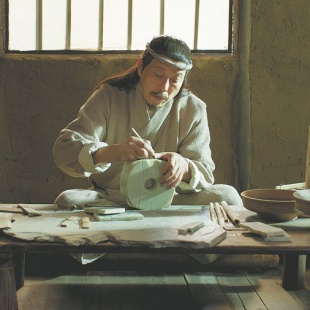
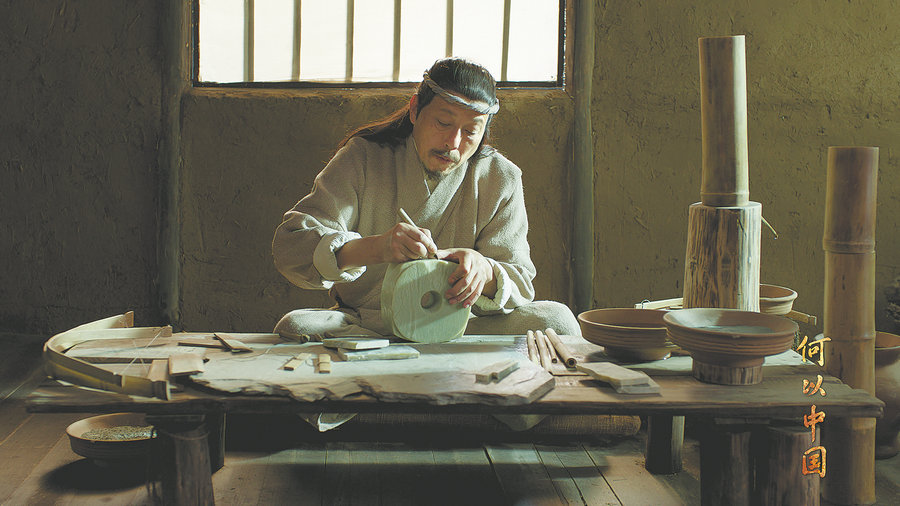
He says that outside the palatial complex were workshops making high-end handicrafts like jade and lacquer ware and the artisans' residences, as well as the mausoleums of the upper classes, and that thick walls encircled the inner city. Civilians lived in small settlements on the outskirts.
West of the ancient city, between the canal-laced flatlands and the verdant Tianmu Mountains, the remains of a system of upstream and downstream reservoirs have been found.
As the largest dam system in the world at the time of Liangzhu, it had a pondage capacity three times the size of West Lake in Hangzhou today.
Zhao Hui, a professor at Peking University's School of Archaeology and Museology, who was part of the pre-review of the documentary, says the costumes, props and scenes accord with academic advice and have avoided exaggeration.
"The documentary centers around the historical evolution of early Chinese civilization and aims to create an integral, logical and vivid narrative. It's a difficult and rare attempt," he adds.
According to Zhao, archaeological work and more than a century of academic accumulations enabled a preliminary overview of history, all of which has been woven into this inspirational series, which is accessible to people from all walks of life.
The first episode, which features the Qin (221-206 BC) and Han (206 BC-AD 220) dynasties, reveals the formation of a united, centralized and multi-ethnic country, with archaeological evidence showing the measures taken to sustain unification and efficient administration over a vast area.
From the second episode, the documentary rewinds to the Paleolithic period, and delicately presents the gradual evolution of Chinese civilization since its infancy, all the way through to the emergence of the dynastic state around 3,800 years ago, when the main thread of Chinese history began, to when the country became a united empire during the Qin and Han eras.
"We intended to show what China was like before expounding on how and when its characteristics were cultivated. It's like throwing out the answer first, and then explaining our way of thinking," Qin Ling says.
In this way, later episodes take time to unfold the historical timeline. From the Paleolithic to around 6,000 years ago, ancient people gradually began to settle, inventing pottery for daily use, exploring primitive agriculture and practicing deity worship.
The documentary also delves into the various ancient cultures that emerged from about 6,000 to 5,000 years ago in different parts of the country, through which a range of regional characteristics developed, amid a general trend of intensifying social inequality and differentiation, and the increasing use of pottery and jade ware, the latter mostly in the form of ritual and funerary objects.