



Rural vitalization will improve people's lives in the countryside







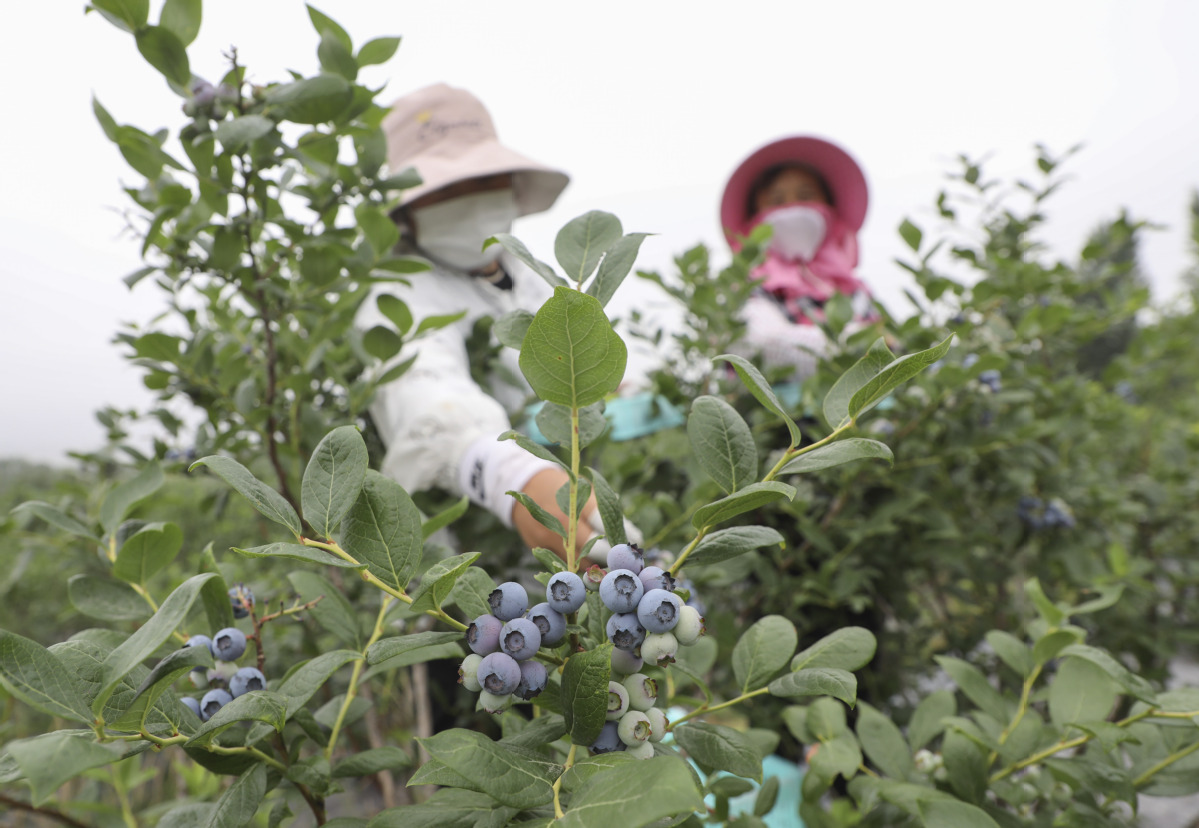
The annual Central Rural Work Conference held in December has set the goals for agricultural and rural development in 2024.
Food security has always been high on the government's agenda because it has to feed nearly 20 percent of the global population while having just 7 percent of the world's arable land. To ensure that 1.41 billion Chinese people have enough food to eat, the government for years has made it sure that at least 123 million hectares of land is protected for cultivation.
But since agriculture's economic return is slow and low as compared with other industries, some people or regions cannot resist the temptation of making quick money by turning arable land into real estate or economic zones. To prevent such acts, the central authorities have to send supervision teams to different regions. As a result, a number of local officials have been disciplined for turning agricultural land into commercial land.
Reaffirming the commitment to ensure China has at least 123 million hectares of cultivable land, the Central Rural Work Conference in December said the government will punish those who cross this redline.
Since it has limited arable land, which is unlikely to increase in area, China now lays emphasis on increasing per-hectare yield by adopting modern farming and by turning sloping fields into irrigable land. The country has spent billions of yuan in flattening sloping fields and introducing modern irrigation systems.
The Central Rural Work Conference said that the country will use seeds that can help increase grain output by 10-20 percent. In fact, in Sanya, Hainan province, where I am writing this column from, most of the big farmlands owned by farmers have been rented out to agricultural research institutes that have invested heavily here. The tropical climate in Sanya can speed up per hectare yield it is hoped.
The government's efforts to increase production have paid off with annual grain output staying above 650 million tons for nine consecutive years. This means the Chinese people have more than enough to eat.
But the increasing grain output does not necessarily mean people in rural areas can increase their incomes by a big margin considering the country's huge rural population and limited arable land. To give farmers a better life, after lifting hundreds of millions of farmers out of absolute poverty three years ago, China has launched a rural vitalization program.
Although rural income has been increasing at a faster pace than urban income over the past few years, there is still a big income gap between rural and urban per capita income, as rural people's income is less than half of those in the towns and cities. In 2023, for instance, the per capita disposable income in urban areas stood at 51,821 yuan ($7,201) while that in rural areas was only 21,691 yuan.
Now that China has made boosting domestic consumption as its development policy, increasing rural income is essential to realizing this goal. In fact, the Central Rural Work Conference has decided to take measures to increase farmers' income. Some of the measures that have already proved successful include providing small sum loans for farmers to build greenhouses, or start their own agriculture-related business, or grow crops that can be sold at a higher price by providing them with technical support. Besides, many villagers are already making money by exhibiting their folk culture and marketing the serene natural environment of their villages by offering visitors homestays.
Rural vitalization will take time. But given the central authorities' strong determination and vow to take effective measures to improve rural areas, rural people can expect an ever-improving life.

The author is former deputy editor-in-chief of China Daily.
kangbing@chinadaily.com.cn





