



US, Japan defense moves imperil peace







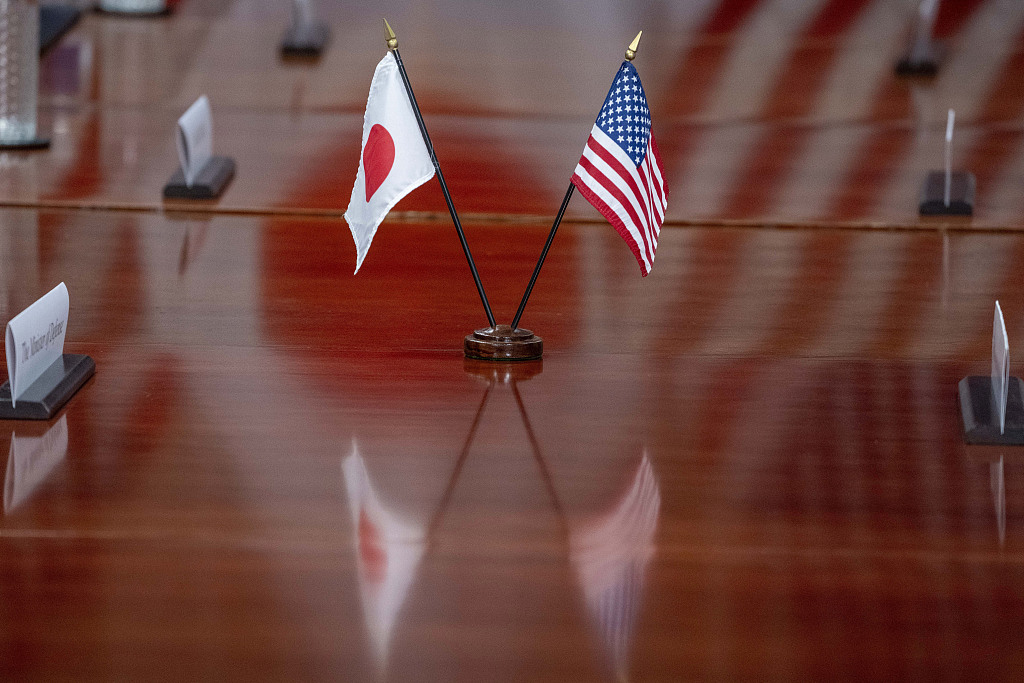
The 2024 Fiscal Year National Defense Authorization Act US President Joe Biden signed in December approves the record-high defense budget of $886 billion for this year. And Japan increased the country's defense budget by 16.5 percent to about $55.9 billion for 2024, which also set a new record.
Both the US and Japanese governments have said the increase in defense spending is aimed at boosting their capability to address current and future threats, identifying China as one of the primary threats. The increase in the two countries' defense budgets is likely to affect regional peace and stability and impact the international security situation.
First, the fact that the US has increased its defense budget and is trying to consolidate its military presence in the Asia-Pacific region at a time when geopolitical competition is escalating will heighten tensions in the region. The National Defense Authorization Act has allocated $12.7 billion to the "Pacific Deterrence Initiative", which focuses on bolstering the US' military presence and defense capability in the Asia-Pacific, and deepening military cooperation with its regional allies.
The NDAA upholds the AUKUS(Australia, the United Kingdom and the United States) alliance, including the commitment to supply at least three Virginia-class nuclear-powered submarines to Australia in the 2030s. It also approves the exemption of export control for the UK and Australia to facilitate the joint development of disruptive weapons and military technologies such as hypersonic weapons, artificial intelligence and quantum computing.
It is clear therefore that the US is strengthening its alliances in the Asia-Pacific to isolate China and undermine regional security, thus increasing the risk of confrontation.
Second, tensions across the Taiwan Strait are escalating due to the US' efforts to boost Taiwan's "defense capability", potentially raising the risk of conflict in the region. In fact, the NDAA includes several provisions related to Taiwan, including assessment of the absorptive capacity of the "defense forces" of Taiwan, helping Taiwan to bolster its resilience, establish comprehensive training, advisory, and institutional capacity-building programs for Taiwan's "security forces", and deepening cybersecurity cooperation with Taiwan. It also gives the US administration the green light to invite Taiwan to participate in the Rim of the Pacific exercise.
Hence, the act is part of the US' bigger scheme to interfere in China's internal affairs, and poses a threat to China's sovereignty, national security and development interests, thereby raising the risk of conflict.
Moreover, the US is trying to check the development of key technologies to prevent China from making any advancements in the military and high-tech sectors. In the name of securing the defense supply chains and preventing any potential security risks, the US has refused to have any military cooperation with China.
Worse, the NDAA prohibits the US Department of Defense from entering into any contract of purchasing goods, services or technologies from companies associated with the Chinese government or collaborating with companies providing consultation services for the People's Liberation Army or related entities. In addition, it restricts cooperation with all seaports that use or share data with China's National Transportation and Logistics Public Information Platform.
The act has expanded the scope of the ban on the purchase of Chinese-made drones while banning the purchase of Chinese-made computers, printers and specific battery technology.
This makes it clear the US will use the NDAA as a tool to undermine China's defense capability and global competitiveness.
As for Japan, it has increased its defense budget for the 10th consecutive year. According to the National Security Strategy, National Defense Strategy and the Defense Buildup Program, which were approved in December 2022, Japan will allocate about 43 trillion yen (about $300 billion) over five years, from fiscal year 2023 to fiscal year 2027, to boost the country's military capability.
Japan's annual defense expenditure will nearly double to about 10 trillion yen (about $68 billion), making it the world's third-largest military spender — behind only the US and China. And the Japanese government claims this decision is primarily in response to the growing military threats from China, Russia and the Democratic People's Republic of Korea.
Japan's defense budget includes several key elements. To begin with, Japan has prioritized the strengthening of its long-range missiles, and plans to procure Tomahawk cruise missiles from the US to bolster its counterstrike capability, particularly in case of a cross-Taiwan Strait conflict.
Also, Japan is focusing on bolstering its regional defense capability by, among other things, allocating more funds to fortify its Integrated Air and Missile Defense System, which is designed to counter emerging threats, and has plans to build new destroyers equipped with the US-made Aegis missile defense system to boost its defense capability.
In particular, Japan aims to bolster its deployment capability to secure its southwestern islands in the event of a cross-Strait conflict. And to achieve its goal, the Japanese government plans to establish a new joint land-sea-air force, which will ensure the rapid deployment of troops, equipment and supplies to Japan's southwestern islands.
As a matter of fact, the US and Japan have reached an agreement to hold more military exercises around Japan's southwest islands. To be sure, Japan's record defense budget will greatly impact the security situation in the surrounding region, which in turn will exacerbate tensions in both the East China Sea and the South China Sea, increasing the risk of conflict.
And the strengthened Washington-Tokyo alliance could prompt the US to adjust its military deployment in the Asia-Pacific, potentially undermining the regional strategic balance. As such, China needs to closely monitor the situation and use diplomacy to defuse the tensions in the region.
The author is a Beijing-based military scholar.
The views don't necessarily represent those of China Daily.





