Plan aims to unite foreign, domestic trade







Move is part of nation's broader goal to achieve high-quality growth
China has adopted a package of policy measures to integrate its domestic and foreign trade systems at a faster clip, a move officials and experts said will further unlock the potential of Chinese enterprises and enable them to fully leverage both domestic and international markets and resources.
Efforts on this front will also help address the fragmentation in regulatory systems, industry standards and trade practices, so as to create a more seamless and integrated market climate featuring improved efficiency and increased competitiveness, they added.
The State Council, China's Cabinet, announced a series of measures in a guideline aimed at expediting the integration of domestic and foreign trade in December, with a special focus on enhancing regulatory frameworks, market connectivity, the business environment and financial support.
The Chinese government's commitment to supporting the integration of domestic and foreign trade is aligned with its broader goal of fostering a new development paradigm and achieving high-quality development, said Sheng Qiuping, vice-minister of commerce, at a news conference.
The importance of the integration has been brought to the forefront amid the shifting global trade landscape, which is characterized by heightening geopolitical tensions, rising protectionism and bilateralism and dampened consumer demand, said Zhang Yansheng, chief researcher at the China Center for International Economic Exchanges.
By facilitating synergy between the domestic and international markets, businesses can seize opportunities effectively and adapt to changing market dynamics, Sheng said.
This approach aims to support businesses in operating with a dual-track strategy, encouraging foreign trade companies to explore domestic markets while prodding domestic trade enterprises to engage in foreign trade, the vice-minister added.
However, the varying requirements for product certifications and compliance due to the divergence between domestic and international standards have created complexities and obstacles that increased labor, time and financial costs for businesses, dampening their motivation to shift their business focuses, said Zhang Jianping, director of the China Center for Regional Economic Cooperation, which is part of the Chinese Academy of International Trade and Economic Cooperation.
The unification of domestic standards and international best practices, therefore, has been identified as a crucial aspect of advancing the integration of domestic and foreign trade. A robust mechanism for tracking and adopting international standards should be established, ensuring that China remains up-to-date with the latest global trade norms, according to the guideline.
Since the launch of the 14th Five-Year Plan (2021-25), China's efforts to embrace international standards have yielded substantial results, said Yao Lei, an official with the State Administration for Market Regulation, the country's market watchdog.
With an emphasis on industries such as the machine, chemical engineering, information technology and consumer goods sectors, the country has adopted 2,509 internationally applicable standards. Notably, in key consumer sectors such as household appliances and textile apparel, the consistency between critical technical indicators and international standards has reached 95 percent, Yao said.
The willingness of enterprises to pursue integrated domestic and foreign trade has grown stronger as evidenced by data from the ministry. Among industrial firms with annual main business turnover of 20 million yuan ($2.8 million) or more, the number of enterprises involved in integrated domestic and overseas trade increased by 4.7 percent in the first 10 months of 2023 compared with the same period the previous year.
Liu Xiaobin, vice-president of Miniso, a budget retailer and variety store chain, said that the integration of domestic and international trade has provided the company with a broader market space and opportunities for global expansion.
By capitalizing on the benefits of a streamlined supply chain and efficient resource utilization, the company has been able to lower costs and improve operational efficiency. These advantages not only contribute to increased profitability but also enable Miniso to offer competitive pricing to its global customer base, Liu said.
The contrasting dynamics of domestic trade and foreign trade also stand in the way of their integration. The nature of domestic trade emphasizes smaller and more dispersed orders, while foreign trade often involves dealing with bulk orders and engaging in customized production, said Wang Xiaosong, a professor of economics at the Renmin University of China.
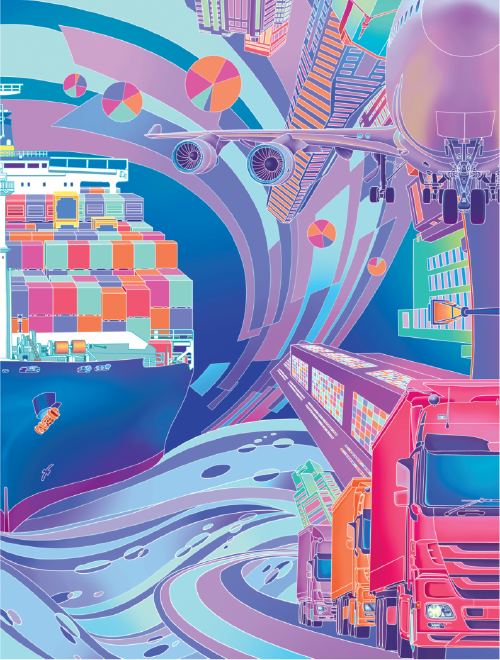
In terms of goods transportation, domestic trade relies heavily on road and air transportation, which is associated with relatively higher logistics costs. Conversely, foreign trade predominantly relies on sea transportation, which has comparatively lower freight fees, Wang added.
Efforts will be made to facilitate the entry of products meant for overseas markets into domestic markets by leveraging various channels and platforms. Meanwhile, domestic trade companies will be encouraged to harness new retail pathways such as cross-border e-commerce to expand their global presence, according to the guideline.
Moreover, steps will be taken to enhance logistics convenience by strengthening cooperation with overseas ports, prioritizing the development of intermodal transportation between coastal and inland ports and expediting the construction of cross-border logistics infrastructure, the guideline said.
China has solidified its position as the world's largest manufacturing hub and has been the largest trading partner for over 140 countries, presenting a significant opportunity for domestic trade enterprises to tap into the immense potential of the global market, said Xu Hongcai, deputy director of the China Association of Policy Science's Economic Policy Committee.
The country also boasts the second-largest consumer market globally, and export-driven businesses should take advantage of the rising consumer demand and tailor their products and services to meet the needs of China's domestic buyers, Xu added.
To this end, these firms should ensure that products sold domestically are produced on the same production lines, meet the same standards and are of the same quality as exported products, Xu said.
China will intensify efforts to bolster the synergy between foreign trade and domestic trade credit insurance, aiming to provide comprehensive support for an integrated insurance plan, the guideline said.
Financial institutions should provide tailored services to meet the specific needs of businesses engaged in such trade activities. To facilitate cross-border trade, China will also expand the scope of the unified banking settlement account system it is piloting, which combines domestic and foreign currency accounts, it added.
Initiatives such as supply chain finance and trade finance can be promoted to encourage banks to offer creative lending solutions to meet the needs of companies engaged in the integration of domestic and foreign trade, said Song Xuetao, chief analyst at TF Securities.
Banks are encouraged to utilize receivables, inventory, warehouse receipts, orders and insurance policies of these companies as pledges to roll out new financing products, Song added.
wangkeju@chinadaily.com.cn




- Taiwan's DPP authorities slammed for hyping up security risks of mainland apps
- Peaceful reunification to bring opportunities to Taiwan: mainland spokesperson
- Global experts gather in Macao for talks in space, planetary sciences
- First national standard for disease classification and coding in Tibetan medicine released
- China records 697 million border crossings nationwide in 2025
- Think tank forum between KMT and CPC to be held on Feb 3: spokeswoman