



Will AI change the course for human development?







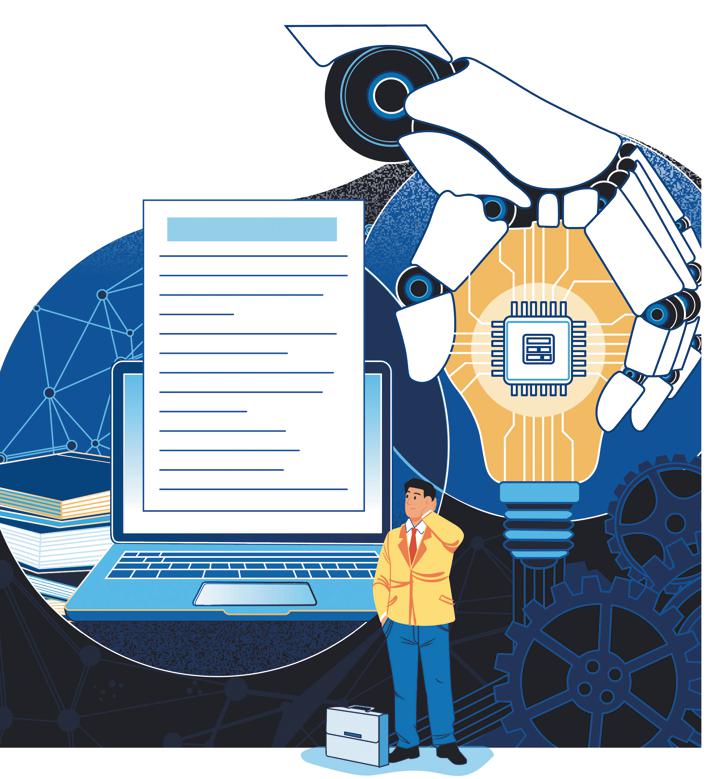
I share the increasingly widespread view that artificial intelligence is going to have huge social and economic consequences.
Concretely, how might AI affect human development, particularly in the countries where the World Bank works? AI will help people acquire skills and knowledge. It also has the potential to extend the reach and quality of public services, including for health and social protection. Finally, it is likely to augment human capital and thus amplify productivity for many people, but with difficult-to-predict impacts on jobs and distribution.
AI could yield large gains for learning. My friends who are teachers and even my own French tutor use AI to write lesson plans and quizzes. This application is available now and does not require specialized knowledge or tools. Teachers around the world who have a smartphone can do this with free tools like ChatGPT-3.5.
Tutoring by humans has been shown to have a great impact on learning, and AI tools are already competent text — and voice-based interactive tutors. When I tutored, as a volunteer at a local library and as a father at home, I customized my approach to each child's needs. This capability for AI is coming and offers the possibility of delivering individualized tutoring at low cost and on a large scale.
AI will also improve access to quality healthcare. The World Bank's Digital-in-Health report identified three areas in which AI is likely to be adopted quickly in healthcare in low — and middle-income countries. AI can pull together and interpret disconnected medical records. It can provide accurate and conversational chatbots as entry points to healthcare. And it can support medical decisions, particularly in radiology, an acutely understaffed specialty in developing countries.
Breast cancer screening, for example, is typically conducted with "double readings" by two different specialists to reduce errors. In a randomized trial, single radiologists assisted by AI detected breast cancer at the same rate as radiologists conducting double readings, reducing workloads by 44 percent.
In addition, AI could be a boon for improving mental health — an essential and underappreciated component of human capital — by providing a free or cheap personal therapist in your pocket.
AI can also help to make social protection systems more effective, as demonstrated in a World Bank-supported project in Togo. AI was used there to improve the targeting of a cash transfer program, to make sure funds were spent on those most in need.
Millions of words have been written speculating on the impact of AI on jobs. Like all technology, AI will boost productivity for some tasks, generate new jobs, and replace some jobs altogether. The unprecedented nature of AI makes it impossible to forecast with confidence what lies ahead. That said, because relatively few people in developing countries work in knowledge-intensive jobs, AI's impacts on employment may be more muted than in high-income nations. And how AI may be used in agriculture and traditional sectors remains to be seen.
AI augments human capital, and in a variety of tasks, it has proved to be an equalizing force.
One study, for example, found that AI improved the quality and speed of professional writing, with the largest gains for low-ability writers. Similar results have been found for creative writing, legal analysis, and customer support. In other words, if you are a highly talented writer, lawyer, or customer service agent, current AI may not help you much. But if your skills are in the lower half of the distribution, your human capital can now get a powerful assist.
These early results may not hold over the long term and in developing countries' context. Alternatively, AI could end up being an "escalator" — improving the productivity of all workers roughly equally. Or it could be a "kingmaker" — benefiting a small minority of superstars. A key question for developing countries is how to make AI more of an equalizing force. Step one is to expand access and affordability of internet connections, which the World Bank is working to do.
Unfortunately, AI augments the human capital of bad actors as well. This creates myriad risks, including for privacy, cybersecurity and misinformation. One of the most worrisome scenarios is that AI combined with advances in synthetic biology will make it easier to create new pathogens that could result in an engineered pandemic.
The influential thinker Yuval Noah Harari says that because of AI, "for the first time in history nobody has any idea how the world would look like in 10 years", and that consequently "we don't know what skills will be needed. So the most important skill is the skill to keep learning and keep changing throughout our lives, which is very, very difficult. To keep reinventing ourselves ... Traditionally, people thought about education like building a stone house with very deep foundations. Now it's more like setting up a tent that you can fold and move to the next place very, very quickly. Because that's the 21st century".
Harari was talking about individuals, but the same logic applies to institutions. To face both AI's opportunities and risks, companies, governments, and international organizations, too, need to prepare themselves to learn and adapt to the coming wave.
The author is manager of the Human Capital Project at the World Bank.
The views don't necessarily reflect those of China Daily.





