



Can southern China introduce central heating?







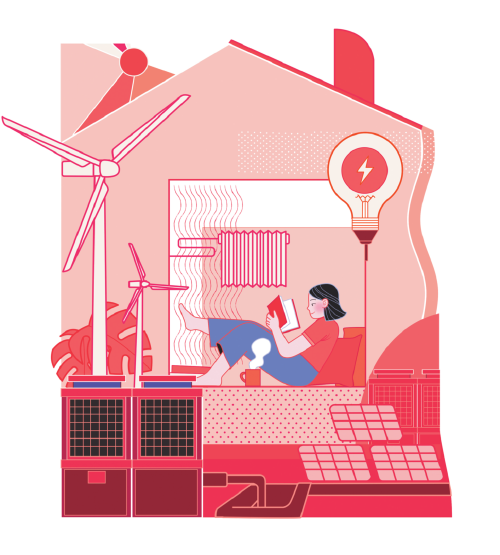
During winter, China provides central heating north of the Qinling Mountains and Huaihe River, that is, between 32 and 34 degrees north of the Equator. Since people living south of the river do not enjoy central heating, they rely on air conditioners and electric heaters to keep themselves warm during winter.
The debate on whether central heating should be available in southern China, or south of the Qinling Mountains-Huaihe River has intensified because of extreme whether events, including severe cold waves, are occurring more frequently. Although few governments in the southern provinces have any plans to provide central heating, calls for central heating in South China have increased recently, especially due to the improvement in people's living standards.
Given the different climate conditions and building structures in the northern and southern regions, providing central heating in South China has always been a controversial issue. The difference in the heating systems on the two sides of the Huaihe River is due to the vast difference in the lowest temperatures during winter, and the architectures and the energy structures in northern and southern China.
In the past, people in northern China, especially in rural areas, used to burn coal to keep their homes warm in winter. So the authorities later developed the coal-fired central heating system to improve heating efficiency and to reduce energy loss. But for some years now, the central government has been prompting northern China to replace coal-powered heating with gasor electricity-powered heating in households to improve environmental conditions while at the same time reducing carbon dioxide emissions, which is essential for the country to achieve its low-carbon transition while greatly reducing air pollution.
People in the southern region, on the other hand, normally depend on air conditioners and electric heaters to keep their homes warm during winter. Hence, it is difficult for the southern region to provide central heating by using either coal or low-carbon energy. Also, central heating requires substantial investments in pipeline networks and has different requirements for building architecture. In fact, the major difference between northern and southern regions is in the building structures. Buildings in northern China need much higher levels of wall insulation than those in southern regions. The coal option is out due to high-carbon emissions. The new energy option, which is low-carbon, is yet to be developed.
Although the use of air conditioners and electric heaters for heating increases household expenses and leads to higher carbon emissions, while posing safety risks, consideration of the demand for central heating in the south should not be a one-size-fits-all approach. From the economic and energy-saving perspectives, the southern region adjacent to northern China is better suited to adopt the central heating system.
Based on the experience in the north, central heating can help increase energy efficiency, reduce household expenses, ensure safety and meet environmental protection norms. The central heating system does face some problems, though, the biggest one being that it cannot meet the demand of individual families. Heaters that can be remotely controlled by individual households can address this problem to a certain extent.
Therefore, some southern areas that experience low temperatures similar to the north have two main options for implementing a central heating system: an electric-powered heating system or a heating system that uses new energy.
The advantage of the first option is that the low-carbon transformation of the local electricity generation structure can help build a relatively clean heating system. A central heating system in southern China will emit less carbon, by increasing energy efficiency, than the individual air conditioners and electric heaters used by households. However, the low-carbon transformation of the heating system requires good coordination among the power generators and heating providers, and a large investment to build infrastructure.
The second option is conducive to fostering heating systems with new energy in accordance with the needs of individual households, although it would take a long time to complete. As such, there are three suggestions for introducing a central heating system in southern China.
First, it is necessary to renovate old buildings and tighten energy-saving norms for new buildings to keep buildings warmer and boost energy efficiency irrespective of whether households choose a central heating or individual heating system.
Second, a central heating system will boost the development of digital and intelligent heating products in high-income southern areas. Intelligent heating products and business formats can meet the demand of individual families, as well as alleviate the problem of energy efficiency caused by unified dispatch in northern China.
And third, although many regions have launched new energy heating projects fueled by nuclear energy, geothermal energy or solar energy, they still face challenges such as inadequate heating effect and higher prices. It would take huge efforts, including time and money, to replace the existing coal-fired central heating system with a new-energy heating system in northern China. In contrast, there is no central heating for residential households in southern China, and local governments are under pressure to reduce carbon emissions. It is therefore more likely for southern China to adopt a low-carbon centralized heating system.
Lin Boqiang is head of the China Institute for Studies in Energy Policy at Xiamen University; and Huang Hui is project manager of Energy Transition Project of the Natural Resources Defense Council.
The opinions expressed here are those of the writer and do not necessarily represent the views of China Daily and China Daily website.
If you have a specific expertise, or would like to share your thought about our stories, then send us your writings at opinion@chinadaily.com.cn, and comment@chinadaily.com.cn.





