Bid to keep neon glowing in HK







Conservationists act after the removal of thousands of street signs
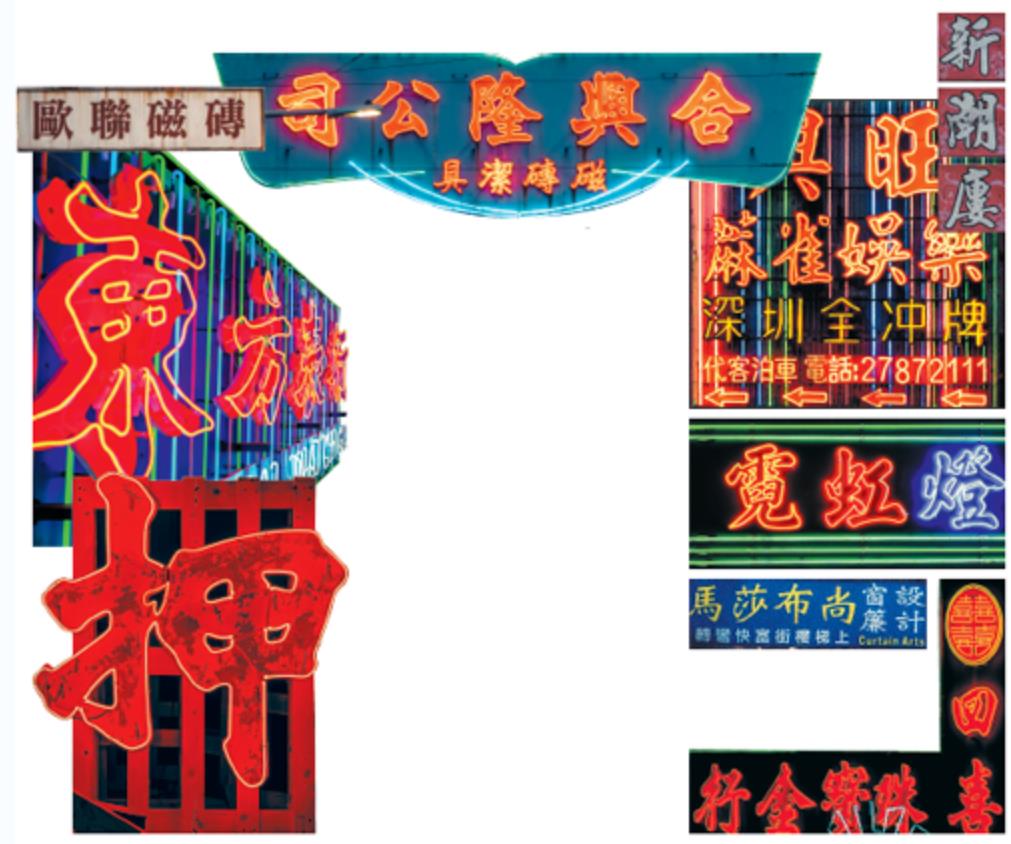
For almost a century, Hong Kong's streets were illuminated by countless thousands of neon signs.
However, the emergence of modern advertising methods such as light-emitting diode displays, or LEDs, along with stricter government regulations have reduced the number of these signs in the city to about 400. The stricter rules have been introduced due to safety concerns.
But despite this reduction in numbers, a group of enthusiasts is working to preserve the signs.
Cardin Chan Sin-man, general manager of Tetra Neon Exchange, a self-funded local neon conservation organization, has spent the past five years saving dismantled neon signs, which are often regarded as waste.
In 2017, while exploring the city's streets with a camera, she saw that many of the signs had disappeared. "Within days, some signs would vanish, and their disappearance was barely noticed," Chan said.
To preserve the neon culture, she quickly decided to become a volunteer conservationist.
Chan discovered that producing neon signs requires a high degree of skill at every stage, from designing and bending the glass tubes, to the installation process.
To create and install a neon sign, a number of craft workers often toil for days. "Neon signs are artisanal art pieces, and these 'neon masters' are true craftsmen," Chan said.
Seeing many of these signs in Hong Kong being forcefully removed and discarded as rubbish, she started to recycle them.
Chan located businesses that were dismantling the signs. She kept a close eye on real estate news, including the sale of commercial buildings, and information about shop closures. She also braved bad weather to search for shops that looked as though they were going to stop trading, or whose neon signs were about to be removed.
She then urged shopkeepers to join forces to conserve the signs.
Many shop owners did not understand Chan's mission, and some suspected her motives, fearing she may be planning to sell their signs fraudulently. To gain their trust, Chan repeatedly introduced herself to shop owners, emphasizing the importance of neon conservation.
A restaurant owner who trusted Chan recently donated the eatery's 58-year-old neon sign to Tetra Neon Exchange. Five years ago, before the organization was founded, Chan established a relationship with the owner when she was still a volunteer.
After they are dismantled, neon signs are stored in a warehouse rented by Tetra Neon Exchange, which has amassed 60 such signs in the past three years.
For Chan, cultural conservation extends beyond collecting signs to educating society and fostering a deeper understanding of neon lights.
She has put reclaimed neon signs to the maximum possible use, and organized neon exhibitions that have attracted tens of thousands of visitors. She takes photographs to document neon signs, and promotes their cultural importance online. In addition, she details the dismantling process for each sign, and tells the stories of the few remaining neon craft workers in Hong Kong.
Group formed
In 2017, architects Ken Fung Tatwai and Kevin Mak King-huai established the sign conservation group Streetsignhk, which recycles signs for cultural preservation. The organization has collected some 20 neon signs.
Fascinated by the mesmerizing glow of neon, Fung and Mak recognized its potential for large-scale art installations.
In 2020, they designed a neon Christmas tree for public display. Last year, they crafted a large 3D moon installation for a Mid-Autumn Festival exhibition, which attracted numerous visitors, further showcasing neon as an artistic medium, Mak said.
Compared with LED lights, neon ones, with their three-dimensional glow, offer new possibilities for use indoors, Mak said, adding that an increasing number of shopkeepers in Hong Kong are embracing neon as a primary lighting solution for their businesses.
Neon is now viewed as a creative medium, transitioning from outdoor to indoor areas, and from commercial to artistic uses, he added.
Elvis Chung Ming-hei is the third-generation owner of Po Wah Neon Light Co, one of the few remaining neon manufacturing companies in Hong Kong.
Originating in the 1920s, neon signs were quickly adopted for advertising in Hong Kong. As the local economy thrived after World War II, demand for advertising signs surged. The city's neon industry peaked during the 1980s and 1990s, with numerous manufacturing factories operating and thousands of such signs adorning the streets.
Chung said Po Wah Neon Light Co was founded in the 1980s by his grandfather.
In his childhood, Chung's family handled a continuous flow of orders. The company had five dedicated neon craftsmen, who worked tirelessly from morning to night. When larger signs were needed, additional help was recruited, and Chung himself occasionally assisted.
However, in the early 2000s, inquiries about LED signs, rather than neon ones, gradually increased, even among longtime clients.
LED signs offer more vibrant colors and a softer glow compared with their neon counterparts, but they are much more challenging to produce, install, transport, repair, and modify. However, LED signs are quicker to update, and are cheaper than neon ones, Chung said.
To meet customers' demands, the company shifted its focus to manufacturing LED lights and other signs, while continuing to offer neon manufacturing services to preserve the culture.
Throughout Hong Kong, there are now only a dozen neon shops and around 20 craftsmen working in various roles such as installation, production, repairs and dismantling. Many of these craftsmen are retired, and their average age exceeds 60, Chung said.
Brian Kwok Sze-hang, an associate professor at Hong Kong Polytechnic University's School of Design and leader of the university's information design laboratory, said the disappearance of neon signs is an inevitable result of changing times.
When only a limited number of advertising options were available, neon signs, with their bright colors, attracted customers, in contrast to flyers, posters and conventional signs. However, there are now countless avenues for advertising, and with the rise of the internet, many business owners have lost interest in offline advertising methods, Kwok said.
Stricter regulation
While new forms of advertising provide additional options for businesses, they do not necessarily mean the end for neon lights, Kwok said, adding that government demolition work is the main reason for the disappearance of neon.
In about 2010, the Hong Kong Buildings Department revised the Buildings Ordinance to manage all projecting signs in the city, such as LEDs, light boxes, and signs lit in neon.
The ordinance allows only three types of projecting signboards to be retained: those for which prior approval has been obtained; small-sized ones that are relatively low-risk; and some for designated exemption projects.
The regulations also specify restrictions, such as a maximum extension length of 4.2 meters and a minimum height of 3.5 meters from a footpath.
The department, which has the authority to demolish illegal signs, has conducted operations to remove them periodically since 2014. It can also order shops to remove signs. Noncompliance is punishable by imprisonment and fines.
In 2013, the Hong Kong Government launched the Signboard Validation Scheme, enabling shops to voluntarily take part. If a shop invites a qualified professional to inspect and certify the safety of a neon sign, it can retain the sign for an additional five years. After this time, the signboard must be reinspected or dismantled.
Government data show that over the past five years, 5,103 demolition orders have been issued, and 16,711 signs have been demolished or repaired.
The Buildings Department said neon signs are dismantled as part of its commitment to prioritizing public safety and adhering to the principle of "safety first".
Kwok said he understands that public safety must always be given top priority. He added that neon signs have been managed since the 20th century, but such supervision became stricter when more accidents were caused by outdoor signs.
In 2007, an amusement park sign injured three people. The following year, a wooden sign collapsed, killing one person, and from 2013 to 2017, eight sign-related accidents caused 11 injuries.
These accidents heightened concerns about the dangers posed by the signs. Given Hong Kong's frequent typhoons, the signs were considered even more dangerous. Furthermore, some irresponsible businesses did not dismantle their signs after they closed, leaving them exposed to the elements, and posing an increased risk of injuries.
Light pollution was another issue raised at the time. With Hong Kong's limited land resources, residential and commercial areas often lie next to one another, and residents often complained that neon signs affected their sleep.
In view of these factors, many people supported the government dismantling the signs, Kwok said.
Years of study
However, after a decade with only a few neon signs remaining, the city began to realize the cultural value of the signs had been ignored during the dismantling process, and that it should have done better, Kwok said.
He said neon signs, which possess a unique cultural value, should be set apart from ordinary signage.
Kwok has devoted nine years to studying neon, and has published several books on this subject. He feels that Hong Kong's neon lights encompass remarkable regional characteristics and cultural significance.
The city's neon signs featured a number of languages and designs, reflecting the city's internationalization, creativity and imagination. They also often appeared clustered closely together in narrow streets and on tall buildings.
Kwok said the signs showcase the city's prosperity. They are a symbol of the "Pearl of the East" and part of Hong Kong's identity. In addition, they capture visitors' imagination, and are an invaluable tourism and cultural resource for the city.
However, these values were largely overlooked by the government and residents.
A lack of collaboration between the cultural, tourism, and safety departments is evident in the approach to dismantling neon signs, Kwok said.
The dismantling order implemented by the Buildings Department was revised in about 2010, but many neon signs were erected during the 1980s and 1990s. Under the ordinance, some 90 percent of such signs have been rendered illegal, Kwok said.





- Fire relief allowance doubled to HK$100,000 for affected families in Hong Kong
- HK may ban smoking at building sites
- Academicians pledge to advance scientific innovation
- New records substantiate truths of war
- Flu activity in China rising, cases likely to peak soon
- Conceptual design of nuclear-powered icebreaker unveiled