Legislator realizes vision for visually impaired







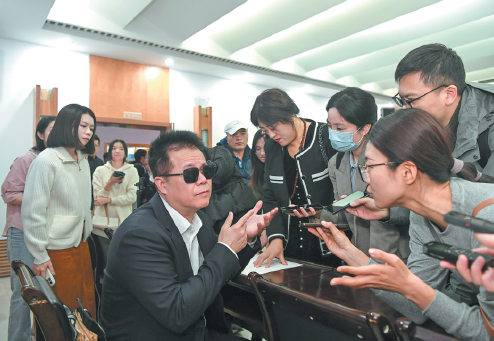
NPC issues documents in Braille, gives weight to deputy's suggestions on law to help disabled. Cao Yin reports in Fuzhou.
When national lawmaker Wang Yongcheng recently received replies in Braille to proposals he made on helping visually impaired people — they represented a historic first for the country's top legislature.
In his office in Fuzhou, Fujian province, on Nov 13, his fingertips traced the raised dots on the Braille documents. Wang, a deputy to the 14th National People's Congress, then declared with a sense of satisfaction, "This is a tangible response to my suggestions."
There are nearly 3,000 NPC deputies, but 56-year-old Wang is the only one with a visual impairment.
As part of his duties as a deputy he must submit suggestions after finding problems people encounter in their work and everyday lives. This year, Wang put forward proposals on education, employment and construction of barrier-free environments that aim to benefit disabled people by optimizing services.
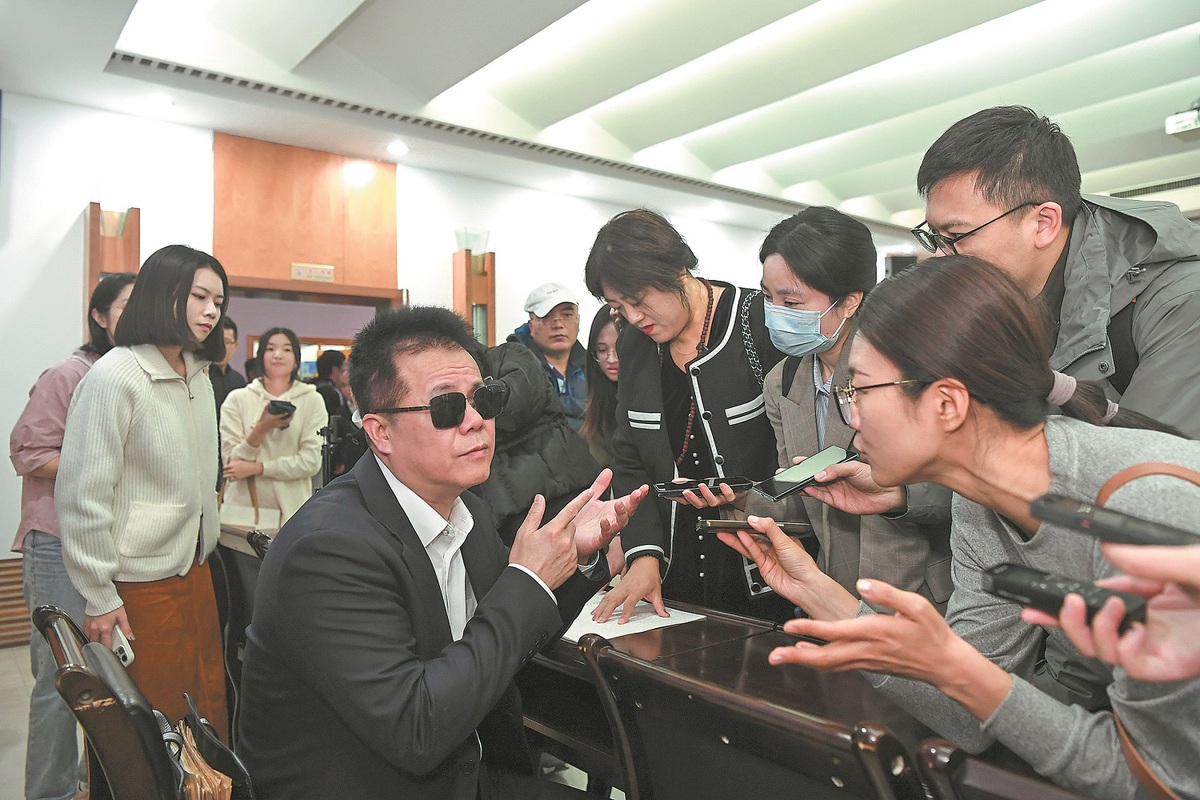
To assist his work and make it more convenient for him, the NPC Standing Committee coordinated with the four departments which his proposals related to — the National Health Commission, the Ministry of Education, China Railway and the China Disabled Persons' Federation — to organize face-to-face discussions with him in Fujian, and increase research to tackle the issues together.
The committee then contacted China Braille Press to make Braille versions of the departments' replies for Wang. The process, including the translation work and proofing, took time. However, it was the first occasion that the NPC had made Braille versions of responses to a deputy's suggestions.

Voice for disabled
In 1985, at the age of 18, Wang lost his sight in an accident. Undeterred, he went to Henan province to learn massage skills. In 1995, he returned to his hometown of Sanming, Fujian, and opened the first blind massage clinic in the area, with free training provided for people with severe visual impairment.
Following his election as an NPC deputy this year, Wang immediately addressed the problem of education for the blind and the visually impaired.
More than 37,000 visually impaired students are receiving compulsory education nationwide, over 60 percent of whom are children with poor vision being educated in regular schools, according to Ministry of Education statistics.
Wang was struck by the breakdown of the figures and wondered why children with visual impairments who were able to attend a regular school did not have educational material that catered to their needs. Parents, some of them blind, had also complained to him that their children with poor vision had difficulty reading books with normal font sizes.
"The more the children cannot see clearly, the more they have to look hard," he said. "It can not only cause visual fatigue, meaning that the sight of visually impaired young people will worsen, but also affects their learning and mental health."
When he attended the first session of the 14th NPC in Beijing in March, Wang suggested that educational authorities provide textbooks with larger print for visually challenged students enrolled in regular schools.
The NPC paid close attention to the suggestion and asked members of the Constitution and Law Committee to visit Wang in May to learn more about his ideas to optimize measures for the visually impaired.
Wang was invited to Beijing again to discuss a draft law on construction of a barrier-free living environment, which aimed to improve the daily lives of both disabled and elderly people. At the time, he reiterated his proposal to provide better reading material for visually impaired students and those with poor vision.
Legislature in action
On June 28, the law was adopted by the NPC Standing Committee, which accepted Wang's advice on aiding visually impaired people.
Taking effect on Sept 1, the law also makes it clear that China encourages the compilation and publication of textbooks in Braille for low-vision students to meet their reading demands.
"I was so excited when I knew my suggestion was written into law," Wang said. "It means our country's top legislature listens to the ideas and opinions of disabled people with special care and attention.
"I immediately told the news to my blind friends, especially those who had previously complained about the problem to me. They were all excited and cheered up by the news," he added.
After receiving Wang's suggestion on larger textbook fonts, the Ministry of Education attached great importance to it, conducting in-depth research on the issue with the China Disabled Persons' Federation and giving strong support to promoting publication of such textbooks.
So far, textbooks for 13 subjects have been published in larger print for this year's autumn semester.
The ministry said that it will further advance the integration of visually challenged students into the education system by giving them easier access to reading material.
Zhou Jian, director of the federation's rights protection department, said, "Wang came from the people, and his suggestions reflected people's yearning for better lives, especially those with disabilities."
He praised the handling of the proposals and the NPC making the Braille documents available to Wang, noting "it's what whole-process people's democracy looks like".
"It is of great importance to facilitating the development of the disabled and strengthening protection of their rights. It will help more disabled people receive a better education and more widely integrate into society," he added.

Continuing work
Wang has also put forward proposals on preferential policies for severely disabled passengers using public transportation.
In response, Ning Fei, an official from the China State Railway Group, or China Railway, said that they have already established special seats, set ticket quotas and provided special booking services for disabled people.
"We'd like to keep in touch with Wang to understand more about the demands of the disabled, so we can optimize our services," he said.
In addition, Wang has suggested the country provide more Braille displays for visually impaired students and address licensing difficulties faced by blind masseurs and their clinics.
The China Disabled Persons' Federation and the National Health Commission have both made Wang's proposals priorities for consideration.
Zhou, from the federation, said that it has increased cooperation with relevant departments to foster technological breakthroughs for the visually impaired, enhanced construction of an information-accessible environment, and increased the integration of Braille displays into schools.
The commission said together with the federation, the National Administration of Traditional Chinese Medicine and medical experts, it had begun direct communication with Wang to tackle the problems he has raised through collaborative efforts.
Wang said he was greatly encouraged by the responses to his proposals. "It's so considerate that the top legislature and the government departments replied to my proposals in a way that I can easily comprehend," he said, referring to the Braille documents.
At the end of 2021, there were 85 million people in China with disabilities, according to official data.
Wang said that as a member of the blind and visually impaired community, "I will carry on proposing suggestions and increasing communication with government departments to solve people's difficulties, which is also my responsibility as an NPC deputy."
Besides issues concerning the disabled, he says he will broaden his focus to other areas, including people's livelihoods and elderly care.
Contact the writer at caoyin@chinadaily.com.cn