'Find our niche' to revive HK's fortune







The SAR needs to seize the opportunities from the realignment of international partnerships, with the rule of law remaining the cornerstone of the city's economic success, Financial Services Development Council Chairman Laurence Li Lu-jen tells Liu Yifan.
Hong Kong's sluggish post-pandemic recovery, with its economy having contracted last year for the third time since 2019, has thrown businesses and investors for a loop.
It has forced the special administrative region government to revise its full-year forecast for GDP growth down to 3.2 percent - from an initially projected 4 to 5 percent - amid a weaker-than-expected rebound and a challenging near-term outlook.
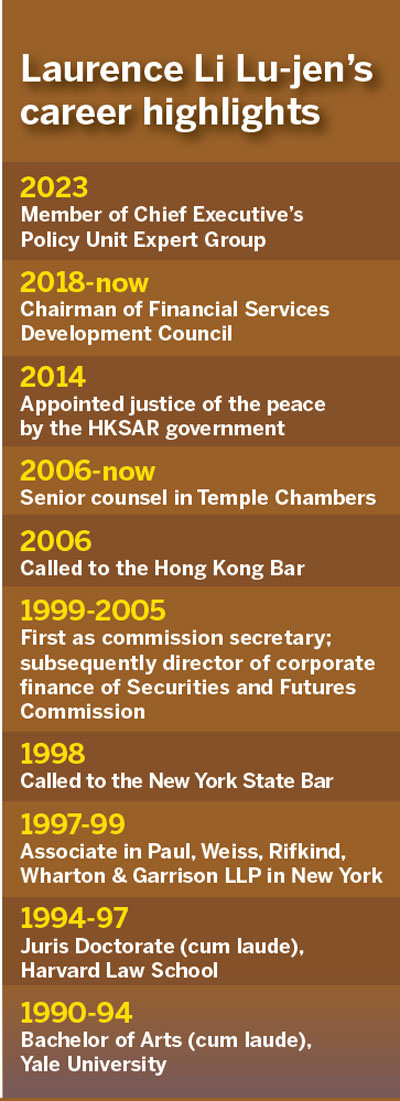
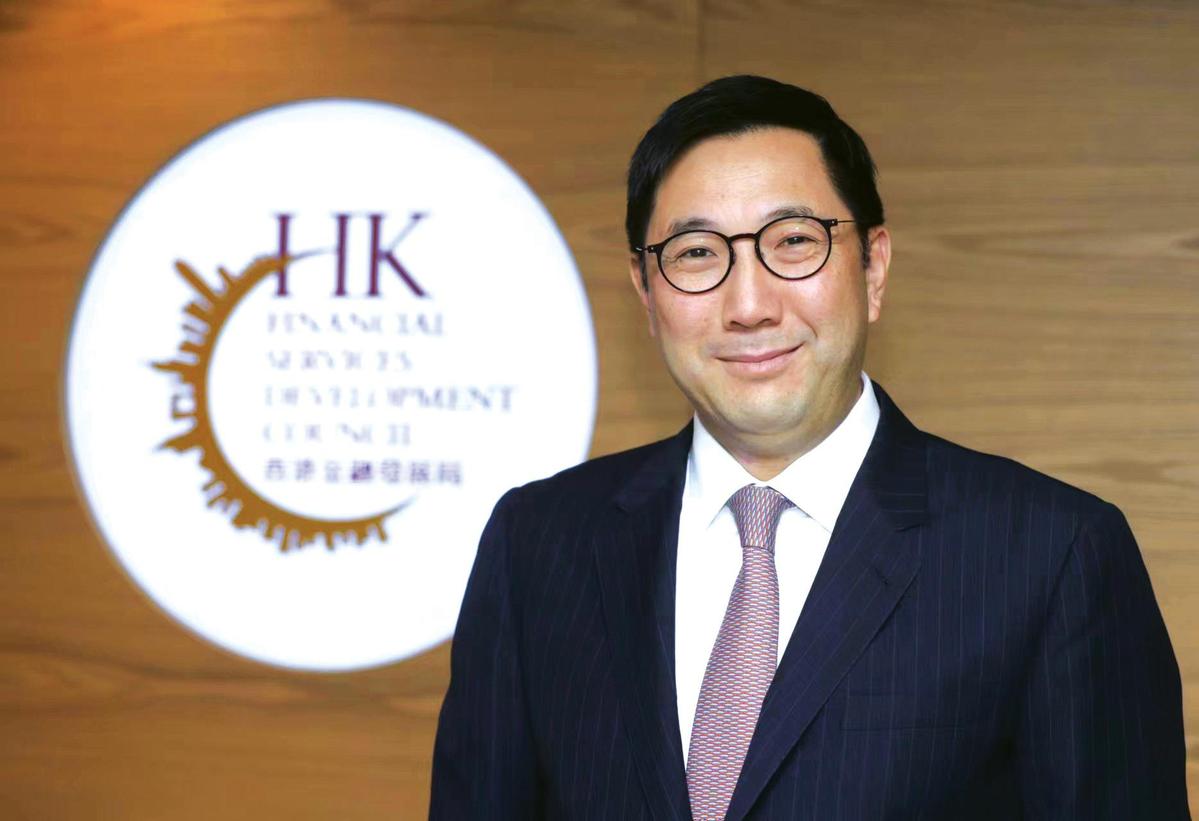
Laurence Li Lu-jen - a practicing barrister, government adviser and chairman of the Financial Services Development Council - has his finger on the pulse of the local economy, saying the new driving force behind the city's growth comes from the realignment of international partnerships.
In an exclusive interview with China Daily, Li shares his insights into a vast array of issues concerning Hong Kong's development, noting that in the past two decades, the city has lifted its standing as a global financial and trading hub, largely as a result of the Chinese mainland's economic prowess.
"The mainland is generating very, very good products. Our international friends came (to Hong Kong) because we have this proximity, we have this very good product. And all Hong Kong has to do is to maintain an open field, welcoming friends from afar," he says.
But it's now a different story, as world trade patterns have changed. A telling example is the deeply intertwined Sino-US trade relationship, with both sides imposing tougher curbs and tariffs on crucial exports, ranging from advanced technology to raw materials essential for producing electric cars.
Partnership realignment
Reworked trade playbooks, coupled with other economic transformations, have led to US companies relocating their factories away from China to other low-cost countries, as well as a dirigiste reindustrialization drive to remake the US economy. Chinese businesses are turning their sights on trade with their allies and neighboring countries, along with the government's efforts to boost technological strength that will make the nation more self-reliant.
And that's just an illustration of the changes to global manufacturing and supply chains. "Everyone in the world is forming new partnerships. We in Hong Kong must find our niche in this realignment."
It appears that the SAR administration has its answer for such a "realignment". Since Hong Kong began its post-pandemic reopening last year, the government has been ramping up efforts to promote the city and attract new investment opportunities to restore its image as Asia's world city.
Hong Kong Chief Executive John Lee Ka-chiu, Financial Secretary Paul Chan Mo-po, and other officials have led delegations to various parts of the world this year, including the Middle East, to develop potential business collaborations and forge closer ties, and more such trips are in the pipeline.
Among Hong Kong's much-anticipated moves is to woo oil giant Saudi Aramco and its units to apply for a secondary listing in the financial center. The Saudi state-run company, which pumps almost 10 percent of the world's oil supplies, raised $29 billion in Riyadh in 2019, making it the world's largest listing on record. With a market capitalization of over $2 trillion today, it's the world's third-most valuable company after US tech giants Apple and Microsoft.
Hong Kong officials see a Saudi Aramco listing in the city as a welcome boost for the SAR's prowess in finance that has been eclipsed by other financial centers. In the latest Global Financial Centers Index, published in September, Singapore held on to third place - a spot the Lion City had snatched from Hong Kong last year.
According to global professional services firm KPMG, there had been 44 listings in Hong Kong's IPO market in the first three quarters of this year, raising a total of HK$24.60 billion ($3.16 billion). This marked a decline of 65 percent in the number of deals and a 15 percent decrease in proceeds compared with the same period in the previous year. The local stock market was also among the worst performers across the globe, with the benchmark Hang Seng Index retreating about 13 percent so far this year, while average daily turnover shrank 16 percent year-on-year to HK$115.5 billion in the first half of 2023.
As for Saudi Aramco, Li has reservations. "Why does Saudi Aramco need a secondary listing in Hong Kong? That's not helping them. You just want business. You're not going out there to make friends. You're not addressing their needs."
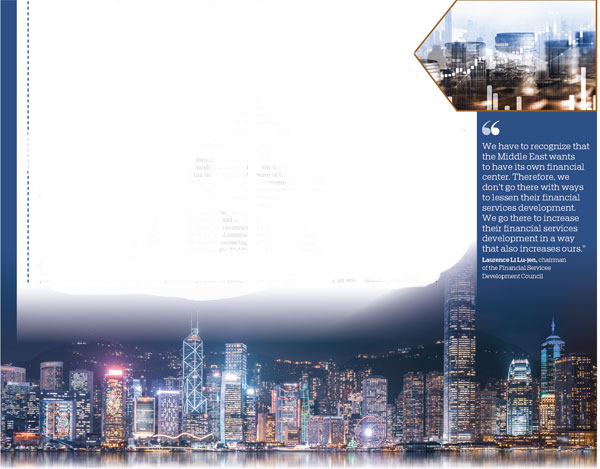
Li believes the job of Hong Kong, a world financial center, should be to "enable" everyone, rather than to attract investment. "We help the local community build. We help them to become big. We have to recognize that the Middle East wants to have its own financial center. Therefore, we don't go there with ways to lessen their financial services development. We go there to increase their financial services development in a way that also increases ours."
Hong Kong can attain its goals through stock connects and exchange-traded funds (ETFs), Li says, adding that the city could work out an investment connect program with the Middle East by leveraging the city's experience with its own stock connect programs with the Chinese mainland.
This month, Asia's first ETF that tracks Saudi Arabian equities made its debut on the Hong Kong Stock Exchange. Through the ETF, investors in Hong Kong are able to trade Saudi stocks including Saudi Aramco and Saudi National Bank, in Hong Kong dollars or Chinese yuan. Li says ETFs listed in Hong Kong will help channel the city's money pool to the Middle East market and, in turn, build up networks and knowledge about that region.
Be forward-looking
Before being called to the Hong Kong Bar Association and joining the FSDC in 2018, Li had served in various positions in the securities watchdog. He says it has never been his job to speak for the government, but to offer a wider diversity of views and help the government strike a balance between good regulation and market development.
"We're pro-market, but also pan-market," Li says. "What we recommend is not only just an insight, but also an insight that takes all angles into consideration." That makes the FSDC different from other institutions that come up with deep insights but, by nature, speak with merely one voice from a certain perspective, he says.
Since its establishment in 2013, the FSDC has published 204 recommendations, of which 66 percent have been adopted. These include the then-controversial rule change in 2018 that allowed companies to list with weighted voting rights - a share structure widely adopted by new-economy firms to raise capital without their founders losing control.
On the heels of the change was a wave of US-listed Chinese companies' homecoming listings, spearheaded by e-commerce giant Alibaba, that have entrenched Hong Kong's status as an offshore fundraising hub for mainland businesses. As of August, companies with dual-class shares have accounted for about a quarter of the total market capitalization and daily turnover of the city's bourse, Chan says.
In Li's view, Hong Kong's disposition can be summarized in three key words - agile, diverse and connected. Acknowledging the city's facing multiple pressing issues, including an economic slowdown, a labor crunch, and bearish investment sentiment, and the fact that there's no cure-all, he believes the SAR government can work on a number of issues at the same time. "Our strength is not in calling this the most pressing problem, and solving this, and everything will fall into place. Our strength is that let's not lose sight of the 1,001 big, medium, and small problems. Let's work on all of them."
Citing the government's move to cut the stamp duty on stock trading from 0.13 percent to 0.1 percent, Li says to reform is to be forward-looking, adding it's the right time to do it as there's a market consensus on this. "But the reason we do this is actually not because it will kick off the liquidity. The reason we do this is we can reap the benefits when the cycle comes back."
And that explains the art of reform. "A consensus on reform can be reached when everyone is a little unhappy and feels there's something to be solved. But, the promise of reform does have to wait until the economic cycle turns," Li says.
Cornerstone intact
Confidence in Hong Kong's future lies in Li's intimate knowledge gained throughout his career. What he found is that the cornerstone of the city's success - the rule of law - remains unchanged. "I've actually found in my various roles it's really, really true that people at a personal level, at a company level, and at an institutional level appreciate Hong Kong because of the rule of law. The rule of law is not just going to court. The rule of law also concerns things here that are very predictable."
Hong Kong has long prided itself on the rule of law, which permeates everything and, more importantly, guarantees that everybody, regardless of race, rank, politics or religion, is equally subject to the laws of the land.
To Li, it's the predictability and stability offered by the rule of law that lays a solid foundation for Hong Kong's continued charisma and growth.
"You might meet friends who are very warm, but what if tomorrow they turn cold? You want a friend who's reasonably warm, but that friendship also runs long. That is us."
Contact the writer at evanliu@chinadailyhk.com



- Chinese researchers develop 'smart eyes' for grazing robots
- University of Macao celebrates 45th anniversary
- Satellite network filings with ITU are routine procedural steps: expert
- Taipei students attend prayer ceremony ahead of college entrance exam
- Conviction in Jimmy Lai's case demonstrates effectiveness of Hong Kong's legal system for safeguarding national security
- China-led sludge standard expands safety checks