



Review Taiwan question via Cairo Declaration







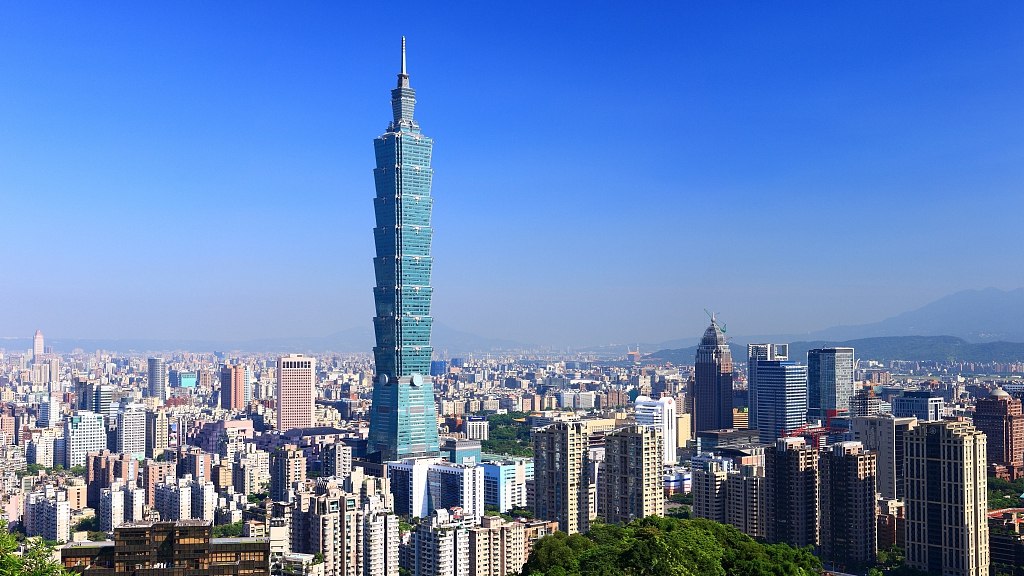
Dec 1 marks the 80th anniversary of the Cairo Declaration, a pivotal moment in history when China, the United States and the United Kingdom gathered in Egypt, during the final stages of World War II. The Cairo Declaration issued by China, the US and the UK on Dec 1, 1943 stated that it was the purpose of the three allies that all the territories Japan had seized from China, such as Northeast China, Taiwan and the Penghu Islands, should be restored to China.
The Cairo Declaration stands as a crucial international legal document, laying the foundation for the post-war international order. Incontestably, it delineated the territorial limits of post-war Japan, affirming Taiwan's rightful return to Chinese sovereignty. This commitment was reaffirmed in the subsequent Potsdam Proclamation on July 26, 1945, which stated that "the terms of the Cairo Declaration shall be carried out and Japanese sovereignty shall be limited to the islands of Honshu, Hokkaido, Kyushu, Shikoku, and such minor islands as we determine".
On Aug 14, 1945, Japan officially accepted the terms of the Potsdam Proclamation, and on Sept 2 the same year, the formal Japanese surrender took place aboard the USS Missouri. The Japanese government unequivocally pledged to abide by the conditions outlined in the Potsdam Proclamation, effectively fulfilling the principles of the Cairo Declaration.
From the Cairo Declaration to the Potsdam Proclamation and the Instrument of Surrender, there is a consistent thread: Japan, in defeat, was obligated to return Taiwan and the Penghu Islands to China.
The historical and legal significance of the Cairo Declaration cannot be overstated. It is globally recognized, featured in official treaty collections and regulations published by the US and Japan. On Aug 15,1945, Japan declared unconditional surrender. Two months later, on Oct 25, the ceremony for accepting Japan's surrender in Taiwan was held in Taipei, officially marking the return of Taiwan and the Penghu Islands to China.
Despite this historical clarity, some "Taiwan independence" separatists still advocate an undefined status, challenging the legal and factual reality that Taiwan is an integral part of China. The Cairo Declaration serves as an unyielding legal foundation, countering any attempts to question Taiwan's status.
From the perspective of international relations history, the Cairo Declaration has shaped the post-World War II international order, particularly in the Asia-Pacific region. The affirmation that "Taiwan is an inalienable part of China" is an integral component of this post-WWII order, which defeats futile attempts of those separatist forces. Some "pro-independence "forces question the legal effectiveness of the Cairo Declaration, but they overreach their capabilities.
In October 1949, there was a government succession within China, and the People's Republic of China replaced the original government of the Republic of China as the sole legitimate government representing the entire country.
Despite the government shift, China's sovereignty and inherent territorial boundaries remained unchanged, granting the PRC rightful authority over Taiwan and maintaining Taiwan as an integral part of its territory.
In this context, challenges from the Democratic Progressive Party and separatist forces questioning "Taiwan as part of the PRC" lack a solid foundation.
Over the 80 years since the Cairo Declaration, the international community has solidified the one-China principle, with 182 countries establishing diplomatic relations with China and recognizing Taiwan as an inseparable part of China. The number of nations maintaining "official relations" with Taiwan has dwindled to just 13 and continues to decrease. International organizations, led by the United Nations, uphold the one-China principle, rejecting the notion of "two Chinas" or "one China, one Taiwan". The DPP's attempts to expand "international space" are bound to face increasing obstacles.
Revisiting the Cairo Declaration holds significant contemporary relevance for maintaining its authority.
Since the DPP became the ruling party in Taiwan, it has made continuous efforts to sever ties with the mainland from history, law and policy, rejecting the one-China framework. However, the Cairo Declaration serves as a clear historical reference.
Some countries driven by strategic gains seek to rekindle the notion of "undetermined status" for Taiwan, attempting to create division or even confrontation between Taiwan and the Chinese mainland, thereby misleading international opinion. The Cairo Declaration can clarify facts. The "Taiwan independence" forces habitually challenge history and international law, posing a significant threat to peace in the Asia-Pacific region. Revisiting the Cairo Declaration 80 years later is imperative to respect history, address current realities, and safeguard order and peace.
The author is a researcher at the Institute of Taiwan Studies, Chinese Academy of Social Sciences.
If you have a specific expertise, or would like to share your thought about our stories, then send us your writings at opinion@chinadaily.com.cn, and comment@chinadaily.com.cn.





