



NATO needs caution in handling relations with China







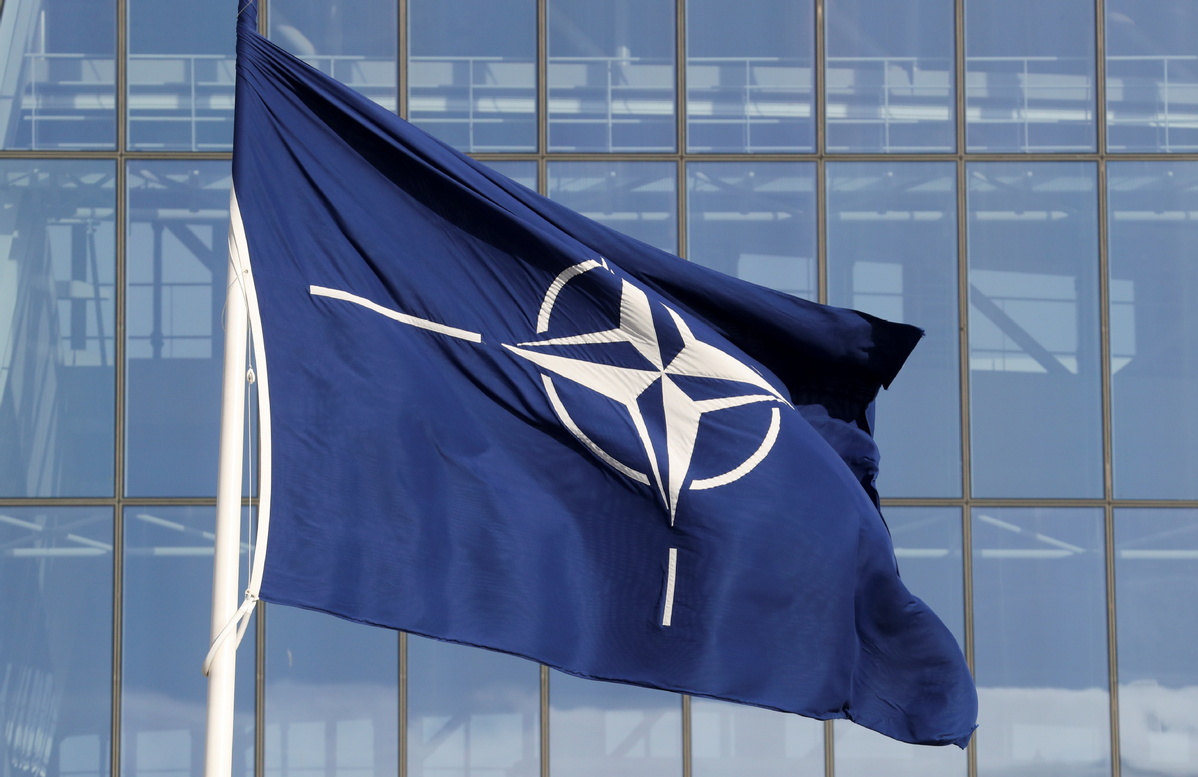
The NATO Foreign Ministers' meeting in Brussels on Tuesday and Wednesday has attracted wide attention. As expected, NATO reiterated its determination to support Ukraine's entry into NATO.
As to China, NATO Secretary General Jens Stoltenberg also addressed the so-called challenges that China presents to Euro-Atlantic security. Despite stressing that "China is not our adversary", Stoltenberg said that NATO must be cleared-eyed about the impact of China's "coercive policies on our security" and welcomed that allies are engaging in dialogue with Beijing on issues of mutual concern.
In recent years, NATO has consistently underscored the challenges posed by China, conspicuously manifesting a posture of balancing against China's influence in the "Indo-Pacific" region. This deliberate stance has evoked concerns, as it raises questions about the motivations behind and implications of NATO's persistent emphasis on countering China. The meeting presented an opportunity to scrutinize and discern the nuanced dimensions of NATO's evolving approach to China, delving into the intricacies of geopolitical dynamics that underpin the alliance's strategic recalibration.
Since its inception, NATO has focused primarily on Europe, with its membership relatively confined to the areas surrounding the North Atlantic. With the conclusion of the Cold War, the raison d'être of NATO has been continually questioned, with French President Emmanuel Macron proclaiming the "brain death" of NATO. Devoid of issues, some forces have begun propagating the narrative of the China threat, seeking to portray China as an adversary of NATO.
At the 2019 London Summit, NATO acknowledged for the first time the challenges posed by China's rising power. The NATO 2022 Strategic Concept document further asserts the need to "remain open to constructive engagement" while accusing China of attempting to "subvert the rules-based international order," posing a systemic challenge to NATO's interests, security, values, and more.
Notably, NATO's accusations against China extend beyond the military realm to encompass technology, critical infrastructure, strategic materials and supply chains. The NATO 2030 agenda report described China as a "full-spectrum systemic rival", fostering an atmosphere reminiscent of a "new Cold War".
Concurrently, NATO is accelerating its "Indo-Pacific pivot", seeking partners in the Asia-Pacific region. It has invited Japan, the Republic of Korea, Australia, and New Zealand — four "global partner countries" far away from the North Atlantic — to participate in foreign ministers' meetings, defense ministers' meetings, and summits. NATO aims to forge a "tailored partnership" with Japan and has invited the ROK to join the NATO Cooperative Cyber Defence Centre of Excellence.
These shifts in strategic thinking and practices, whether overt or covert, warrant vigilance.
Behind NATO's drumbeat of the "China challenge" lies the persistent influence of the United States. Unlike the indifference toward NATO and disdain for member states' insufficient military spending during the Trump era, the Biden administration views NATO as a tool for restraining China. NATO has revived Cold War-era ideological opposition and intensified its focus on the "Indo-Pacific", attempting to link China with the threat posed by Russia. Continuously seeking allies around China, these moves align closely with the strategic choices of the US, revealing a strong US influence. However, shifting toward the Asia-Pacific and confronting China does not align with the interests of many NATO member states, nor does it meet the security needs of countries in the Asia-Pacific region.
European countries do not have any fundamental geopolitical conflicts with China, and their economic development has already been impacted by the Russia-Ukraine conflict and energy crisis. Their limited financial resources cannot be diverted to meet the ambitions of the US or NATO. This year, French President Macron opposed NATO setting up liaison offices in Japan, and Hungarian Foreign Minister Péter Szijjártó explicitly stated that "We don't want NATO to become an anti-China bloc". The European Union has repeatedly emphasized being against decoupling from China, indicating that Europe has no intention of being tied to the US agenda to contain China.
As the US sidelines NATO and seeks "minilateral" cooperation, establishing the trilateral security partnership of the US, UK, and Australia, as well as the quadrilateral cooperation of the US, Japan, India, and Australia, it only has the support of its traditional allies. The lukewarm response from Asia-Pacific countries indirectly underscores that the strategic logic of "confronting China" does not resonate widely.
China's development presents opportunities rather than challenges. Both the US and Europe have substantially benefited from China's economic growth, and China, through initiatives like the Belt and Road Initiative, has shared the fruits of its development with the world. It has also played a constructive role in international security affairs, including UN peacekeeping operations, the Iran nuclear issue, and the reconciliation between Saudi Arabia and Iran. The narrative of the "China threat" lacks a solid foundation. Conversely, the promotion of the China threat, adopting confrontational stances, and intervention in the Asia-Pacific region pose challenges to international security.
Examining NATO's post-Cold War history, it is evident that while waving the banner of "collective security", NATO has simultaneously interfered in security matters beyond its purview, meddling in extraterritorial affairs and national sovereignty, leading to irreversible tragedies. Historical experiences also demonstrate that prioritizing values and engaging in zero-sum Cold War thinking only perpetuates lasting security dilemmas among nations. If these security dilemmas extend into economic, technological and cultural domains, not only will international security be compromised, but mutually beneficial economic and cultural exchanges will also suffer. This runs counter to NATO's vision of constructing a world where "sovereignty, territorial integrity, human rights, and international law are respected".
NATO faces a strategic choice regarding its approach to China — either strengthen "constructive engagement" or portray China as a "systemic challenge". Faced with the intricacies of the international security landscape and the growing prominence of non-traditional security issues, NATO should listen to diverse internal voices and carefully assess its own security environment. It should refrain from returning to the Cold War path, positioning itself as a vanguard against China and getting entangled in a vicious cycle of escalation. In navigating its relationship with China, NATO must proceed with thoughtful consideration.
Ding Chun is the director of the Center for European Studies at Fudan University, Shanghai. Ji Haonan is a research assistant at the same center.
The views don't necessarily represent those of China Daily.
If you have a specific expertise, or would like to share your thought about our stories, then send us your writings at opinion@chinadaily.com.cn, and comment@chinadaily.com.cn.





