Innovative solutions for bladder replacement on the horizon at CUA2023







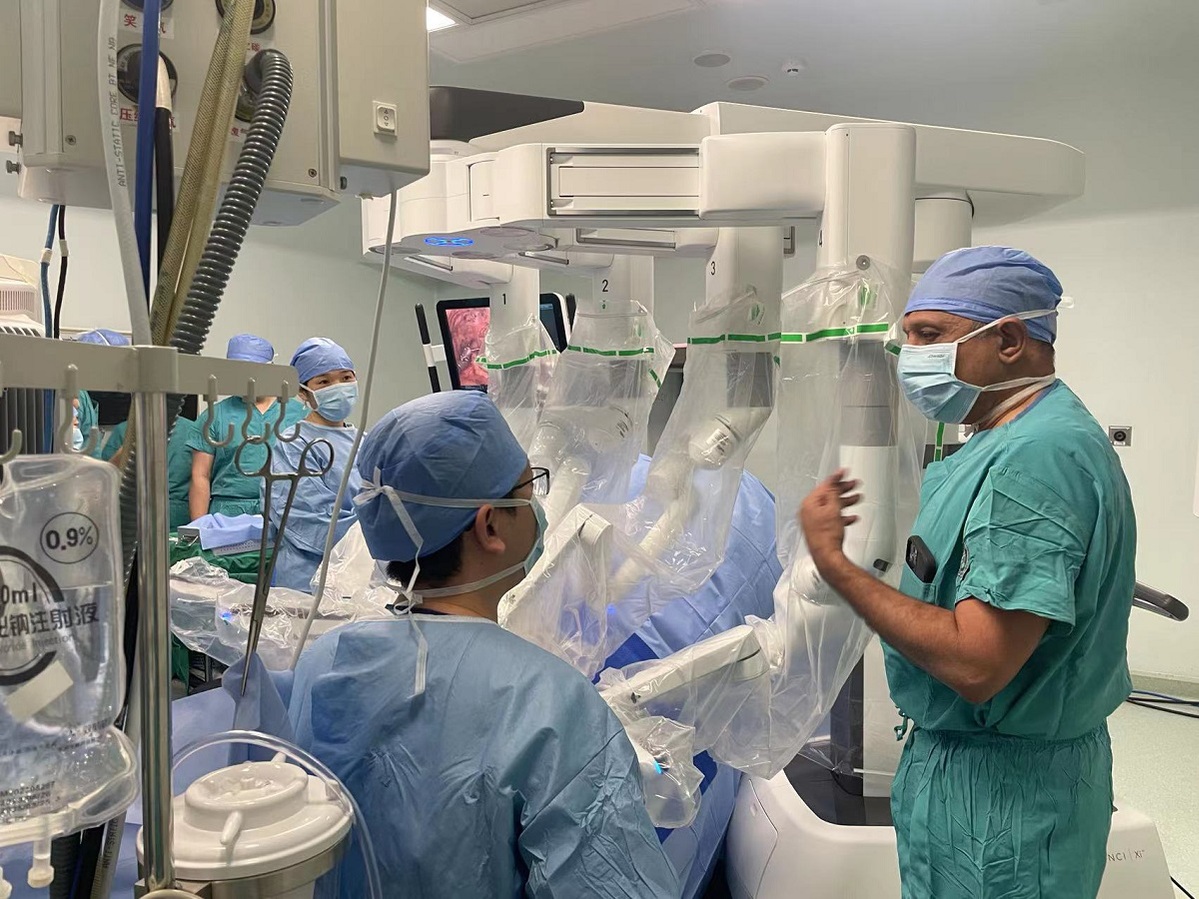
In a medical advancement poised to improve the lives of countless patients, medical experts are on the brink of performing the world's first human bladder transplant.
Inderbir Singh Gill, the chairman and Distinguished professor of the Catherine and Joseph Aresty Department of Urology and the founding executive director of the USC Institute of Urology, delivered a presentation at the 30th Annual Meeting of the Chinese Urological Association (CUA2023) in Beijing. The meeting was held from Oct 19 to Oct 21.
As one of the world's most renowned urology physicians at USC Keck Medicine (a USC-affiliated hospital) in the US, he shared the latest developments in his pioneering work and highlighted the promising opportunities for collaboration between China and the US in this historic endeavor.
According to him, bladder transplants have been a long-neglected area in medicine, primarily due to two critical factors. Firstly, the medical community had not widely considered the possibility of such a procedure until now. Secondly, other solutions for replacing a diseased bladder already exists.
The utilization of intestinal tissue as a substitute for the urinary bladder, although prevalent, is associated with a substantial risk of complications, impacting approximately 40 to 80 percent of patients. This suboptimal approach has been accepted primarily because of the absence of viable alternatives.
Gill and his team, however, believed that a bladder transplant could offer a safer and more effective remedy.
The need for bladder transplants arises from the thousands of patients who endure severe bladder-related issues. These patients often undergo extensive surgeries, sometimes involving the use of intestinal tissue, but the outcomes are frequently far from optimal.
"Patients with terminal, non-functional bladders caused by nerve-related issues, infections, and other factors can significantly benefit from this innovative approach," said Gill.
Currently, the waitlist for a kidney transplant in the United States can stretch to 7-8 years, while there is virtually no demand for bladder donations, according to Gill. All pertinent rules, regulations, and laws regarding ethical issues surrounding organ donation and transplant in specific regions and countries must be meticulously adhered to.
The permission for bladder donation would be obtained alongside the permission for other organ donations, with the patient's family playing an essential role in the process, he added.
Currently, the research has not yet progressed to the clinical stage, and Gill's team has been focusing on robotic techniques for bladder transplants, hoping that both robotic and open surgical methods will be viable, similar to kidney transplants. Gill's team is looking forward to collaborating with experts like Professor Zhang Xu, Director of the Academy of Urology, Chinese PLA General Hospital, academician of the Chinese Academy of Sciences, and the Chairman-designate of the Chinese Urological Association (CUA).
The current focus has been on the technical aspects, approvals, and initiating clinical trials. Patient acceptance and the number of potential candidates will be explored in subsequent stages. The research is actively recruiting participants for the clinical trial, and the medical community eagerly awaits the next chapter of this transformative journey, Gill said.
Given certain complications posed by utilizing intestinal tissue for bladder replacement, the industry is actively exploring more effective solutions, he said. One promising avenue is using stem cells to grow a bladder on a scaffold, which could then be transplanted into patients. While this approach remains in the experimental stage, technological advancements hold the promise of leading to an easily accessible, off-the-shelf solution in the future.






- Agarwood exhibition steeps Shanghai museum in fragrance
- The Fujian Coast Guard conducts regular law enforcement patrol in the waters near Jinmen
- IP protection for new fields to improve
- Draft rules define premade dishes in consumer interest
- Self-powering pacemaker could last a lifetime
- China intensifies crackdown on misuse of personal data