BRI playing critical role in structural transformation







The world needs strong engines for sustainable growth, and infrastructure for trade and connectivity is key to that.
The Belt and Road Initiative, proposed by President Xi Jinping in 2013, aims to promote infrastructure for enhancing connectivity and to build a global community for a shared future.
So far, more than 150 countries and over 30 international organizations have supported the BRI.
Ten years on, evidence suggests that the BRI has played a critical role in addressing local and regional infrastructure bottlenecks, facilitated trade, generated jobs and contributed to structural transformation.
As global economic growth has been weak, and the progress made by developing countries has been rolled back, the BRI has become even more important, serving as a global public good to add steam to sluggish growth internationally.
The World Bank estimates that 60 percent of low-income countries are heavily indebted and at high risk of debt distress. A recent flagship study from Boston University's Global Development Policy Center showed that China's global economic engagement has led to solid benefits to countries and regions involved in the BRI as well as the world economy.
First, China has brought in new resources to the Global South.
"China's development finance institutions provided approximately half a trillion dollars, and at least $331 billion during the period of 2013-2021. In Africa, Chinese DFI financing stood at $123 billion from 2008-21, and $91 billion during BRI years. In addition, Chinese commercial and other actors provided $30 billion to African governments from 2008 to 2021, and $23 billion during the BRI period," according to estimation by the Global Development Policy Center at Boston University.
Chinese development finance is complementary to existing financing sources but indispensable because it is long-term, focused on a clear mission, result-driven and transformative.
Second, China, together with host countries, has co-established a new model of South-South Cooperation, implemented and completed a great number of infrastructure projects, helped address development bottlenecks and promoted economic growth and job creation. Our own study has found that these completed projects are located in the poorest countries in the most backward sectors such as electricity, transportation, water and telecommunications. They have formed the public assets, started operations and generated jobs, revenues, incomes, and social benefits to the local communities.
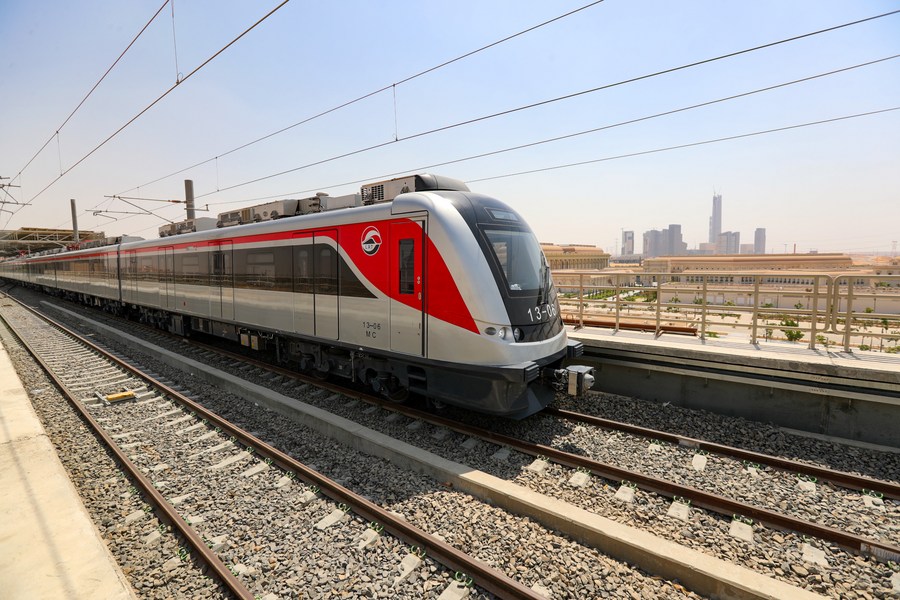
For instance, the China-Europe Railway Express, which links over 200 cities in 25 European countries, has carried more than 6.4 million twenty-foot equivalent units of freight with an accumulated value of nearly $300 billion. Other examples include: standard gauge railways in Kenya and Laos; highways in Cambodia, Mongolia, Laos, Jamaica and Ethiopia; high-speed railways in Serbia and Indonesia; and hydropower stations in many countries.
These completed projects have formed the global public goods/assets that reduce the vulnerabilities in host countries, something that international community had wanted to build.
Third, Chinese finance has leveraged, or "crowded in", more private funds, including from the international bond market, from FDI, sovereign wealth funds and other equity investors for development. After the Chinese projects addressed the bottlenecks in water, electricity and transport, cost of doing business has been reduced, and private investors have been attracted to these lower-income or landlocked countries.
However, infrastructure development has been a global problem since it is extremely complex. These projects are lumpy, risky and require a huge amount of financial resources and take a long time (three to five years) to complete. All projects are confronted with not only the operational risk, financial risk, the currency and term mismatch, but also macroeconomic, geopolitical and environmental/climate risks.
Fourth, debt sustainability. Although the accusation of "debt trap" diplomacy has been discredited as groundless, Chinese loans, on average, account for around 10 percent of total external debt in African countries. Some countries, such as Zambia, Sri Lanka and Kenya, have a higher debt burden. In order to promote sustainable investment and sound risk management, it is imperative to design and implement a "debt sustainability framework" for low-income market-access countries or MAC, for high-quality development of the BRI.
In 2019, the Chinese Ministry of Finance designed and published "Debt Sustainability Framework for Low-Income Countries of the BRI".
This year, the ministry designed and published "DSF for Market-Access Countries of the BRI" in order to cover all the BRI countries.
The Chinese government has attached great importance to dealing with debt distress, by supporting capacity development to improve debt analysis and risk management, and by participating in multilateral roundtables for debt restructuring in debt-distressed countries.
The newly published "DSF for MAC of the BRI" is timely, comprehensive, pertinent and innovative, for the following reasons.
First, it views the sovereign debt risk from the perspective of development. For market-access countries, especially developing countries among them, the key to improving debt sustainability is economic growth. To that end, the "DSF for MAC of the BRI" stresses the relationship between debt dynamics and medium — and long-term economic growth, and believes that debt risks should be controlled on the basis, and in the process, of promoting economic growth.
Second, the "DSF for MAC of the BRI" is a non-mandatory policy tool. It does not constitute a new conditionality. Financial institutions in China and other BRI economies are encouraged to use the framework to assess debt sustainability of BRI market-access economies, manage risks and make investment and financing decisions based on sound analyses.
This approach is more flexible and reduces the risk of limiting borrowing in a "pro-cyclical" fashion. It allows financial institutions to make an informed decision by themselves on whether to invest in this country or not.
Third, the DSF has taken into account climate change and severe weather disasters in assessing total risk. They are first included in the "triggered stress test" section, and then in the "long-term debt projection" section.
In sum, this "DSF for MAC of the BRI" is timely, comprehensive and innovative. If implemented carefully, it will play an important role in the development of a high-quality, green and sustainable BRI in the next stage.
The writer is a senior academic researcher at Boston University's Global Development Policy Center, a visiting scholar at the Institute of New Structural Economics, Peking University, and former senior economist at the World Bank.
The views do not necessarily reflect those of China Daily.