Xi Focus-Closeup: A gift from China to global development







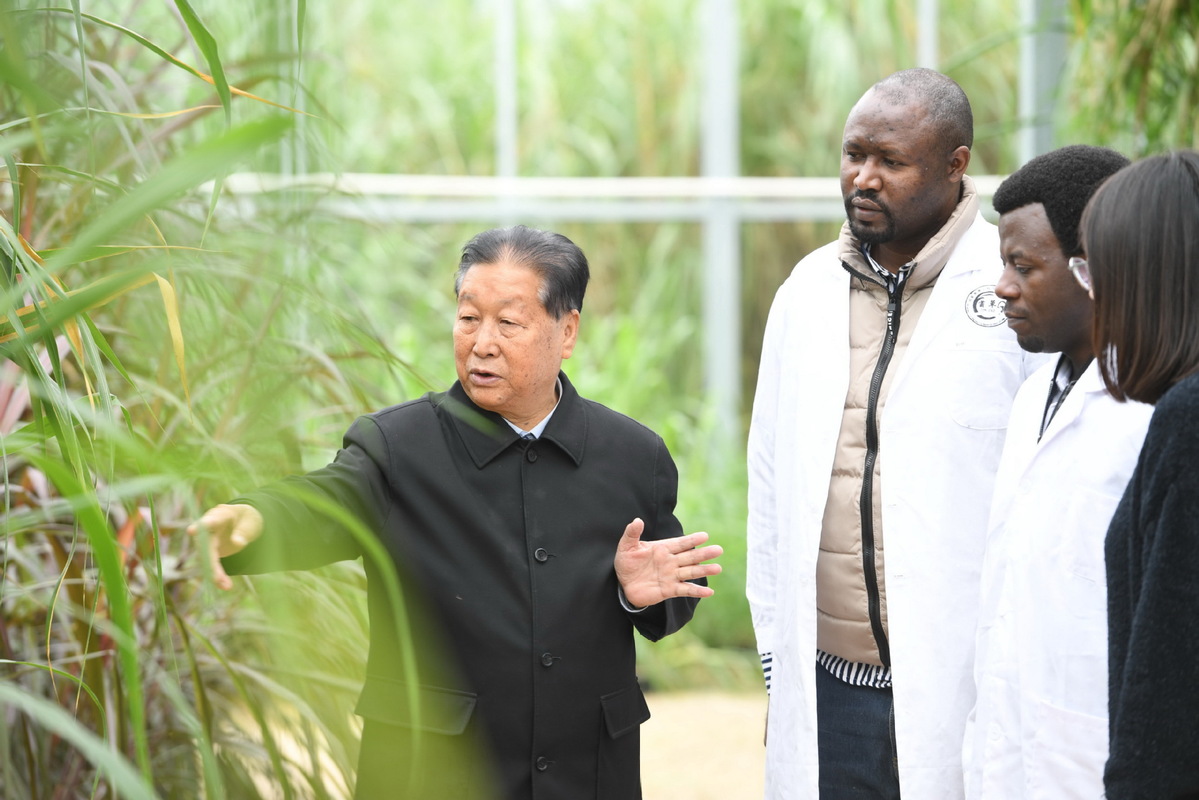
BEIJING -- When the seedlings of a "magic grass" were first introduced to Papua New Guinea over two decades ago, people there were skeptical about its ability to help them.
Over the years, however, this particular breed of grass from China, recommended by Chinese President Xi Jinping, has proven to be a seed of hope in this Pacific country, helping lift over 30,000 local people out of poverty.
The grass, now widely known as Juncao, which literally means "mushroom" and "grass," can be used, as its name suggests, to grow edible mushrooms. It can also be used as livestock feed or as a green barrier to stop desertification.
Benefits derived from Juncao technology not only contribute to poverty eradication, but also clean energy and other targets listed in the UN's 2030 Agenda for Sustainable Development.
The real power of this grass to positively impact world development may have remained hidden had it not been for the proactive promotion made by Chinese officials including Xi himself.
Back in the mid-1980s, when Xi worked in East China's Fujian province, he spent considerable time on rural development and poverty alleviation.
At that time, the mushroom business was lucrative in Fujian's rural areas. However, the felling of trees, used as fungi substrate for large-scale mushroom growing, posed a potential threat to the future of the industry and even the local environment and economy.
A potential solution, Xi discovered at that time, could lie in research efforts that were then underway in Fujian concerning a group of wild grasses.
It turned out that Juncao technology, replacing timber with Juncao for mushroom growing, significantly lowered farming costs, reduced annual tree clearing, and hence provided an economical and environment-friendly path for poverty alleviation.
Thanks to Xi's support, Juncao science laboratory was built, and the development of Juncao varieties was able to proceed.
Lin Zhanxi, the inventor of Juncao technology, said he was very grateful and extremely thankful to Xi for his support of agricultural science and technology.
The application of this "magic grass" ended up not being confined to China.
Papua New Guinea was among the first overseas destinations to apply Juncao technology. In 2000, Xi, then governor of Fujian, assisted with the launch of a pilot project to help improve the livelihood of people in Papua New Guinea.
To enable Juncao to benefit more people, Chinese scientists simplified and localized Juncao technology, allowing the "magic grass" to take root in far-flung and exotic fields across this Pacific country in just a few years.
In 2018, the annual yield of the grass in Papua New Guinea set a record of 853 tonnes per hectare, with the resulting mushrooms gracing the tables of an increasing number of households.
Juncao technology involves mixing various low-cost materials such as Juncao powder, lime powder, rice or cotton husks and water and is applicable in a small space. For many underdeveloped countries, it is an affordable, accessible, and environmentally sound way to generate opportunities.
Later in his political career, Xi, as a state leader, continued to promote Juncao in the South Pacific region, and also in Africa and South America.
In Fiji, Juncao has become a household name and is known as "the grass of happiness from China," after multiple phases of the Juncao project there witnessed sound success. In March this year, a regional Juncao technology demonstration center opened in Fiji.
So far, a total of 270 Juncao training programs have been organized by China both home and abroad, cultivating over 10,000 people who are now qualified to popularize Juncao technology in as many as 18 languages.
From the island of Fiji to landlocked Rwanda, from the jungles of Brazil to the desert in Jordan, Juncao has now taken root in over 100 countries around the globe.
Juncao has become the "grass of prosperity" in a variety of underdeveloped countries. James Marape, prime minister of Papua New Guinea, said the Juncao project is a gift from China to the whole world.


- China moves to set national standards for pre-made dishes
- Chinese company unveils plans for commercial space flights
- Latest addition to Shiziyang Bridge constructions brings main tower above 300 meters
- Hebei's 'ancient pressure cooker' setting internet ablaze
- Major urban renovation restores Xi'an's ancient moat
- China launches nationwide employment assistance program