A little language opens a big window on China







"The living environment in China suits me perfectly, and I feel right at home even though my Chinese isn't fluent. It's not a daunting task to come to China without being fluent in the language. You can savor life here." Since I left Japan and started my journey in China, these have been my initial thoughts on my time here in China.
In February 2022, I began learning Chinese. Almost a year later, I found myself in Beijing, the capital of China. Before coming here, I had attended Chinese classes, and I could sense my progress in the language, albeit modest. As you might expect, studying for just one year wasn't sufficient to claim fluency, and to be honest, I'm not there yet. But full proficiency in the language is not necessary to immerse yourself in and enjoy many attractions of life in China.
The one thing that truly makes me feel comfortable and alleviates loneliness is making friends and engaging in conversation. At Tsinghua University, where I pursued my studies in China, I made friends with many Chinese young people and relished spending time with them, be it for meals or leisure activities.
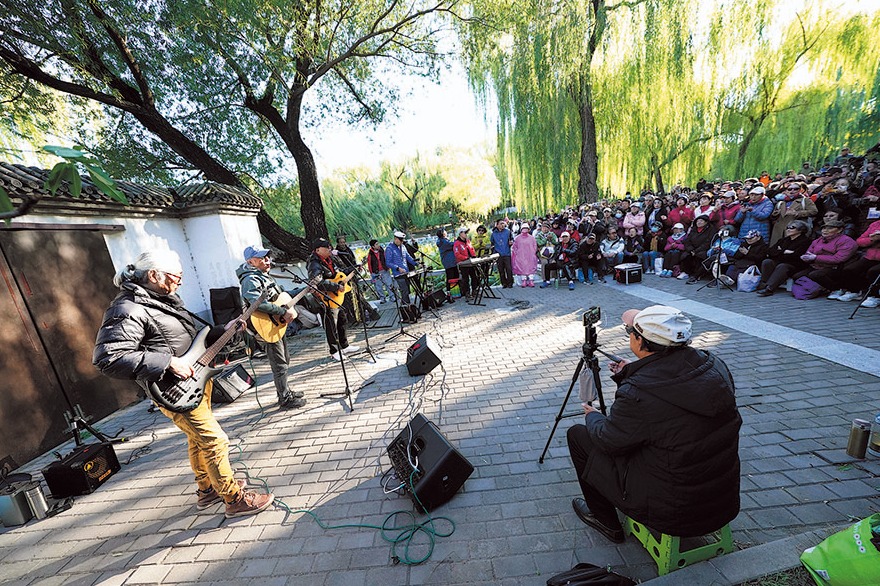
They would often ask me to hang out and go to karaoke, known as KTV, which is a popular form of entertainment among Chinese youth. I've been delighted to sing Chinese songs, for example, those by the famous Chinese singer Jay Chou, with my friends. I would also sing well-known Japanese songs, such as Lemon, which, as it turns out, is very popular in China.
I felt that connecting with my Chinese peers through a shared passion, such as singing, was incredibly enjoyable and beautiful. It transcended language barriers and fostered a sense of unity and joy that was truly special.
During breaks from study, I frequently embarked on solo journeys across China. I've explored cities like Shanghai, Chongqing, and Changsha in Hunan province, among others. Although I have experienced traveling on overnight trains for over 12 hours several times and explored unfamiliar cities, I never felt fearful or unwelcome as a foreigner. Chinese people are consistently warm and welcoming to foreigners, and eager to engage in conversation.
On the train from Beijing to Chongqing, for example, I talked with a Chinese kid and his mother for three hours, sharing our life experiences and discussing what it's like living in China. They were genuinely curious about my life in Japan and made efforts to understand both me and my homeland.
After I arrived in Chongqing, my Chinese friends from Chengdu in Sichuan, the province neighboring Chongqing, took me on a tour of the city, the birthplace of hot pot. It was a unique experience to sit down together and savor the local hot pot while listening to the distinctions between Chongqing and Chengdu, both famous for their hot pot culture.
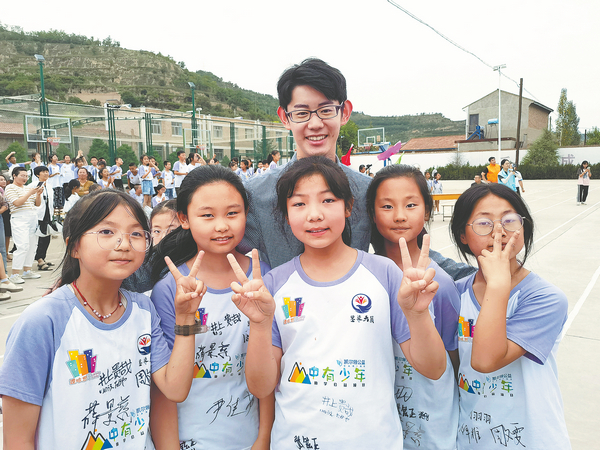
I once participated in community activities in Northwest China's Gansu province to gain a deeper understanding of China's rural areas and contribute to the development of local communities and education. As a volunteer teacher at a local school, I shared contemporary and traditional Japanese culture such as animé, architecture, pop music and languages with the students. Since Japanese kanji originated in China, there are many similarities between the Japanese and Chinese languages. I told the students we could glimpse the historical connections between our cultures through our daily language use.
A highlight of the teaching was when I showed Japanese coins. As I asked my students how many grams a one yen coin weighed, they gave me answers ranging from 50g to 300g. I still remember their surprised faces and yelling when I said, "Actually, it weighs only 1g."
My favorite Chinese phrase is huxiang xuexi, which means "learning from each other". In Gansu, while the students eagerly absorbed the accounts of my life in Japan, I simultaneously learned a great deal about China. For example, I gained insight into their lives through playground chats and friendly games of soccer and ping-pong, both of which are popular in China. I also learned how life and education in rural areas in China is different from that in Japan.
Everything has proved that acquiring fluent language skills is not an absolute requirement. I've met and befriended many foreigners who don't speak fluent Chinese, and they've all found their own unique ways such as through food, sports, and games to connect with and appreciate Chinese culture. For example, my Indonesian friend, who loves cooking, invited Chinese friends to her home to prepare her national meals for them. And my friend from Turkey operates his social media as an influencer, sharing his perspective on the rapid development and the beautiful life he witnesses in China as he roams around the country while studying at Tsinghua.
If you want to understand and experience life in China, you'll find a way to do so. I hope that many foreigners who don't speak Chinese fluently can still embrace and enjoy life in China, just as I have.
Written by Takaya Inoue, a Japanese student who had been studying at the Language Center at Tsinghua University and is passionate about bridging the gap between China and Japan. He is a delegate to the Tsinghua Global Youth Dialogue, where global leaders from around the world gather in China to gain insight into China.