Some US exclusions on China tariffs extended







But Chinese embassy says many remaining duties should be lifted 'as soon as possible'
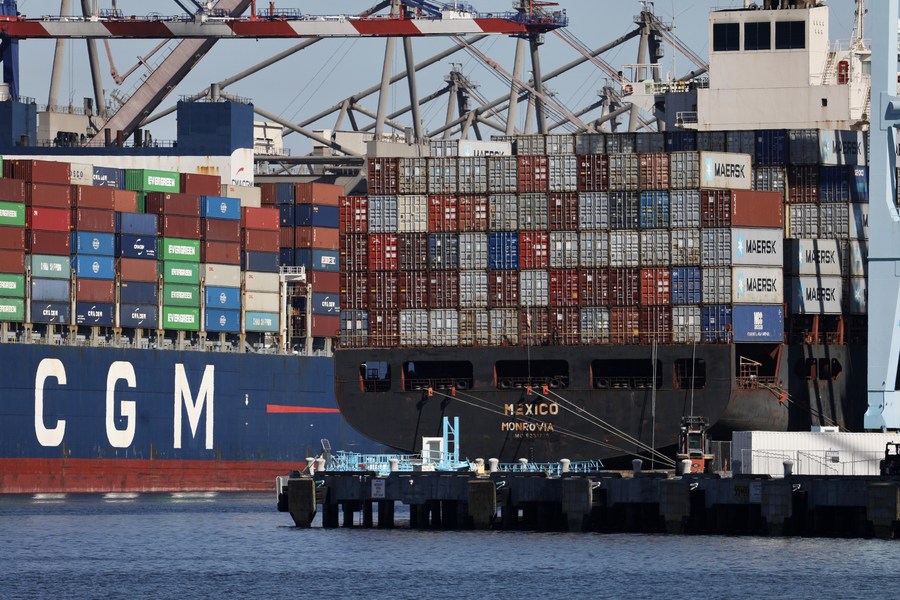
As the United States on Wednesday further extended tariff exclusions on some Chinese imports until the end of 2023, China's embassy spokesperson and analysts said that all the remaining additional duties should be removed altogether.
The Office of the United States Trade Representative (USTR) announced the further extension of China "Section 301" tariff exclusions on 352 Chinese import and 77 COVID-19-related categories that were set to expire on Sept 30.
The extension until Dec 31 will "allow for further consideration under the statutory four-year review", the office said in a statement.
Liu Pengyu, a spokesperson for the Chinese embassy in the US, said China always believes that the unilateral tariff increases by the US are not good for China, the United States and the world.
"As currently inflation continues to rise, and the global economic recovery is facing challenges, we hope that the US will, in the fundamental interests of consumers and producers in both countries, remove all the tariffs on China as soon as possible, and push the bilateral trade relations back to the normal track at an early date," Liu told China Daily.
This would be the third time that the 352 exclusions have been extended out of 549 exclusions that expired at the end of 2020, meaning the practice of granting tariff exclusions to select industries has been in effect through the administrations of former president Donald Trump and President Joe Biden.
John G. Murphy, senior vice-president for international policy at the US Chamber of Commerce, noted that the USTR in 2018-19 imposed Section 301 tariffs on about 10,000 categories of goods from China.
"Today it is extending those exclusions through the end of the year, but the great bulk of the tariffs remain," Murphy said in a message posted on X, the social media site formerly known as Twitter.
Inu Manak, a fellow for trade policy at the Council on Foreign Relations, said the announcement was good news, but Washington needs to take further steps.
"The next step is to permanently remove 301 tariffs at the end of the review period and put an end to this failed trade war," Manak wrote on social media on Wednesday.
The Trump administration, invoking the Section 301 of the Trade Act of 1974, first launched the China tariffs in 2018.
The US is currently imposing a 25 percent tariff on approximately $250 billion of imports from China and a 7.5 percent tariff on approximately $112 billion worth.
The Section 301 tariffs remain in place under the Biden administration.
On Tuesday, US Commerce Secretary Gina Raimondo, a member of Biden's Cabinet, said she does not expect any revisions to the China tariffs until an ongoing review is completed by the USTR office.
"I don't think the (Biden) administration will make any changes until that review is completed," Raimondo told CNBC.
"We didn't put those tariffs in place. We don't think they make a whole lot of sense in many cases," she said. "I think the Trump tariffs could have been much more strategic, and that's why we are doing this four-year review."
In October last year, the USTR announced that it would seek public comments on the effectiveness of the tariff actions, other actions that could be taken, and the effects of such actions on the US economy, including consumers.
It received 1,497 submissions from "all interested parties" when the comment period ended in January.
In research published on April 18, Manak and two other researchers found that 286 of those submissions were essentially duplicates, and an analysis into the remaining 1,181 comments found that 917, or more than two-thirds of the submissions favored removal of the tariffs.
In their article titled "The Cost of Trump's Trade War with China Is Still Adding Up", they urged the USTR to listen to the "overwhelming majority" of comments calling for an end to what many described as a failed trade war.
They noted that several studies have examined the cost of the Section 301 tariffs on the US economy.
For example, research by the American Action Forum published in January found that US consumers largely bore the brunt of the tariffs, paying a total of $48 billion — with half of the figure paid by US firms that rely on intermediate inputs from China.
Removing the tariffs would increase the competitiveness of US companies by lowering their costs, and in turn spur additional economic output and growth by the US goods-producing sector, according to trade analysts Tom Lee and Tori Smith, who authored the research.
The additional tariffs on Chinese imports have been a sore point in China-US relations, which both sides have sought to stabilize over the past few months.
In the meeting with Raimondo in Beijing late last month, Chinese Vice-Premier He Lifeng expressed the country's concerns over measures taken by the US, including Section 301 tariffs and export and investment restrictions.
Chinese Ambassador to the US Xie Feng, in a speech at the US-China Business Forum held by Forbes on Aug 29, noted that the sharp decline — 14.5 percent — of China-US trade in the first half of the year is partly a result of the Section 301 tariffs.
The envoy also noted that average US tariffs on Chinese products are at 19 percent, while China's tariffs on American goods are 7.3 percent on average.