High-altitude life provides tonic for hospital worker







Before Zhang Shiyan went to work at a hospital in Ngari prefecture, Tibet autonomous region, she had no clue what the place was like, except that it stood at a high altitude, at an average of more than 4,500 meters.
In 2018, she was preparing to retake the national postgraduate entrance exam, having failed it that year. However, after learning that the Tibet government was looking for graduates from outside the region to work as teachers, medical administrators and grassroots officials, Zhang didn't hesitate to seize the chance.
"I made the decision and never had any doubts. I was born in a village in Zunyi city, Guizhou province, and my childhood was filled with hardship due to poverty, so I thought no matter how hard the environment was going to be, I was tough enough to survive and thrive," the 28-year-old recalled.
Zhang said that her family had trouble paying her tuition fees at primary school and she had to help with farmwork and household chores from an early age.
Moreover, Guizhou is mountainous, with little arable land. That led her parents to leave home and find work in cities. She was in middle school at the time, so she had to attend a boarding school.
Before she graduated from college, she had never left Guizhou.
"I thought that even if I had to live in a house with a leaking roof in Tibet, it would be OK because I could just live in the office," she said.
Luckily for Zhang, when she arrived at the People's Hospital of Ngari Prefecture the conditions were much better than she had imagined. The development of Ngari's urban area is very good and it has very beautiful scenery, clean streets and multistory buildings, she said.
She was also lucky when she arrived because she only experienced mild symptoms of altitude sickness.
More importantly, Zhang met her husband in Ngari. He works at the same hospital and was admitted through the same talent enrollment plan in the same year.
"He is from Shaanxi (province) and we work in the same department. We started dating in 2019 and got married in 2021."
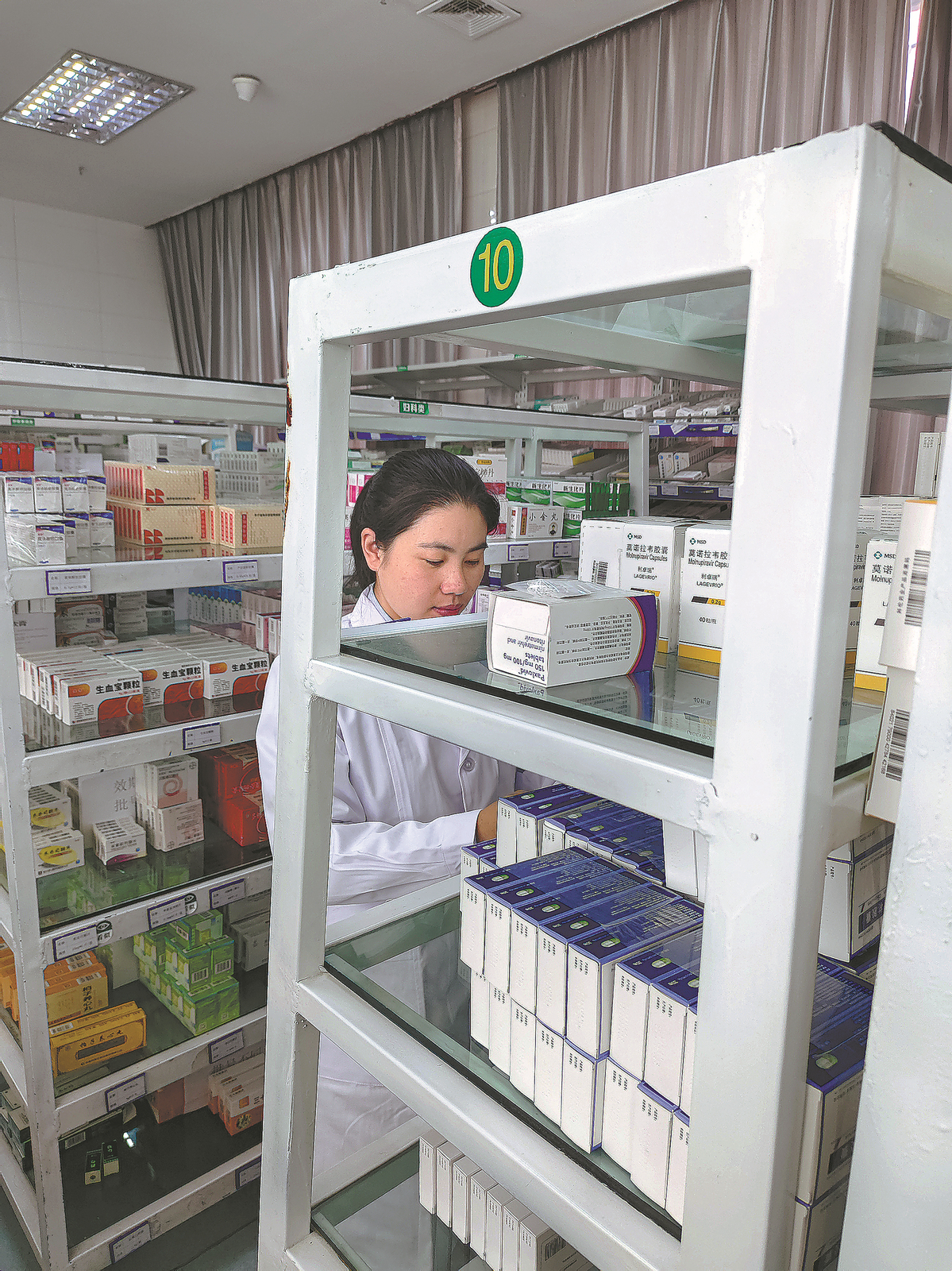
They work in the hospital's pharmacy, where Zhang's job mainly involves purchasing and distributing medication and medical equipment.
She makes 8,000 to 9,000 yuan ($1,100 to $1,240) a month, much more than her peers in other areas, thanks to subsidies provided for people who work in high-altitude and border areas.
Unlike hospitals in more advanced areas, which have automated medicine distribution machines, or hospitals that send texts to patients' phones explaining how to take the medication, Zhang's hospital still relies on medical workers to distribute the treatments and show the patients how to take them.
To make sure the patients understand her, Zhang has learned some basic Tibetan from colleagues.
She said she has been motivated and willing to learn new things from her first day on the job, which is why she was appointed head of her team in her second year at the hospital.
"I like my job very much. People might think it is simple, but when you see that the patients understand what you mean and give you a thumbs-up or a big smile, there is a sense of achievement that cannot be bought with money," she said.
Zhang's hospital is the largest in Ngari, and the conditions have improved greatly in the past five years. Now, the facility has more medical professionals and can treat more patients and a wider range of illnesses, which means her work has become busier.
Awareness of healthy lifestyles has also risen a lot among people in the region, and improvements to the transportation infrastructure mean that more herders from remote townships and villages are coming to the hospital for treatment, she said.
"My life in Ngari is very satisfying. My only regret is that I am far from home, so I cannot spend as much time with my parents as I would like," she said.
Zhang said she will work at the hospital for at least six or seven more years. However, when she has a child and it reaches primary school age, she will consider moving to a place at a lower altitude to access better child care.