



How to attract more foreign investment







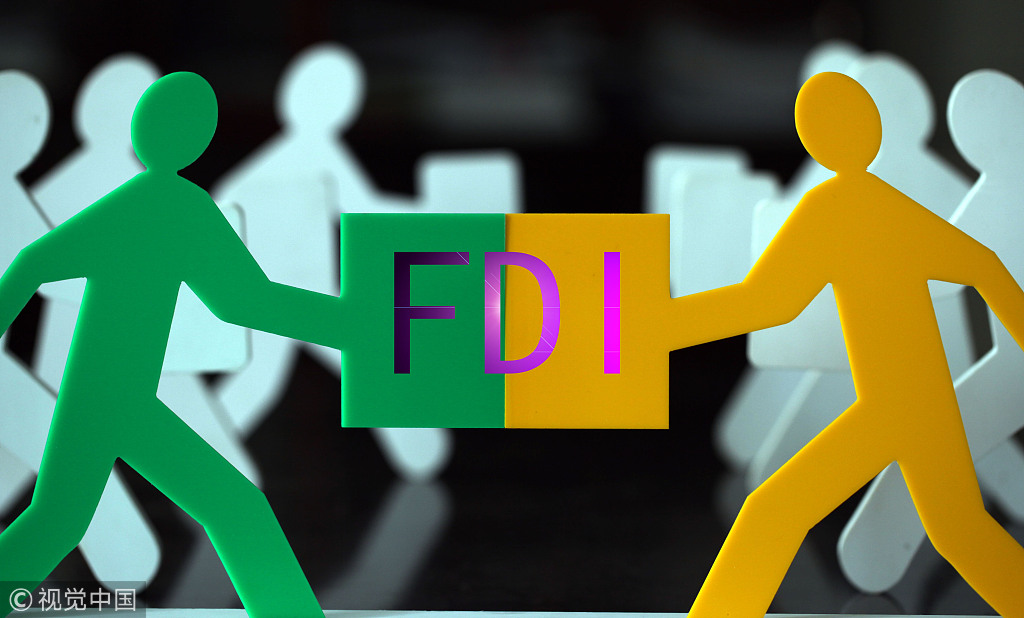
The 20th National Congress of the Communist Party of China in 2022 highlighted the importance of "promoting high-standard opening-up" and "steadily expanding institutional opening-up with regard to rules, regulations, management, and standards", which is the fundamental guideline for further advancing "institutional opening-up". The main reason behind high-standard, institutional opening-up is to attract more foreign investment, which connects the domestic and international markets and resources, and serves as a crucial indicator of the overall level of opening-up.
In the past, China's foreign investment-related mechanisms were primarily centered on opening-up based on the flow of factors. As China's opening-up enters a new phase of promoting institutional opening-up related to rules and regulations, the traditional approach can no longer meet the requirements of the new situation, or help remove the hurdles to high-quality economic development. It's imperative therefore to advance institutional opening-up, establish robust institutional safeguards to attract more foreign investment, and enhance the international competitive advantage of China's institutional environment.
Institutional opening-up is the advanced stage of opening-up beyond the trade in goods and flow of factors. It differs from the previous concept of opening-up which, among other things, involved reducing trade barriers. Recently, the State Council, China's Cabinet, issued the Opinions on Further Optimizing the Foreign Investment Environment and Increasing Foreign Investment (referred to as the 24 Measures to Attract Foreign Investment), covering areas such as fair competition, tax incentives, cross-border data transmission, and research and development support.
These measures call for better coordination between the domestic and international markets, creating a world-class business environment characterized by marketization, the rule of law and internationalization. They are aimed at fully leveraging China's market advantages, by making greater efforts to attract and more effectively use foreign investment.
China has been expanding its institutional opening-up to attract more foreign investment. But it still faces numerous challenges on both the internal and external fronts. Internally, competitive policies in the foreign investment sector need to be fully implemented, facilitation of cross-border element movement further improved, and the differences between global and domestic high-level economic and trade regulations narrowed.
Take investment rules for example. Although China has adopted the "Pre-establishment National Treatment" and "Negative List" regulatory model in line with international standards, the 2021 edition of the Special Management Measures for the Access of Foreign Investment (Negative List) still contains 27 entries, indicating the need to further open up the market. In particular, among the special management measures for the service sector, there are still 22 items spread over eight categories covering fields such as logistics, education, culture, healthcare, commerce, telecommunication, digital technology, and digital content services.
Recent years have seen an increasing number of countries resorting to investment protectionism — on both incoming and outgoing investment. According to United Nations Conference on Trade and Development data, the number of investment policy measures taken globally in 2021 was 109, slightly fewer than in 2020. But the tightening of investment regulations continues, with an increasing percentage of measures unfavorable to investment. Among the main challenges in attracting more foreign investment are the intensified investment competitions among major economies and the restrictions the United States has announced against investments in China.
The US has been intensifying its trade and investment restrictions on China's high-tech manufacturing sector. They include not only limitations on critical technologies, key energy resources and vital assets, but also restrictions on investment in crucial sectors. By announcing legal limitations to protect its high-tech sector and strengthening the review authority of regulatory institutions, the US has expedited the process of "decoupling" from China in the high-tech sector.
Amid rising external constraints, it has become all the more important for China to maintain its strategic composure and not allow them to disrupt the pace of its deepening reform and expanding high-quality opening-up.
There is also a need to promptly implement the opening-up measures outlined in the State Council's 24 Measures for Attracting Foreign Investment. And to align with the World Bank's new investor-friendly assessment framework, China should further improve its business environment. For that, the authorities have to make the legal system for foreign businesses more robust, promote fair competition between domestic and foreign companies, and better safeguard the legitimate rights and interests of foreign investors.
Strictly adhering to the Pre-establishment National Treatment and Negative List management system, China should widen the access of foreign investment, improve the market access management system, ease restrictions on foreign investments, licenses and operational conditions, among other aspects, and build on the foundation of "access" in order to facilitate "operation". And in the realm of service trade and emerging cutting-edge technology sectors such as semiconductors and artificial intelligence, more substantial measures should be taken to deepen open cooperation.
Prioritizing high-level opening-up in areas such as services, the Negative List should be further shortened. And opening-up in areas like value-added telecommunication, internet data centers, cloud computing and other high-tech sectors should be promoted, raising the confidence of foreign investors to invest in the Chinese market.
The author is deputy director of the Institute of American and European Studies, China Center for International Economic Exchanges. The views don't necessarily reflect those of China Daily.
If you have a specific expertise, or would like to share your thought about our stories, then send us your writings at opinion@chinadaily.com.cn, and comment@chinadaily.com.cn.





