Belt and Road gives boost to the growth of Global South







The Silk Road Economic Belt was officially proposed during President Xi Jinping's visit to Kazakhstan in September 2013.The following month, in Indonesia, Xi proposed the 21st Century Maritime Silk Road. Together, these two proposals are known as the Belt and Road Initiative.
The initiative came at a time when the serious negative impacts of the 2008 global financial crisis were still being felt by developed as well as developing economies. It emerged at a time when the powerful imperialist states were seeking to solve their problems at the expense of the poor and weaker Global South countries.
This was manifested in growing protectionism, in which goods from developing countries became uncompetitive in the world market due to the massive subsidies that the large Western countries were giving to their companies, both in industry and agriculture. This policy caused an explosion of poverty in the world.
Basing its endeavors on its experience of opening-up at the end of the 1970s, China sought solutions that would not negatively affect the poor and powerless. This led China to promote a new type of international relations based on the win-win approach of mutual benefits and mutual security. It is an approach that sees the world as one, where cooperation is the most important condition for advancement.
That is why, when China's economic strength began to grow after the country launched its reform and opening-up policy, it started to help the poorest countries in the world. It extended a helping hand to those countries that could not obtain assistance from the World Bank or the International Monetary Fund because of the weakness of their respective economies — those countries considered by the West to be too high a risk for their investments.
That type of Western thinking was based solely on money. In fact, any assistance was usually premised on those countries giving up control of their economies to huge transnational corporations. In almost all the cases, investments only went toward the exploitation of natural resources. The leading Western powers used international financial institutions to impose economic policies that emasculated the borrowing countries' sovereignty.
China's cooperation with the developing countries has been qualitatively different. It never dictates to countries what they should do. Instead, it has worked with governments, which have identified their own priorities. It has never tried to subjugate any state for its sole benefit.
That is why much of the assistance given by China has been aimed at creating the conditions for sustained growth. Its investment projects have mainly been physical infrastructure such as roads, bridges, railways and ports as well as energy infrastructure such as hydroelectric plants. All these projects are intended to stimulate and facilitate economic growth.
A lot of assistance has gone toward building up social infrastructure, which has had a positive impact on the development of human capital and promoted sustainable growth. China has not only helped to build schools, hospitals and world-class sporting and cultural facilities, but has also provided tens of thousands of scholarships to students from developing countries. All of this has been done without imposing conditions that affected any country's independence.
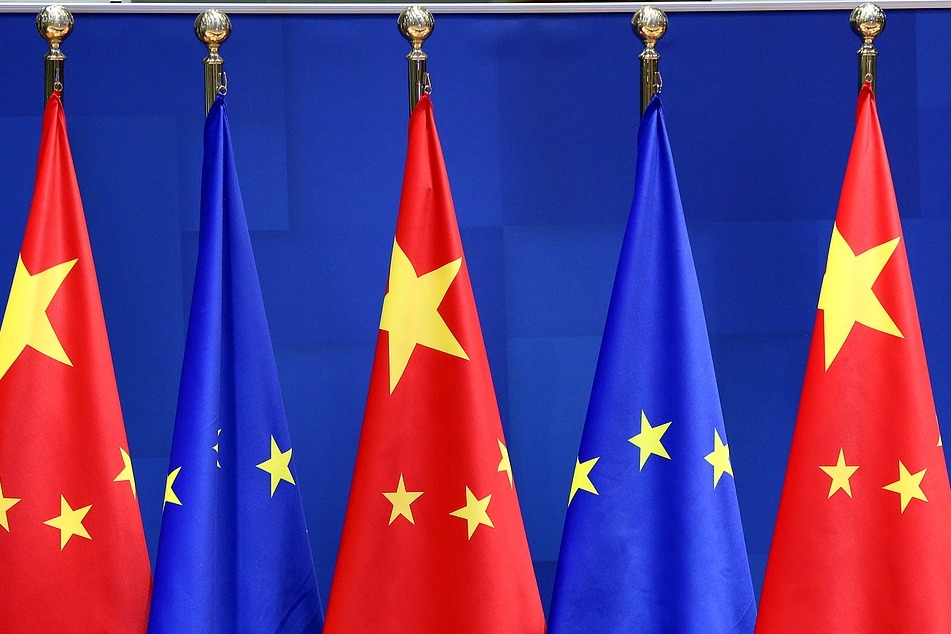
This win-win diplomacy has paid great dividends for China and the other countries involved. Today, 152 countries have joined the Belt and Road Initiative. It is this new type of relations that has allowed China to become the largest trading partner of most of the countries in the world.
However, not everyone is happy with China's high and growing prestige throughout the world, particularly the United States.
Such countries' basic concern is that China's assistance is lessening the dependence of developing countries, many of which are endowed with natural resources, on the West. They are afraid of losing their power to dictate to former colonies and semi-colonies and to use them as a source of raw materials for the West.
The imperialist states have therefore set themselves two tasks. One is slowing China's economic progress. The idea here is to make many of the big projects too expensive for China to finance, and the second is using all means to discourage developing countries from building and strengthening relations with China. They have employed a wide array of measures to attain these objectives, including a campaign of slander, economic sanctions, threats and provocations.
In their effort to discredit China's assistance, they have spun incredulous stories. One of the most persistent is that China wants to create a "debt trap" for poor countries in order to control them politically. They use this approach, because that is precisely what they have been doing since the end of World War II.
On the economic front, they are using sanctions against China and other developing countries. In the case of China, they are using frivolous excuses to put obstacles in the way of Chinese companies that are operating abroad, accusing them of spying and other wild charges, none of which they ever back up with evidence.
On China itself, they are trying to prevent it from obtaining high-tech equipment and tools that these countries export. In this regard, they have banned the export of some microchips to China. They have also forced other countries to do the same. When China reacts by controlling some of its high-tech exports to the West, we hear a hue and cry complaining of China being unfair. All their measures are forcing China to become tech self-reliant.
Despite these concerted hostile measures, the Belt and Road Initiative has become widely accepted. All the countries, developed and developing, that are participating in it are experiencing positive results. The connectivity by road, rail and sea has stimulated individual and regional economies, as well as the international economy.
Another reason that the US is failing in its effort to roll back the Belt and Road has to do with the economic situation in many Western countries. Many countries in the European Union are experiencing recessions or are close to being in that state.
In the US, many people are becoming worried by the fact that the dollar is losing ground in international commerce. The use of the dollar as a weapon to sanction the world has led to more countries turning their backs on the dollar and using their own currencies.
Over the past 10 years, the Belt and Road Initiative has contributed greatly to many of the positive changes in the world. Apart from the obvious and demonstrable progress that has been achieved by all countries and regions involved in the Belt and Road, we see some tangible spinoffs from this bold and innovative plan. The projects are forging closer people-to-people ties throughout the world, which has helped to promote friendship and solidarity among peoples from various countries and continents. No doubt this will lead to greater international solidarity.
The author is a former president of Guyana.?The views do not necessarily reflect those of China Daily.