



US hegemony and China's peace-building approach







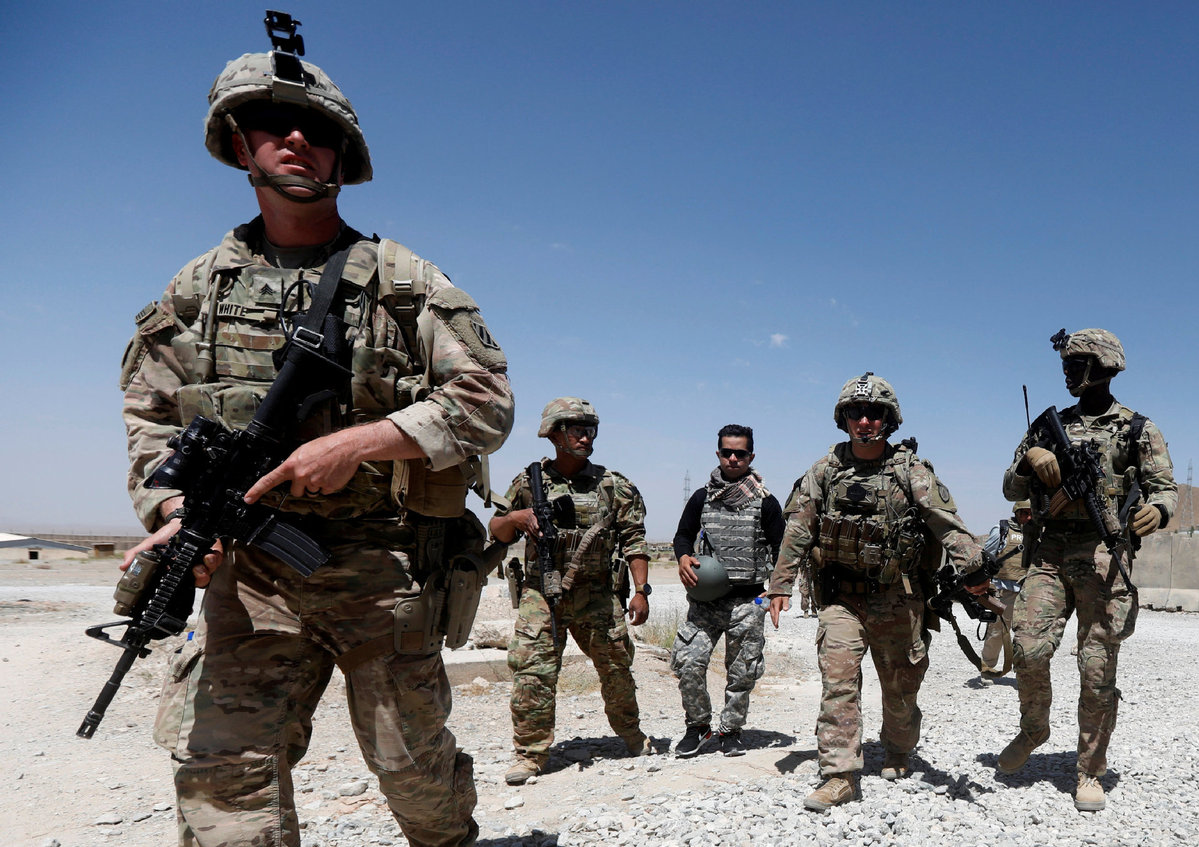
The 15th of August will likely be remembered as the formal day that the "American Century" came to an end and the "Asian Century" began. On that day, the US-backed Kabul regime fell, with its leader escaping with some $169 million in cash, and the Afghan Taliban returned to power.
Regrettably, the US granted itself permission to attack any nation as part of their War on Terror. It started by attacking Afghanistan and toppling the Taliban regime. The White House imposed a war for 20 years rather than working out a political solution. Afghanistan's people were consequently thrown into the worst humanitarian crisis, and they are still struggling and paying a high price for what the US mishandled.
The US invasion of Afghanistan was based on utterly false presumptions and an incorrect perception of the true nature of a poor tribal nation. It came as little surprise when US General Douglas Lute claimed that the Afghan War was not justified. To think that a superpower like the US, with its good system of governance and abundant resources, could make such a mistake of judgment and pay a horrible price in blood and treasure to pursue aims that have no relevance to the facts on the ground is unbelievable.
However, this is not the first time that a misjudgment has guided US policy. The Iraq War in the 2000s and the Vietnam War in the 1950s are actually where the US's legacy of errors in judgment began. So, the Afghan war demonstrates, as noted by historian Toynbee many years ago, that the only lesson mankind has taken from history is that it has not learned any lessons. More significantly, this proves that the US has erroneously intervened in many parts of the world in order to advance its own hegemonic goals.
On the eve of the second anniversary of the Afghan debacle, the question of who can be held accountable for such an epochal blunder that destroyed infrastructure, ruined social stability and resulted in fatalities inevitably emerges. The narrative goes much deeper than the military setback. Ineffective decision-making, the arrogance of believing one is the world's defender and intolerance of others are all deadly components of a policy that aims to dominate the globe.
Most probably, the US made the finest choice in recent decades when it decided to withdraw its military from Afghanistan. However, more strategic actions should have been taken after the withdrawal of foreign troops from Afghanistan to give the Taliban an opportunity to set up a stable government that could maintain peace and guarantee citizens a healthy life. Instead, it appears that the Americans are adamant about finding a means to undermine the Taliban. Prior to the Taliban taking power, 80% of Afghanistan's budget was supported by foreign aid, which abruptly stopped the day the Americans left.
Moreover, having failed to defeat them militarily, the US is now playing another dirty game to bring the Taliban government to its knees and portray them as a failing state or a home of terrorists before the international community. Americans and other western allies are increasingly expressing serious worries about Afghan women's rights. Isn't it a parody of justice and ethics to speak up for women's education and other human rights while depriving that nation of its economic resources and then cutting off all aid?
It is evident that the Afghan crisis was created by the Americans. They never wanted Afghanistan to be a stable and affluent country. That's why they first destroyed the nation with an unjustified war, and they then made every effort to keep this nation's economy in shambles. The US spent over $2 trillion killing Afghans but can't spare a few billion to help them rebuild their country.
China's constructive role in post-war Afghanistan
China's role in fostering peace in Afghanistan is of great significance following America's two-decade-long war that failed to deliver peace. For its post-war reconstruction, Afghanistan currently has a critical need for financial resources, international assistance and technology. In these areas, China can offer valuable assistance. Suhail Shaheen, a Taliban spokesman who is aware of China's potential, warmly "welcomed" China's assistance in the reconstruction and development of Afghanistan, referring to China as "a friend to Afghanistan".
China has stayed steadfast in its commitment to addressing the challenges that Afghan people face. China was one of the first countries to announce investments in Afghanistan and to send aid, particularly during the severe winters and the COVID-19 pandemic. In order to help the country address terrorism, humanitarian crises and instability, China has long strived to develop regional support. To fully realize Afghanistan's potential as a regional economic and connectivity hub, China decided to expand the China-Pakistan Economic Corridor (CPEC), a centerpiece of the Belt and Road Initiative (BRI), into Afghanistan. Projects under the BRI would boost Afghanistan's exports, fostering the country's war-torn economy and prosperity.
China has a very clear position on Afghanistan. Based on the strategy of "Afghan owned, Afghan led", China will continue to advocate for Afghanistan's independence and territorial integrity. It will also act as a responsible neighbor and friend to the Afghan people and contribute positively to promoting peace and stability in the country. We expect China's continued positive interaction and practical partnership with the Afghan government, as well as a greater contribution to Afghan peacemaking.
Kamal Uddin Majumder is an independent researcher and strategic affairs analyst in Bangladesh. The views don't necessarily reflect those of China Daily.
If you have a specific expertise, or would like to share your thought about our stories, then send us your writings at opinion@chinadaily.com.cn, and comment@chinadaily.com.cn.





