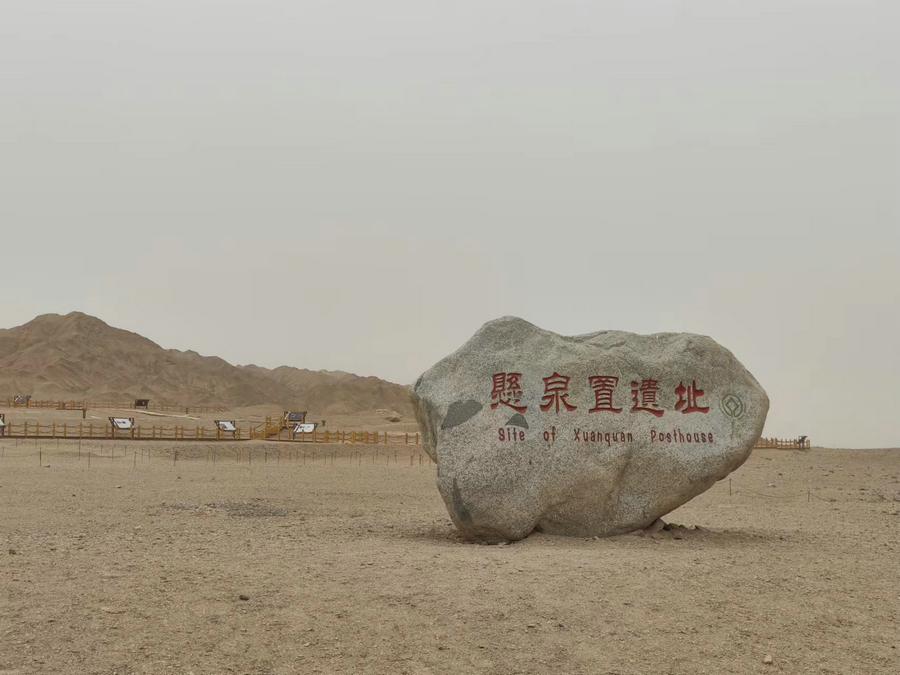
On an overcast, windy morning in late July, standing in the arid Gobi Desert of Dunhuang city, Northwest China’s Gansu province, was a test in its own right; the air was dry and hot. What greeted the eye was nothing but an endless wavy terrain formed by sand and rocks.
Battered by its cruel climate, one had to stretch their imagination to think of Xuanquanzhi, a post house that functioned here more than 2,000 years ago.
What was more surprising was that amid all the barrenness, the official institute once hosted up to 1,074 guests when the King of the Yutian Kingdom, heading a delegation from what is now the Hetian county in Xinjiang Uygur autonomous region, was en route to Chang’an, today’s Xi’an, to pay tribute to Emperor Xuan (91-48 BC) of the Western Han Dynasty (206 BC-AD 24). The delegation consumed large quantities of beef and mutton, and broke over 300 cups during their stay.
“The cost and details of this reception were all recorded on jiandu, bamboo or wooden slips used for writing documents before paper was widely available, which were unearthed from the Site of Xuanquanzhi,” Rong Hongmei, public education director at the Dunhuang Museum, told the China Daily website.
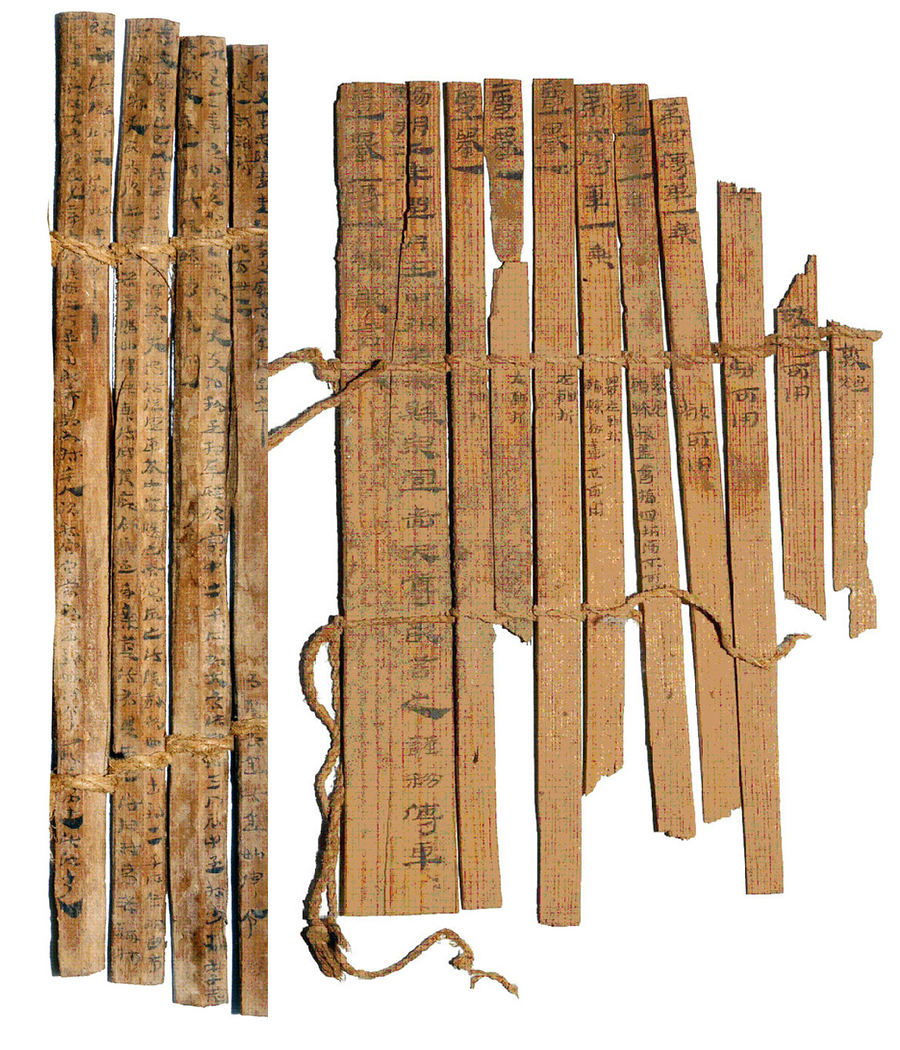
“Another high-profile itemized bill on jiandu unearthed from the site was about the post house receiving veteran diplomat Chang Hui in 65 BC when he was sent to visit Wusun Kingdom in what is now Xinjiang’s Yili Valley,” Rong added.
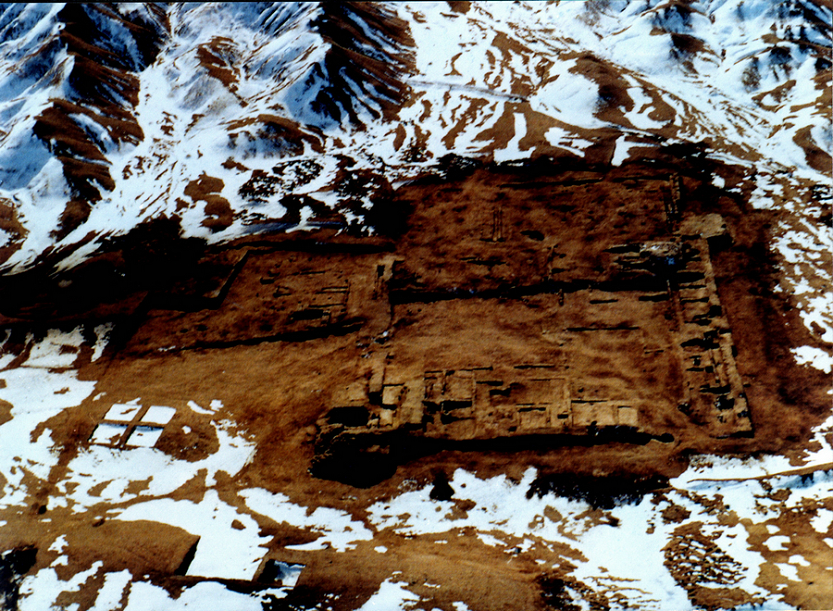
First discovered by the local cultural relics survey team in 1987, the Site of Xuanquanzhi was excavated between 1990 and 1992 by the Gansu Provincial Institute of Cultural Relics and Archaeology. More than 70,000 relics, including jiandu, silk books, paper documents, crops, farming tools and domestic animal bones, were unearthed from the site, making it one of the top 10 archeological discoveries in 1991.
In 2001, the site was made a national key cultural relics protection unit by the State Council. In 2014, it was included on UNESCO’s World Heritage List, as one of the 33 components of “Silk Roads: The Routes Network of Chang’an-Tianshan Corridor”, a transnational property of China, Kazakhstan and Kyrgyzstan.
A beautiful knot on Silk Road
Between 121 BC and 111 BC, Emperor Wu (156-87 BC) set up four counties to the west of the Yellow River (Hexi Corridor), Jiuquan, Wuwei, Zhangye and Dunhuang, in today’s Gansu province, to expand the influence of the Han central government and develop ties with countries in xiyu (western regions), which were west of the Yumen Pass in today’s Central Asia.
As a result, the national postal system of the Han Dynasty (206 BC-AD 220), acting like a network of blood vessels, expanded to help improve the communication between the central government and the grassroots ones on its northwestern border.
The postal system of the Han Dynasty consisted of three tiers — ting, you, and zhi. Tings were usually set up every two and a half kilometers, providing a place for passengers and envoys to rest on their journey. The distance between two yous was around 15 kilometers, the longest distance a man could cover by foot in a day. A zhi was the biggest post station, set up around every 40 kilometers, the distance a horse-drawn carriage could reach in a day.
According to the jiandu records unearthed from the Xuanquanzhi Ruins, more than 80 zhis were established between Chang’an and Dunhuang, with Xuanquanzhi being one of them. “Although in the historical records of the Han Dynasty, Yulizhi was to the east of Xuanquanzhi and Zheyaozhi to its west, archeologists have only found Xuanquanzhi after countless investigations in Dunhuang,” Rong said.
Covering an area of 22,500 square meters, Xuanquanzhi featured a defense area, an office area, a reception area, a stable, a horse doctor’s clinic, a mill and a restaurant.
Sitting on the Hexi Corridor that connected ancient China and xiyu countries, the post house functioned for more than 400 years (from the 2nd century BC to the 2nd century AD) as a hub that delivered mail and official documents, as well as hosting envoys and foreign guests.
“The Xuanquanzhi Ruins are so far China’s largest, best-preserved posthouse with the most unearthed cultural relics in the Han and Jin Dynasties (206 BC–420 AD),” said Zhang Defang, founding director of the Gansu Jiandu Museum, which houses more than 40,000 slips unearthed in the northwestern province.