



Unraveling the US-China decoupling myths







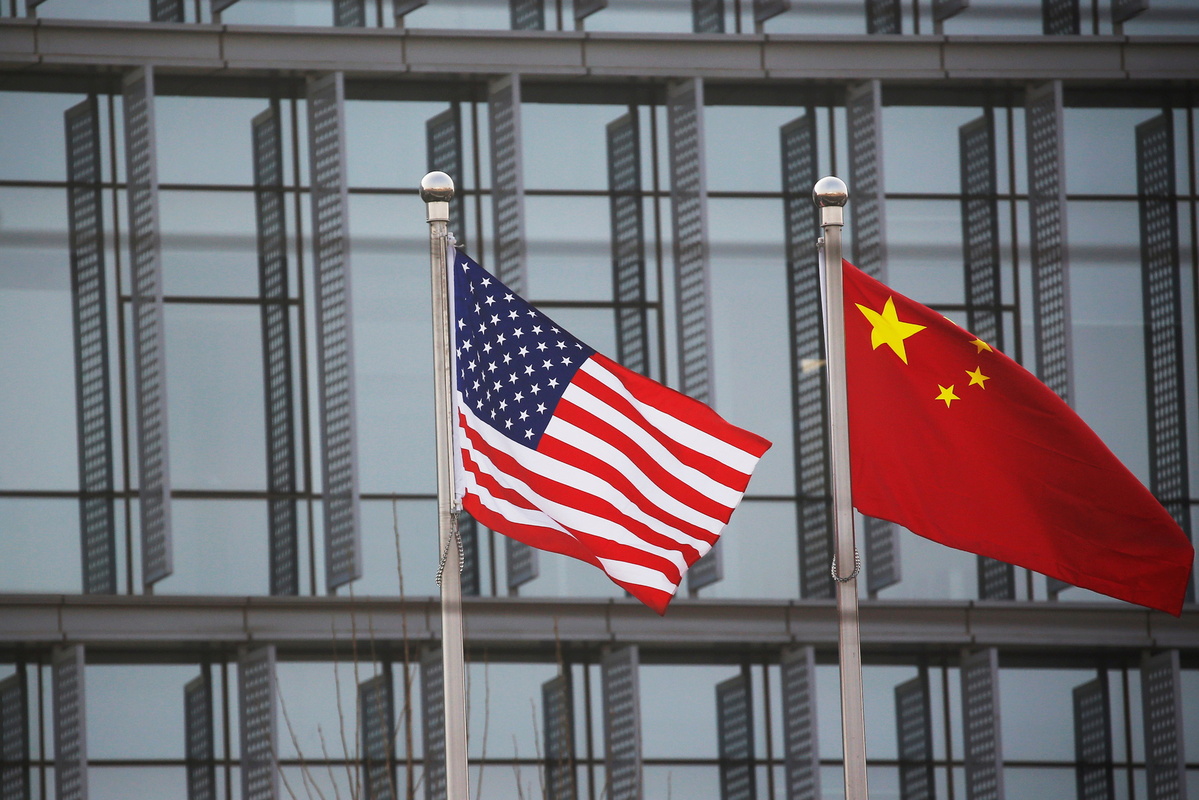
Growing frictions between the world's two largest economies are reshaping trade, finance, and technology, leading in many ways to regression on the advancements brought by globalization in the preceding decades. In my previous op-ed, I discussed how the partial divorce of this "marriage made in heaven" by China and the US has started to restructure the global economy, redefine technology collaboration, redirect global capital, and reconfigure international supply chains. While debates are still ongoing, there appears to be some consensus on the likely consequences of this decoupling. In this piece, I will examine three of the most widely accepted consequences — by the developed world — and offer a different perspective.
The first is inflation, which has emerged as a major problem for policymakers and the average Joe in many developed countries. Given that the US—and the collective West—has benefited significantly from the great moderation of inflation during globalization, a fragmented world will likely reverse those benefits and raise inflation permanently.
This view is confirmed by research showing that trade tariffs imposed by the US have increased import prices, with some pass-through to CPI inflation. However, another less-discussed channel through which decoupling has impacted prices is the labor market, which has so far defied gravity amid the fastest US monetary policy tightening in decades.
Part of this resilience is due to job creation by companies "reshoring" from China under pressure from the White House to increase national security and supply chain resilience. One estimate shows that almost 365k new manufacturing jobs were added due to "reshoring" last year, and a total of over a million jobs were created since the trade war started in 2018. These job creations have added strength to the labor market and pushed up wages, making the Fed's job of taming inflation all the more difficult.
While inflation is clearly pervasive in the US and other developed economies, it would be wrong to generalize it as a common problem of deglobalization for the entire world. One needs to look no further for an exception than China, which has been confronting entrenched deflationary forces in industrial sectors. There are short-term domestic drivers of falling prices, but an important external contributor is that Chinese products are being shut out of Western markets. A glut of supply in the "world's factory"—which is no longer servicing all of the world's demand due to political interference—is putting downward pressure on prices.
On the other hand, the US' attempt to replace China by forcefully stretching its domestic production and/or sourcing goods from "friendly countries" at higher costs has raised domestic prices. Hence, deglobalisation isn't inflationary for all, but is creating differentiated price dynamics for countries at different parts of the global supply and demand spectrum.
Another visible consequence of increasing economic and geopolitical tensions is supply chain reconfiguration. According to surveys of the US/EU Chamber of Commerce in China, many foreign companies have either moved, or are in the process of moving, part of their operation out of the country in pursuit of a so-called "China + 1" strategy. By having the "plus-1s" as backups, businesses claim they would become more resilient against future shocks.
Appealing as it sounds, I am skeptical if the "China + 1" approach can truly live up to expectations. This is because China is a critical player in the global supply chain and at center stage of production networks in Asia. It ranks among the world's top three exporters in 2,400 of 4,000 categories of globally-traded intermediate goods, which many of the "plus 1" countries rely on to produce final products. One of the biggest beneficiaries of supply-chain reallocation out of China, Vietnam, even relied on China's electricity supply to keep its factories running during the recent power shortages. Hence, even a minor hiccup in China's production and trade can send ripple effects across globe, making it very difficult for businesses to fully hedge such shocks.
Furthermore, the "China + 1" strategy will almost certainly fail to hedge tail risks of another global pandemic or US-China military conflicts. Another COVID-like shock will hit all production and trade systems globally. So instead of shying away from China, businesses would in fact be better off sticking with China given its ability to normalize production much faster, as seen after the initial wave of the pandemic. Similarly, a "hot" clash between the world's two largest military powers could quickly degenerate into a global conflict, rendering any production insurance strategies ineffective in maintaining business normalcy. Overall, I think the "China + 1" approach is ill-suited to guard against any global events where both China and the "plus 1s" will be affected.
Finally, the collective message from the recent G7 meeting is that reducing ties with China is "derisking" for the world. My previous op-ed and the discussion above suggest the opposite may be true: a fragmented global macro system will increase—not reduce—risks for economies and markets.
But the bigger issue at stake is world peace and stability. With increasingly less economic cooperation but more confrontation, the changing nature of globalization in the past five years, according to a recent NBER paper, bears an eerie resemblance to the period preceding the World War II when the British Empire reduced trade with countries outside the bloc—in a move that was seen as exacerbating already elevated international tensions at that time.
So to sum up, the world is at a dangerous crossroads. Attempts to create fragmentation and build exclusive clubs will take a toll on global economic efficiency, free flow of capital and progress of technology, with an ultimate risk of undermining peace and stability. China sees this clearly and has vowed to continue opening up by signing trade agreements such as the Regional Comprehensive Economic Partnership and applying to join the Comprehensive and Progressive Agreement for Trans-Pacific Partnership. The onus is now on the other side to realize the same and alter its course to avoid a disastrous collision.
The author is an experienced economist based in Hong Kong. The views don't necessarily reflect those of China Daily.
If you have a specific expertise, or would like to share your thought about our stories, then send us your writings at opinion@chinadaily.com.cn, and comment@chinadaily.com.cn.





