



Japan's discharge plan toxic to fishing industry of whole world







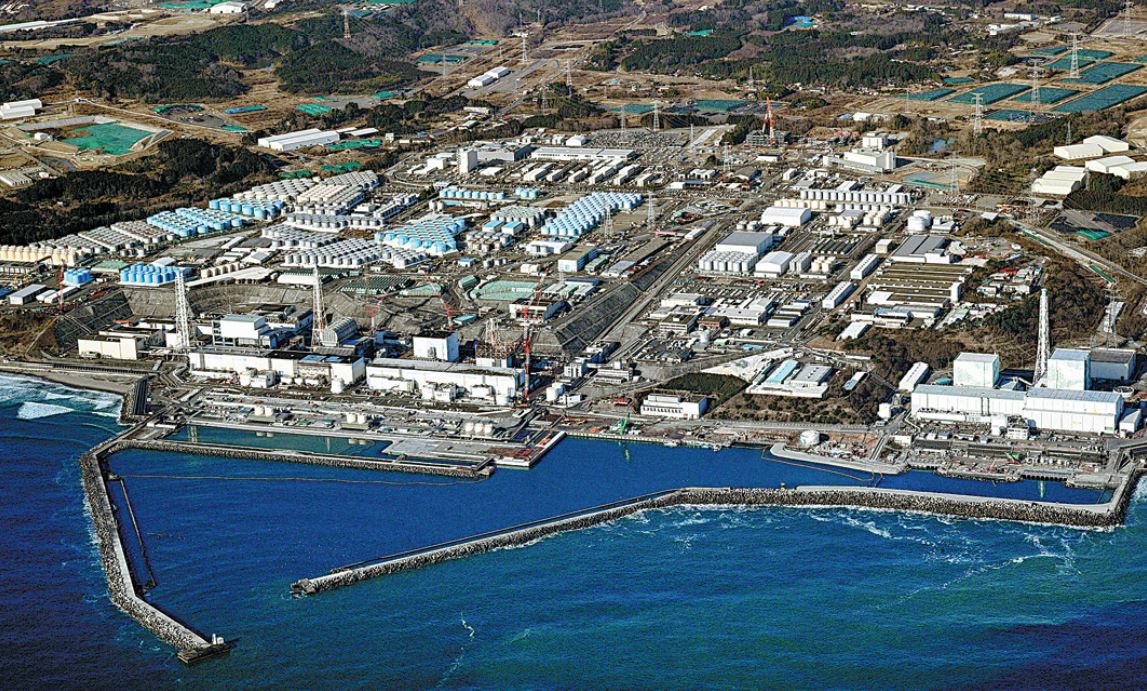
The International Atomic Energy Agency recently released its report on the safety review of the nuclear-contaminated water at the Fukushima Daiichi Nuclear Power Plant, creating doubts in Japan as well as the rest of the world over its authenticity. The IAEA report therefore should not be seen as the international community's "green light" to Japan's plan to discharge the nuclear-contaminated water into the sea.
It is difficult to assess the damage the contaminated water would cause to the economy of Japan, the marine ecology and the food chain. The discharge of the radioactive water into the sea will make people around the world lose confidence in Japan's aquatic products, which could deal a huge blow to the country's fishing industry and thus the Japanese economy.
The nuclear-contaminated water of Fukushima contains more than 60 radionuclides, including tritium, carbon-14, cobalt-60, strontium-90 and iodine-129, which are very harmful to the marine environment and ecology. According to Japanese media, a report released by Tokyo Electric Power Company, which owns the destroyed Fukushima Daiichi plant, says the radioactive element Cs-137 in black rockfish caught in the Fukushima harbor in May far exceeded the safety levels — as high as 18,000 becquerel/kilogram, 180 times higher than the standard maximum stipulated in Japan's food safety law.
These factors will prompt consumers to stay away from Japanese aquatic products, dealing a severe blow to Japan's fishing industry, which in turn could force the closure of many seafood enterprises, leading to the loss of a large number of jobs.
Data from Japan's Ministry of Agriculture, Forestry and Fisheries show the country's total marine product output fell below 4 million metric tons — to 3.86 million tons — for the first time last year. This is a record low since record-keeping began in 1956. The shortage of marine products in Japan will cause a series of problems including hoarding, price rise and social instability.
The sharp decline in sales and profit will deplete Japan's fishing industry, which in 2022, had about 66,000 management bodies and about 125,000 workers, a large number of whom could lose their jobs if Japan goes ahead with its contaminated water discharge plan.
Japan's radioactive water discharge plan has already raised global consumers' concerns over Japanese marine products and related goods, prompting many governments to take preemptive measures against the import of Japanese seafood. For example, China's General Administration of Customs has banned the import of food products, including seafood, from Fukushima and nine other prefectures in Japan in order to safeguard Chinese consumers' health and life.
While people in the Republic of Korea are also strongly opposing Japan's plan to discharge the contaminated water into the sea, those in Southeastern Asian and Pacific island countries have voiced their serious concerns against Japan's decision.
Besides, the discharge of the radioactive water into the sea will deal a deadly blow to Japan's related industries, employment, and even the whole world's fishing industry. According to a study by a German marine research institute, within 57 days of the release of the radioactive water, the radioactive elements will spread to most of the Pacific Ocean and in 10 years, they will spread across all oceans and seas.
According to the State of World Fisheries and Aquaculture 2022 released by the Food and Agriculture Organization of the United Nations, an estimated 58.5 million people were employed in the primary fishing and aquaculture sector in 2020. Including subsistence and secondary sector workers, and their dependents, it is estimated that about 600 million livelihoods depend at least partly on fisheries and aquaculture. While the total fisheries and aquaculture production reached a record 214 million tons and inland and marine capture production in the Pacific reached 45.8 million tons, the output in the Atlantic Ocean and Mediterranean Sea was 20.3 million tons.
Japan's fishing industry fears the government's decision will destroy the reputation of the country's seafood. Moreover, some scientists say the environmental impact of long-term, low-dose exposures to the radioactive elements in the Fukushima water is still unknown, while others are calling for more transparency and greater access for cross-checks.
Japan's Economy and Industry Minister Yasutoshi Nishimura recently met with national fishing association officials to persuade the fishing communities to accept the Japanese government's decision, saying the release of the contaminated water is unavoidable if the daunting task of decommissioning three melted reactors in the Fukushima plant is to be completed.
During the talks, National Federation of Fisheries Cooperative Associations chief Masanobu Sakamoto said their opposition to the plan remains unchanged.
Given the opposition of its own fishing industry and the ill effects the contaminated water will have on global fisheries and aquaculture, Japan should pay greater attention to the health of the fishing industry and marine environment and ecology, handle the contaminated water issue scientifically, and fulfill its moral responsibility and international obligation by abandoning its plan to discharge the contaminated water into the sea.
The author is a lecturer at the Beijing Center for Japanese Studies of Beijing Foreign Studies University. The views don't necessarily reflect those of China Daily.
If you have a specific expertise, or would like to share your thought about our stories, then send us your writings at opinion@chinadaily.com.cn, and comment@chinadaily.com.cn.





