



NATO expansion alters security dynamics, woefully







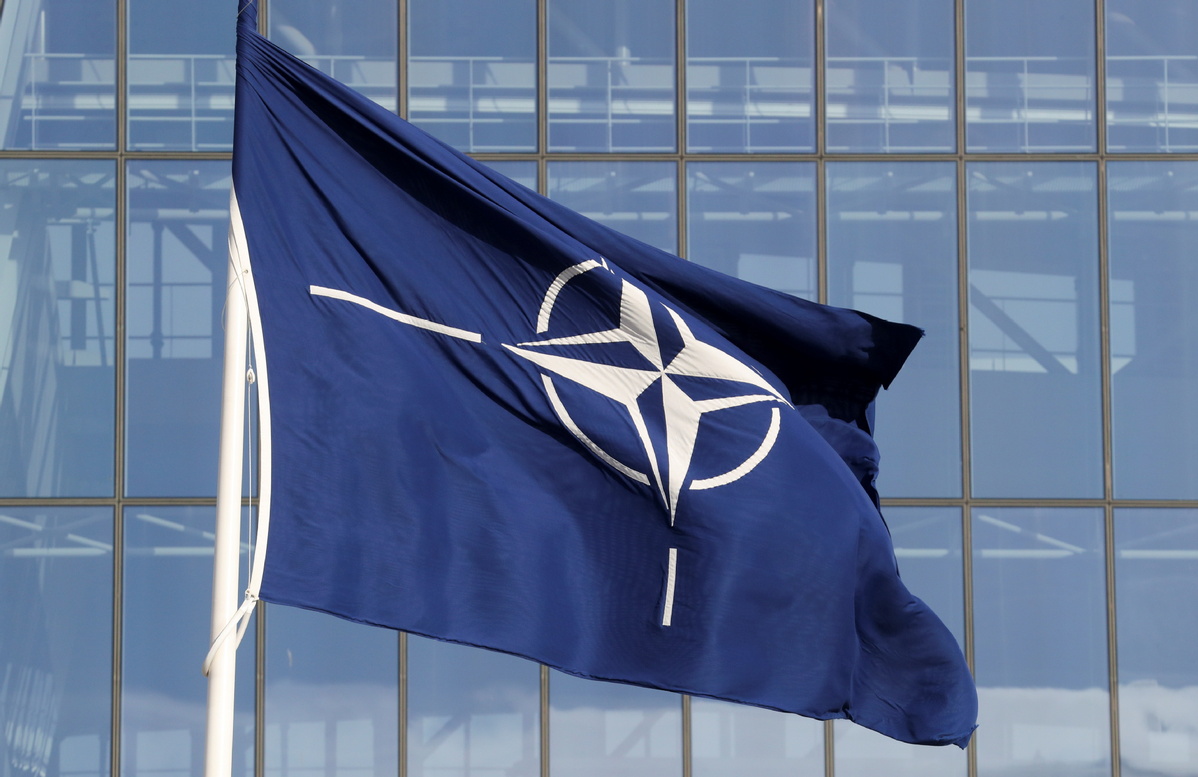
NATO allies are gearing up for their annual summit in Vilnius, Lithuania, on July 11-12 amid growing tensions with Russia. The summit began on Tuesday with fresh momentum after Turkiye withdrew its objections to Sweden joining the alliance. On the other hand, Ukraine has been imploring the military alliance to expedite its membership process. As a legacy of the Cold War, NATO has frequently triggered regional tensions and conflicts worldwide, and despite violating its promise to Russia to not extend "even one inch" eastward, NATO is still holding talks to admit new members.
In April Finland became the 31st member of NATO, and NATO has expanded in Northern Europe. Finland's accession to NATO has profoundly changed the European political and geopolitical landscape and will have a spillover effect on the global security situation.
Finland abandoned its policy of military neutrality, which it had adhered to since the end of World War II, to become a full NATO member in perhaps the shortest span of time — Finland joined NATO before Sweden, even though they had applied to join the alliance at the same time.
This is a direct consequence of the escalation of the Russia-Ukraine conflict, and a significant achievement by NATO.
Since the outbreak of the Russia-Ukraine conflict in February 2022, there have been significant changes in the security situation in Europe, which have exceeded the nature and extent of NATO's bombing and dismemberment of Yugoslavia in 1999.
The Russia-Ukraine conflict, on the other hand, is the consequence of NATO's continuous efforts to shrink Russia's strategic space, with the fuse being the refusal of the US and the European Union to accept Moscow's demand to stop expanding NATO eastward and posing a bigger security threat to Russia.
The Russia-Ukraine conflict has led to strategic changes in the geopolitical security assessments of Switzerland, Finland and Sweden, which till recently had been pursuing a neutral foreign policy. Switzerland broke a principle it had followed for more than 200 years by freezing Russian assets, following the financial and trade sanctions by the US and the EU against Russia. And Finland and Sweden chose to join NATO ostensibly to seek "protection" from Russia.
The decision of Finland and Sweden to join NATO reflects the historical trauma of "fear and aversion to Russia", due to their long history of war with Imperial Russia and the Soviet Union, which has shaped the territorial and border dynamics of Russia and the Baltic and some Nordic states.
Despite political differences within NATO, Sweden is set to join the military alliance and help NATO expand northward and push its frontiers to the Arctic coastline.
Finland's accession to NATO and Sweden's impending membership signal the end of military neutrality for some countries, the complete reconstruction of the Nordic security framework established under the Yalta system, based on the Yalta Conference between Washington, Moscow and London, and the end of "cold peace" in the Baltic region. It also means the EU-Russia confrontation will intensify, leading to further fragmentation and division of the continent.
The two countries' accession also marks the end of the strategic differences among Western politicians over Russia, indicating the waning influence of traditional theorists and strategists on Western politicians and decision-makers. Some diplomats such as Zbigniew Brzezinski have publicly opposed NATO's unlimited expansion and "anti-Russian" stance, but their opposition has been in vain. Former US secretary of state Henry Kissinger, who too was of the same view, has now changed his stance and supports Ukraine's accession to NATO.
The two countries' decision has forced Russia into a more serious security dilemma. NATO has extended and consolidated the northeast flank, bringing under its so-called defense umbrella not only the entire Gulf of Finland, the Baltic Sea and coastal countries, but also doubling the length of its border with Russia, completing a C-shaped encirclement of Russia. As a result, the military pressure on the western front of Russia and even the Arctic region has suddenly doubled.
Finland's entry and Sweden's imminent entry into NATO will also encourage the military alliance to expand further eastward, even tempting some Asia-Pacific countries to join the alliance, and then dovetail its global security strategy with that of the US. In fact, NATO has already persuaded Japan to open a liaison office in Tokyo next year, which will allow the US-led military alliance to become a global military police and geopolitical juggernaut, sparking more geopolitical tensions and security frictions.
This does not bode well for either Europe, Eurasia or the Asia-Pacific, and could increase confrontations and conflicts in the region.
The author is the dean of and a professor at the Institute for Studies on the Mediterranean Rim at Zhejiang International Studies University. The views don't necessarily reflect those of China Daily.
If you have a specific expertise, or would like to share your thought about our stories, then send us your writings at opinion@chinadaily.com.cn, and comment@chinadaily.com.cn.





