Nebraska digs for lost cemetery of Native American children







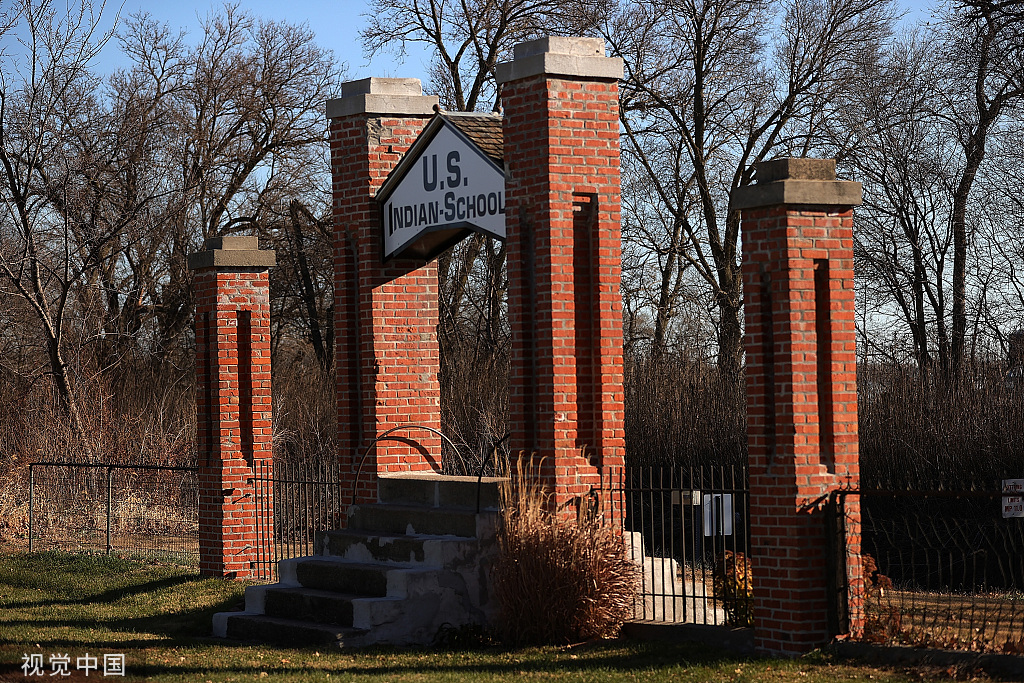
A dig began recently in Nebraska for missing bodies of dozens of Native American children who died at a boarding school around 100 years ago.
The dig is at the suspected site of the lost cemetery of the Genoa Indian Industrial School about 90 miles west of Omaha. It was part of a national system of more than 400 Native American boarding schools that attempted to integrate the indigenous population into the white culture and society by taking the children away from their families and cutting their ties to their own community and heritage.
The Genoa school was opened in 1884 and closed in 1931. At its height, it had almost 600 students from more than 40 tribes across the US. More than 4,300 students had gone through the school before it was closed. Most of its buildings have long since been demolished.
Students were forced to cut their long hair and not allowed to speak their native language. They were given a basic academic education and spent much time learning skills of little real value such as horse bridle-making for boys and sewing for girls. In essence, it was a form of "forced incarceration".
Preliminary research from newspaper clippings, records and a student's letter led to the conclusion that at least 86 students died at the school from diseases such as tuberculosis and typhoid, and in one case, an accidental shooting, reported The Associated Press.
Judi gaiashkibos, executive director of the Nebraska Commission on Indian Affairs, whose mother attended the school in the late 1920s, has been involved in the cemetery effort for years.
She told the AP that it is difficult to spend time in the community where many Native Americans suffered, but it is vital for the search to bring the children's voices to the surface and to help with healing.
"It's an honor to go on behalf of my ancestors and those who lost their lives there and I feel entrusted with a huge responsibility," gaiashkibos told the AP.
Last year, when researchers were trying to identify the site of the cemetery, gaiashkibos told the AP that "these children, in my opinion, were disrespected, and they were throwaway children that no one talked about. They were hidden, buried under the ground, and it's time to take the darkness away. Until we do that, we have not honored those children."
Dave Williams, Nebraska's state archeologist, said that if the dig reveals human remains, they could be reburied in the field and a memorial created, or the remains could be exhumed and returned to tribes.
A study by the Interior Department showed that the Native American school system was started in the early 1800s, and some schools lasted well into 1960s. Many children never returned home.
The federal government had identified at least more than 500 student deaths across the country at about 20 schools, but the Interior Department said that with further investigation, the number of known student deaths could be in the thousands or even tens of thousands. Causes included disease, accidental injuries and abuse.
The federal government directly operated some of the more than 400 identified schools, and churches ran others with federal funding, the study shows.
The US study was prompted by the discovery of unmarked graves at former residential school sites in Canada. Like Native American schools in the US, Canada's residential schools forcefully took, between the 1870s and the late 1990s, at least 150,000 indigenous children away from their families to assimilate them.
Canadian researchers affiliated with indigenous communities said they have located more than 2,000 such unmarked graves.